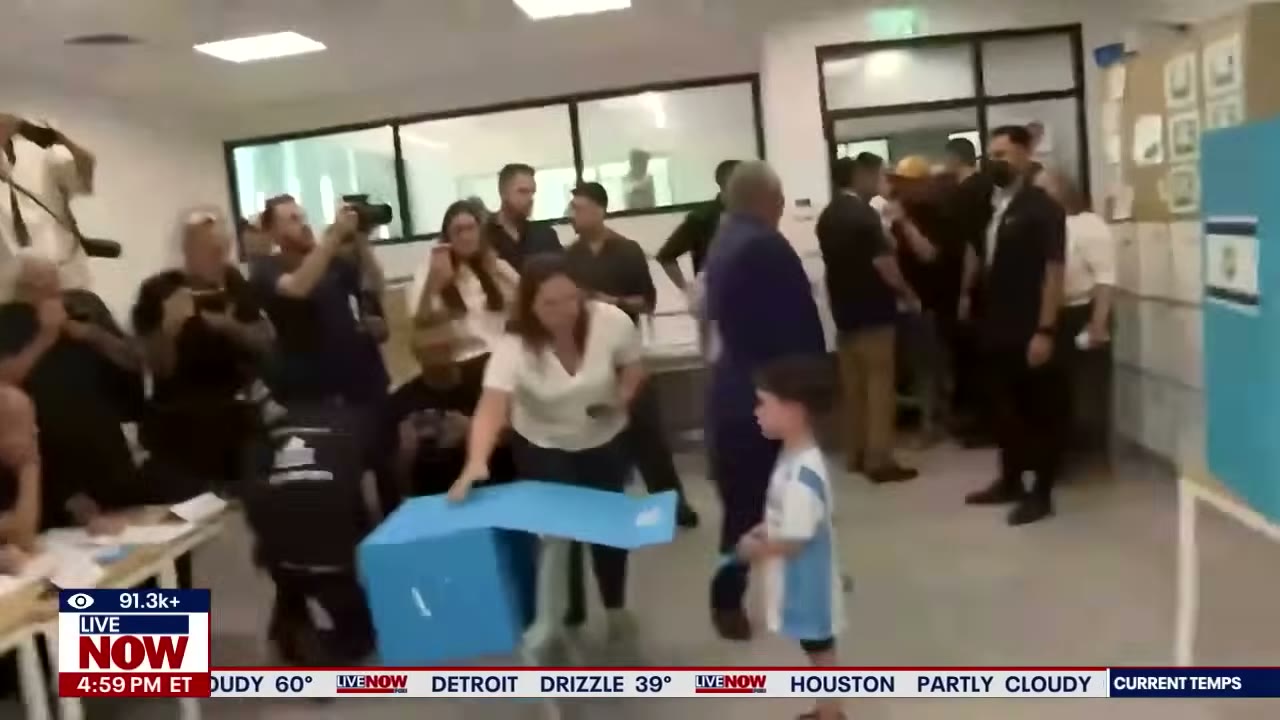
Israeli Prime Minister Benjamin Netanyahu's political future hangs on Gadi Eisenkot's coalition talks, with a December 6 deadline and a possible two-week extension. Analyst Alon Bernstein explains the splits in both camps, the role of Arab and ultra-Orthodox parties, and why Netanyahu could still win a re-election.
1Eisenkot's deadline to form a coalition and unseat Netanyahu
Gadi Eisenkot has until December 6 to form a government and end Benjamin Netanyahu's premiership. He is racing against that deadline, accusing Netanyahu's Likud party of dragging out coalition talks to force a re-election.
Eisenkot may be able to extend the deadline. To remove Netanyahu, he will likely have to rely on the support of two Arab parties or two ultra-Orthodox parties.
"He is racing against time to end Netanyahu's premiership," said Professor Alon Bernstein of the Israel Palestine Report. The coalition math, and the splits inside both camps, will decide whether the deadline holds.
2Analyst explains Eisenkot's coalition math and split camps
Eisenkot has two weeks left to form a coalition, and the 67-seat anti-Netanyahu majority is splitting apart. He was given a month to negotiate; he can ask for a two-week extension, but it is not certain he will get it.
The blue and light blue parties on the map all promised to remove Netanyahu. Yet splits appeared in both camps. In the pro-Netanyahu camp, United Torah Judaism and the ultra-Orthodox parties began to distance themselves from Netanyahu, saying they were concerned about their own interests and could go anywhere.
In Eisenkot's camp, parties said they were not sure they wanted to sit in parliament with Arab Palestinian Israeli parties. Eisenkot may try to swear in a minority government, just to remove Netanyahu and decide the rest later.
3Would Arab Israeli parties in government jeopardize Gaza and West Bank policy
About 20–21% of Israeli citizens are not Jewish — Arab Palestinians of Israel, who hold Israeli citizenship and are distinct from Palestinians in the West Bank and Gaza. Netanyahu's side says relying on their parties would jeopardize Israel's security.
The analyst called that greatly exaggerated. By law, military operations do not require coalition approval, and it is highly unlikely these parties would get a cabinet seat — or, if one did, it would be one vote out of perhaps ten.
The irony: a government can be formed with 48 votes to 46, but overthrowing it needs 61. The "dovey" partners in an Eisenkot government are more likely Jewish left-wing parties than Arab ones.
4Ultra-Orthodox parties could back either side, splitting Netanyahu's base
One ultra-Orthodox party broke away right after the election and said it was ready to go with either side — a split in Netanyahu's base that the analyst admitted no one, including him, predicted.
These parties want policies affecting their voters: exemption from military service and socialist programs specifically for them. Eisenkot, the Democratic Party and the Bahad Party all campaigned on ending the ultra-Orthodox exemption, so going with them would feel like a stab in the back to his voters.
If Eisenkot reaches a deal with the ultra-Orthodox, it would signal a serious blow to Netanyahu's camp — the first split in the pro-Netanyahu base in over ten years.
5Why Netanyahu would likely win a repeat election
Netanyahu would definitely have a better chance of winning a re-election, the analyst said — for three reasons.
First, the parties elected on promises to end his stay in office won 67 seats and could not unite. That would deter voters next time.
Second, judges summoned Israel's attorney general and recommended dropping the bribery charges and one other case in his corruption trial. They did not say they would find him innocent, but doubted the prosecution could easily prove guilt. Third, about 3% of votes went to small right-wing parties that failed the electoral threshold — lost votes Netanyahu usually prevents.
6Eisenkot camp may still form a minority government as Netanyahu weighs unity deal
Eisenkot's camp knows that if he fails in the next two weeks, new elections are likely — and that they would probably do much worse. So they will likely try to form a minority government anyway.
Netanyahu is expected to take desperate steps. One version: he proposes a national unity government with rotation, with himself second.
The analyst was blunt about that offer. Netanyahu has not followed through on such agreements in the past, he said, so it would be very strange if Eisenkot's team went with him this time.
7Israeli electorate has shifted right and puts security first
Israel's entire electoral landscape has shifted toward right-wing politics — even inside the camp opposing Netanyahu. Yesh Atid, led by Eisenkot, puts safety first and has many religious figures; Yisrael Beitenu, led by Avigdor Lieberman, is a nationalist party that would like Israel to be exclusively Jewish.
The only thing these parties share is opposition to Netanyahu. If he were removed from Likud's leadership, Likud, Yesh Atid and Yisrael Beitenu could most likely unite around a strong right-wing agenda.
These were the first elections since the October 7 attack, and security comes first across both left and right.
8Analyst promotes Israel Palestine Report and upcoming live broadcast
The analyst pointed viewers to the Israel Palestine Report on YouTube, with a live broadcast planned for tomorrow or Sunday.
The topic: what Yitzhak Herzog is doing, amid rumors that he is already negotiating with the Palestinian Authority.
There will be plenty more topics in the coming weeks, he said.