South Vietnam's ARVN was among the first militaries to adopt the Cadillac Gage Commando armored car. Declassified organization tables reveal how Regional Force mechanized platoons used the XM706 for convoy escort, road security and base defense.
1ARVN Adopts Cadillac Gage Commando for Evaluation and Widespread Use
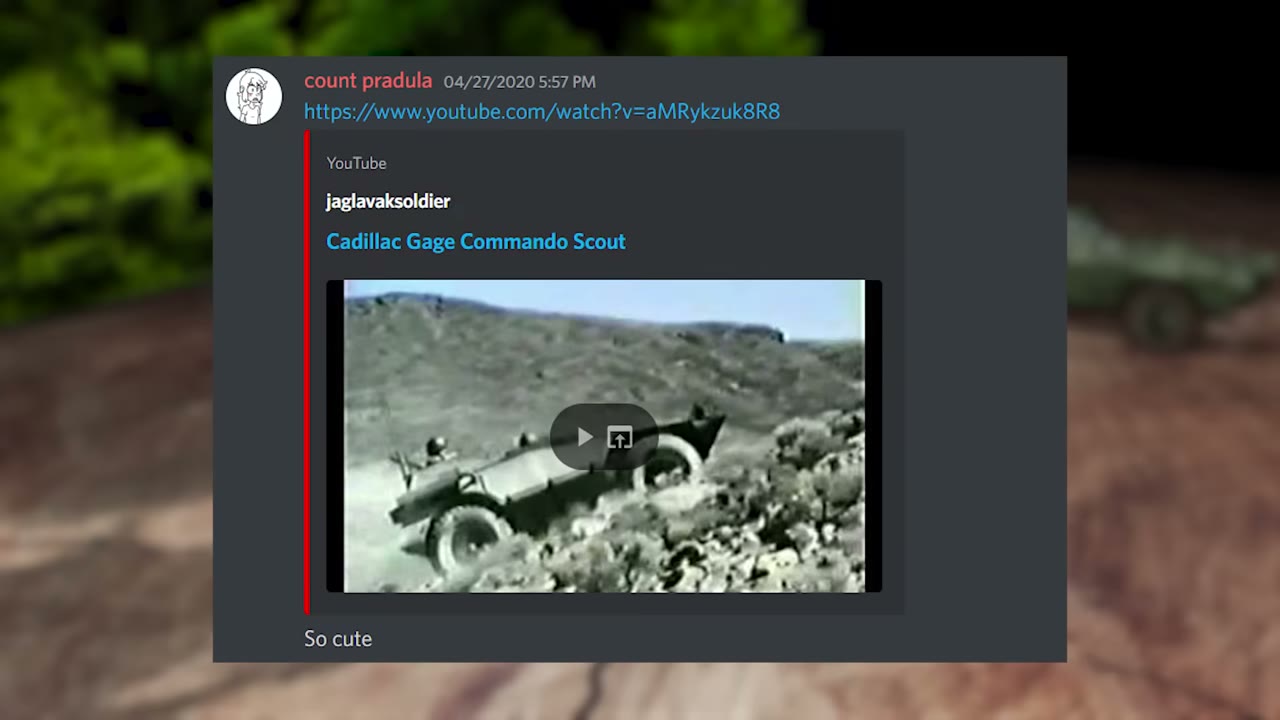
South Vietnam's army became one of the first militaries to adopt the Cadillac Gage Commando, an armored car whose achievements include being called cute by the narrator's wife. In 1963, the U.S. Advanced Research Projects Agency, later rebranded DARPA, bought two brand-new V-100 Commandos and sent them to South Vietnam for evaluation. The 4x4 combat car could carry either two M1919 or M37 .30 caliber machine guns as per the initial table of equipment, but could also be converted for one .30-cal and one .50 cal to bolster firepower. ARVN liked what it saw and began widespread adoption in 1965 via U.S. aid. It was classified the XM706.
2Regional Force Mechanized Platoon: Six Commandos, Truck and Dismounts
A Regional Force Mechanized Platoon fielded six Commandos, a 1-ton truck and two elements of dismounted cavalrymen. The truck was a Dodge M601, a version of the civilian Dodge Power Wagon made for export to foreign militaries. The Commando found one use case in these platoons.
3Commando Unit Cost: $52,875 Versus $280,000 for an M48 Patton
A Cadillac Gage Commando cost $52,875, or $301,000 in 2023 dollars, when Congress was considering sending more gear to South Vietnam just before its collapse. By comparison, an M48A3 Patton tank at the time cost $280,000, equivalent to 1.6 million in 2023. The Commando was far cheaper than the Patton.
4Mechanized Platoons Escort Convoys and Guard 45 Kilometers of Road
One Regional Force Mechanized Platoon could doctrinally provide security to 45 kilometers, or 28 miles, of road. The platoons were mainly for rear area security and maintaining lines of communication, which entailed escorting convoys, clearing and patrolling roads, and acting as mobile guards for bases. In their one U.S. Army unit, about 49% of Commando missions were convoy escort, while 15% were road patrols and 13% were base defense.
5V-100 Presence Lowered Ambush Rates and Raised Convoy Morale
Convoys experienced a much lower ambush rate when the V-100 arrived in theater, according to the assessment of the U.S. 500th Transportation Group, especially in areas where Vietcong convoy ambushes were common. The U.S. also noted that "The mere presence of the V-100 increase[d] the morale of all convoy personnel by its armored appearance, and the quality of its weapon system." It was a big upgrade from a jeep.
6Commandos Reinforce Isolated Outposts and Conduct Small-Scale Attacks
Commando units could reinforce isolated outposts under attack or conduct small-scale attacks themselves, thanks to their small-arms resistance armor, mobility and relative firepower. For this they would ideally be reinforced by one or two infantry platoons, as their dismount strength was limited. This missionset was essentially half of the traditional U.S. Army Military Police purpose, but the Regional Force Mech Platoon lacked other MP duties like holding enemy prisoners of war and law enforcement. In the Regional Force Mech Platoons, troopers also had cavalry designations.
7Corps Tactical Zones Blend Military Command and Civil Administration
Corps commanders in South Vietnam initially appointed the nation's 44 province chiefs, who were nominally colonels in the army. During the war, South Vietnam was split into four corps tactical zones and the capital military district, serving a dual function as both tactical headquarters and civil administration. Under one hierarchy, the corps commanded ARVN operational forces like infantry divisions and brigades. Each province chief controlled a regional force sector charged with territorial defense duties in their provinces. The Regional Force was the province-wide force, while the Popular Force was basically a static militia for defending individual villages. Both types of units would often be placed under the control of a sub-sector, which was under the control of a district chief, nominally a major.
8Each Regional Force Sector Fielded One Mechanized Platoon from 1965
As of 1965, each Regional Force Sector was intended to have one Mechanized Platoon. Each regular Army Armored Cavalry Squadron also had an identical Scout Platoon from 1967, although in practice these armored cars weren't under the Squadron's own control. They were more or less introduced to conduct convoy security missions to free up the bulk of the armored force, which was mounted in M113s, to conduct combat operations.
9Platoon Combat Sections: Two XM706 Armored Cars and Eight Dismounts
From 1965, each combat section at the basic level of the platoon had two XM706 armored cars, the Cadillac Gage Commando. In earlier TO&Es from 1963 they had one Canadian 15-hundredweight armored truck and one Lynx scout car with an unarmed cupola, among many World War II-era vehicles left behind by the British when the French reoccupied Indochina. The armored truck carried the infantry component, but with the Commandos' adoption they were split evenly. Each car was crewed by a Car Leader, one of which was section chief, a gunner for the twin .30 cals, and a Driver. Between them, eight cavalrymen were also carried in each section, including two so-called Chiefs of Cavalry Men, one of which was actually an M1918A2 BAR gunner. The rest included an assistant BAR man and 5 cavalrymen, as well as a single M79 grenade launcher among the section.
10ARVN Rifle Transition: From WWII Garands to M16A1 and M60 by 1971
In 1965, ARVN was still using WWII-era rifles like the Garand. It wouldn't be until 1968 that the new M16A1 started to be issued to South Vietnamese troops. By the 1971 TO&Es, the Garands were replaced by M16s and the BAR by the M60.
11Platoon HQ Section: Command Car, Political Warfare Officer and 60mm Mortar
Each South Vietnamese platoon HQ carried an officer whose job was modeled on a communist political commissar. The political warfare officer served as the assistant platoon leader — and doubled as second-in-command.
The role was almost identical to a communist political officer, copied from Chiang Kai-shek's system, which itself drew on the USSR's in the 1920s. Both South Vietnam and Taiwan were military dictatorships in the mid 60s.
The officer blended morale officer, ideological educator, civil affairs and loyalty enforcer.
The HQ section split into two parts. A command car carried the platoon leader, a gunner for the commando, a driver, a radio operator and an aidman.
The support car, led by the political warfare officer, also fielded a 60mm mortar team: team leader, gunner, loader and ammunition man. A 1-ton M601 truck with a mechanic and mechanic helper rounded it out — a modified civilian truck given mainly as foreign aid in place of the standard American M37.