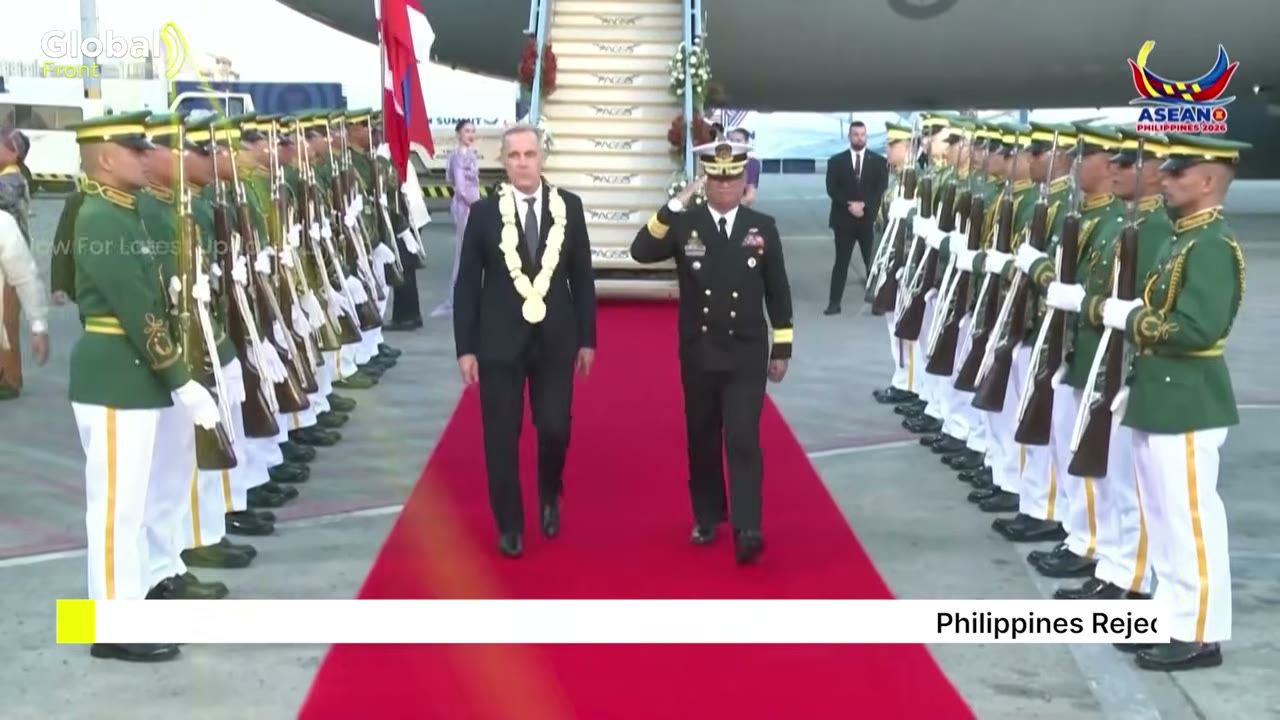
The Philippines told Beijing it has no right to dictate its defense partnerships after China criticized new agreements with Australia and Japan. Manila's defense department defended the deals as sovereign decisions, while China accused Philippine politicians of inviting outside interference in the South China Sea.
1Philippines Rejects China's Right to Dictate Its Defense Partnerships
The Philippines told China it has no right to dictate who Manila allies with, after Beijing attacked its defense deals with Australia and Japan. The Philippine Department of National Defense said Manila will not let Beijing determine how it protects its sovereignty and national interests.
Defense spokesman Arsenio Andolong said: "China has neither the right nor the moral grounds to dictate to the Philippines how and with whom we cooperate to protect our sovereignty and national interests."
The statement, released on November 27, 2026, came less than a day after China's Ministry of Defense criticized a newly signed defense cooperation agreement between the Philippines and Australia. Beijing accused certain Philippine politicians of pursuing personal interests and spreading misleading narratives about China, and criticized Japan for expanding defense cooperation with Manila.
The Philippine government rejected the accusations, saying stronger international partnerships are a legitimate decision for any sovereign state.
2Philippines and Australia Sign Upgraded Defense Cooperation Agreement
The Philippines and Australia signed an upgraded defense cooperation agreement on November 15, 2026, during the ASEAN summit in Manila. Philippine Defense Secretary Gilberto Teodoro Jr. and Australian Ambassador Mark Ennis Brown signed it at a ceremony witnessed by Australian Prime Minister Anthony Albanese.
The deal modernizes the memorandum on defense cooperation signed in 1995 and complements the status-of-forces agreement signed in 2007, which entered into force in 2012. That earlier framework lets Australian military personnel train in the Philippines and Filipino personnel do the same in Australia.
The new agreement is meant to make coordination between the two countries more effective and expand cooperation in several areas.
3Australia and Philippines Expand Maritime Training and Patrol Cooperation
Australia's defense priorities under the new pact include maritime awareness, information sharing, military training, strategic planning and defense infrastructure development, Deputy Prime Minister and Defense Minister Richard Marles said. For the Philippines, the measures could sharpen its ability to coordinate maritime operations and respond to security challenges.
The arrangement could support joint maritime patrols, military exercises, humanitarian aid and disaster relief. Defense Secretary Gilberto Teodoro Jr. said stronger defense ties are essential to enhance the Philippines' deterrence posture, especially where the country exercises its maritime rights and jurisdiction.
The agreement does not provide for a permanent Australian military base in the Philippines.
4Albanese Says Defense Pact Is Not Aimed at Any Country
Australian Prime Minister Anthony Albanese said the defense relationship with the Philippines is not directed against any specific country. Canberra's position is that regional security cooperation should support national sovereignty, international law and stability in the Indo-Pacific.
The agreement creates a more effective framework for the two countries to conduct current and future cooperation, and it does not provide for a permanent Australian military base in the Philippines.
The comments came as Beijing criticized the pact and the wider involvement of outside countries in South China Sea affairs.
5China Accuses Philippine Politicians of Inviting Foreign Interference
China's Ministry of National Defense accused certain Philippine politicians of encouraging foreign interference to strengthen their position against China. Spokesman Senior Colonel Chen Shi made the allegation at a regular briefing on November 26, speaking about growing involvement of countries outside Southeast Asia in South China Sea affairs.
In Beijing's view, such a partnership could increase tensions and make the region's security environment more complex. Chinese authorities maintain their maritime activities are legal and say Beijing will keep acting against what it deems provocative or a violation of its claimed rights.
The criticism reflects China's long-standing resistance to greater involvement by Australia, Japan, the United States and other partners in maritime disputes.
6Manila Says It Needs No Beijing Permission for Defense Ties
Manila said it needs no Beijing permission for its defense ties, after China criticized the Philippines' partnerships. Defense Department spokesman Arsenio Andolong said: "We do not need Beijing's permission regarding our relations with other states, especially in matters of our defense and security."
Andolong accused China of trying to shift responsibility for regional tensions onto other countries while continuing maritime activities Manila considers coercive and contrary to international law.
The Philippine Department of Defense said true regional stability requires respect for other countries' maritime rights, including those established by the United Nations Convention on the Law of the Sea.
7Chinese Vessels Near Philippines Jump From 19 to 48 in a Week
Chinese vessels recorded in controlled areas of the West Philippine Sea jumped from 19 to 48 in a week, the Armed Forces of the Philippines reported after the ASEAN summit. From November 9 to 16, authorities counted 19 Chinese vessels; from November 17 to 23, the number rose to 48.
The latest count included 31 Chinese Coast Guard vessels and 17 People's Liberation Army Navy ships. Retired Admiral Roy Vincent Trinidad, spokesman for the AFP in the West Philippine Sea, highlighted the difference between China's maritime activity during the summit and immediately after it.
Philippine authorities also confirmed tracking a Chinese H-6 strategic bomber near Scarborough Shoal and Luzon Island. The events do not indicate armed confrontation is inevitable, but show continued military and naval activity near areas of strategic importance to the Philippines.
8Manila Frames Defense Partnerships as Response to Chinese Pressure
Philippine officials say the country's growing defense partnerships should be seen against a surge in Chinese vessels in the West Philippine Sea, not as an attempt to provoke confrontation. Manila is increasingly anxious about security challenges facing its maritime authorities.
While the Philippines expands its maritime surveillance capabilities, China has a much larger naval force and coast guard. International defense cooperation gives Manila chances to improve surveillance, training, information sharing and coordination without relying solely on its own resources.
The increase in Chinese vessels spotted has heightened concerns in Manila.
9Japan Signs $27 Million Security Aid Deal With Philippines
Japan signed a security assistance agreement worth about 4.3 billion Japanese yen, roughly 27 million US dollars, with the Philippines on November 9. The aid will give the Philippine Navy a coastal radar system and the Air Force unmanned aerial vehicles for reconnaissance and monitoring.
The project runs under Japan's official security assistance program, which supports partner countries' defense capabilities. For the Philippines, better coastal surveillance will help authorities identify and track maritime activity in its vast archipelagic waters.
For Japan, security cooperation with Manila is tied to protecting important international shipping lanes and maintaining regional stability. Much of Japan's energy imports and trade depend on safe sea routes through Southeast Asian waters.
10China Calls Japan the Real Destroyer of Peace in Asia-Pacific
China accused Japan of using regional security concerns to justify expanding its military influence, and attacked a Japanese defense think-tank report on the South China Sea. Senior Colonel Chen Shi criticized the report published by Japan's National Institute for Defense Studies on November 13, which examined China's strategic interests there, including a possible link between maritime control and a crisis over Taiwan.
Beijing rejected the findings and accused Japanese authorities of using academic research to justify deeper interference in regional maritime affairs. Chen Shi called Japan the real destroyer of peace and tranquility in the Asia-Pacific region.
The remarks showed rising diplomatic tensions between China and Japan. Japan continues to develop defense cooperation with the Philippines.
11Japan Plans to Transfer Decommissioned Destroyers to Philippine Navy
Japan and the Philippines are developing plans to transfer decommissioned Abukuma-class escort destroyers to the Philippine Navy. The two defense ministries have confirmed their intention to hand over the first ship after expected training and maintenance activities are completed.
The Philippines had previously announced plans to receive five ships, though delivery schedules for each still need to be agreed. The transfers could help Manila improve its naval capabilities while strengthening long-term defense relations with Tokyo.
The plan comes on top of Japanese radars and reconnaissance aircraft aid, as Australia and Japan form part of a wider network of countries coordinating security actions.
12Four-Nation Defense Chiefs Meet Regularly on Maritime Security
The defense chiefs of Australia, Japan, the Philippines and the United States have begun meeting regularly on maritime security and military cooperation. Their last confirmed meeting was in Cebu on October 28, 2026, with Philippine Defense Secretary Gilberto Teodoro Jr., Australian Defense Minister Richard Marles, Japanese Defense Minister Shinjiro Koizumi and U.S. Defense Secretary Pete Hegseth.
The four countries reaffirmed concern about the situation in the South China and East China Seas and backed further maritime cooperation and regional security initiatives.
For Beijing, the expanding network represents a significant geopolitical shift. China insists maritime disputes should be resolved mainly through negotiations between the countries directly concerned, and argues outside military forces raise the risk of misunderstandings and confrontation.
13South China Sea Code of Conduct Talks Stir Sovereignty Fears
Talks between China and ASEAN countries on a South China Sea code of conduct have raised fears in Manila that outside military exercises could be restricted. Previous proposals in the negotiations included limits on joint military exercises involving countries outside the region.
Such restrictions could curb the ability of Southeast Asian countries to conduct security activities with international partners. The Philippines insists international defense cooperation is a sovereign right that cannot depend on another state's approval.
From Manila's view, an agreement giving another country influence over its military partnerships could undermine independent foreign and defense policies. The Philippines has repeatedly stressed the importance of preserving freedom in international relations that strengthen national security.
142016 Arbitration Ruling Remains at Heart of Maritime Dispute
A July 12, 2016 international arbitration ruling found China had no legal basis for claims to historical rights to marine resources beyond limits set by the UN Convention on the Law of the Sea. The tribunal did not define sovereignty over disputed territorial objects.
China continues to reject the ruling. The Philippines considers it the fundamental basis of its legal position on the sea.
Australia, Japan and the United States have repeatedly expressed support for international maritime law and the principles reflected in the decision. The dispute remains closely linked to that landmark ruling.
15Philippines and Australia Deepen Ties From 2023 Partnership Onward
The Philippines and Australia elevated their relations to a strategic partnership in September 2023, opening closer cooperation in defense, economic development and regional security. That year, Manila and Canberra held their first joint naval and air patrol in the South China Sea.
Military cooperation expanded through more exercises and training. The Alon exercises in 2025 marked another milestone, showing growing coordination between Australian and Filipino personnel.
China criticized the measures, accusing the Philippines of relying on outside countries. In August 2025, Gilberto Teodoro Jr. and Richard Miles signed a statement of intent to modernize their defense cooperation structure.
16Australia Balances China Trade With Stronger Regional Defense Ties
Australia and the Philippines signed their updated defense agreement in Manila on November 15, completing a goal set at the third defense ministers' meeting in Darwin on August 7, 2026. Canberra maintains important economic relations with China while strengthening defense cooperation with regional partners.
The new agreement may not radically change the region's military posture. Its long-term significance lies in improving coordination, removing administrative obstacles and creating more opportunities for defense cooperation.
More effective maritime monitoring and information sharing could improve the Philippines' understanding of developments in its maritime zones. Closer training could strengthen its preparedness and ability to respond to emergencies.
17Expanding Defense Web Tests Deterrence and Diplomacy Balance
China will likely keep opposing military cooperation it sees as a threat to its strategic interests, and more naval activity could pressure existing diplomatic channels. Manila has repeatedly said it seeks a peaceful resolution of maritime disputes while refusing to cede what it calls its legitimate maritime rights.
China views the Philippines' expansion of defense partnerships as a potential source of instability. The Philippines sees the partnerships as necessary tools to protect sovereignty, strengthen maritime security and maintain regional stability.
As Australia and Japan deepen cooperation with Manila, the South China Sea remains at the center of complex regional security debates.