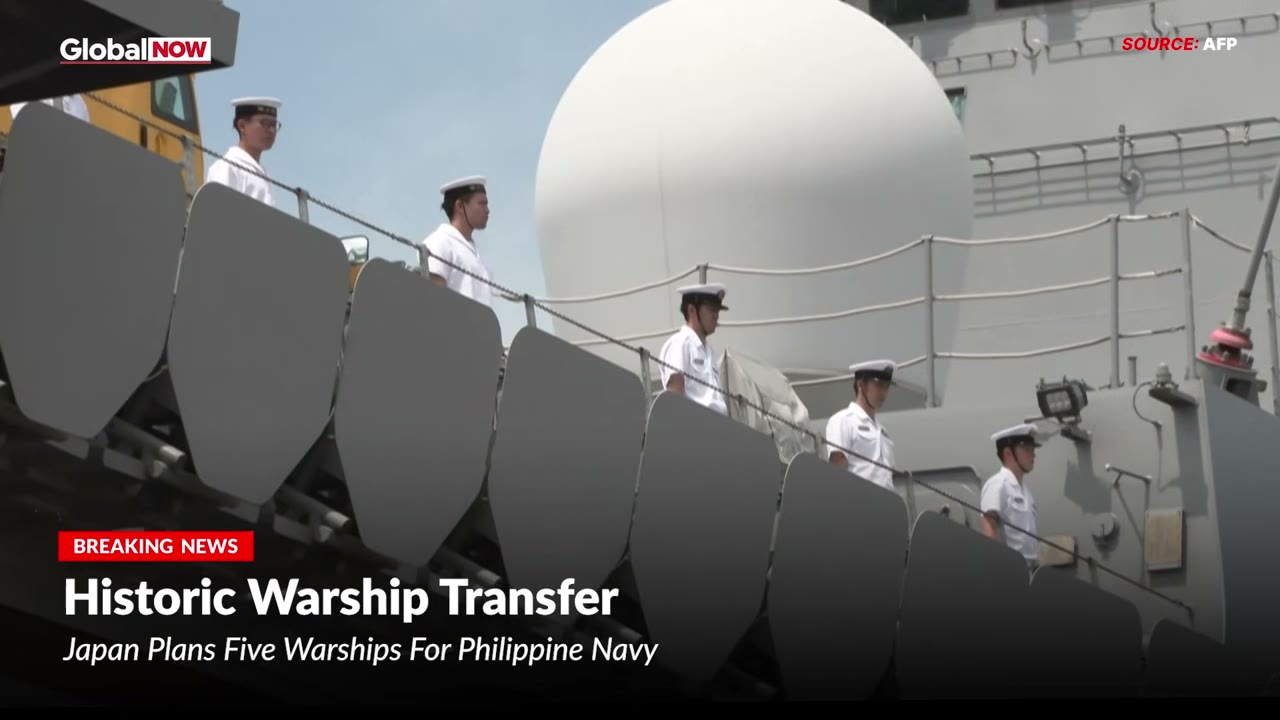
Japan is preparing to hand five Abukuma-class destroyers to the Philippine Navy, starting with the JS Sendai, under loosened defense export rules. The deal deepens Tokyo-Manila security ties and draws Chinese warnings as maritime tensions rise.
1Japan Plans Transfer of Five Warships to the Philippine Navy
Japan is preparing to hand five warships to the Philippine Navy, and the first — the JS Sendai — has reportedly been named for delivery to Manila. The move comes as tensions rise in the West Philippine Sea, where Chinese maritime activity is expanding and the Philippines is accelerating efforts to strengthen its naval capabilities.
The transfer will not happen immediately. Sendai must first complete its service with the Japan Maritime Self-Defense Force before preparations for the handover can be completed.
If it goes through, it could be Japan's first export of armed combat equipment under its revamped defense export regulations — a departure from decades of restrictions.
2Deal Signals Shift in Indo-Pacific Strategic Environment
Five warships are only part of the story. The planned transfer reflects Japan's changing security policy, the Philippines' growing defense partnerships, and a broader transformation of the strategic environment in the Indo-Pacific region.
The significance goes beyond the receipt of five additional ships, according to the reporting.
JS Sendai is the first vessel reportedly set for delivery to Manila.
3Abukuma-Class Destroyer Specifications and Cold War Origins
JS Sendai is an Abukuma-class escort destroyer — one of six built between 1989 and 1993, when Japan was worried about Soviet submarines near its waters. Sendai was commissioned in March 1991.
The ship is about 109 meters long, displaces about 2,000 tons standard, and carries about 120 crew.
The class was designed in the final years of the Cold War for submarine detection, maritime defense and escort operations.
4Aging Destroyers Still Offer Useful Capabilities to Manila
The Abukuma-class ships are no longer Japan's most advanced vessels, but they still carry naval guns, anti-ship missiles, torpedoes, anti-submarine systems and close-in defensive combat capabilities — and could add valuable capability to the Philippine Navy.
The final equipment configuration of the transferred vessels has not been publicly confirmed.
Japan is gradually replacing aging naval platforms with modern frigates.
5Japan Retires Abukuma Ships as Manila Expands Fleet Cheaply
Japan is retiring its Abukuma-class destroyers as it swaps aging platforms for modern frigates with improved surveillance technology, automation and advanced defense systems. For Tokyo, decommissioning the ships is part of an ongoing modernization.
For Manila, the acquisition is a chance to expand its operational fleet without waiting for new vessels to be built.
6Japan Loosens Postwar Restrictions on Military Exports
Japan adopted a pacifist constitution after World War II and kept broad restrictions on exporting military equipment for decades. That approach began to change in 2014, when Tokyo introduced three principles for transferring defense equipment and technology.
On April 21, 2026, Prime Minister Sanae Takaichi's government lifted long-standing restrictions on certain categories of defense equipment. The updated policy lets Japan consider exporting combat-capable military platforms to partners, subject to individual assessments and safeguards.
7Philippines and Australia Benefit From Japan's Export Shift
The Philippines has become one of the main beneficiaries of Japan's defense export shift. Australia has also chosen a modernized version of Japan's Mogami-class frigate for its future navy — a sign of Tokyo's growing ambitions in the international defense industry.
Discussions on transferring Abukuma-class destroyers to the Philippines began to gain momentum in 2025.
8Koizumi and Teodoro Build Bilateral Transfer Framework
Japanese Defense Minister Shinjiro Koizumi visited Manila in May 2026 and met Philippine Secretary of National Defense Gilberto Teodoro Jr. The two agreed to set up a bilateral working group to facilitate defense equipment transfers and support the modernization of the Philippine Armed Forces.
On July 7, Teodoro announced that an agreement in principle had been reached for the Philippines to acquire five Abukuma-class ships.
9Ministers Agree to Pursue Fastest Possible Ship Transfer
The Philippines expects to receive the five Abukuma-class ships in two to three years, according to the delivery timeframe announced with the deal.
On 28 October, Koizumi and Teodoro met again in the Philippines and agreed to strive for the quickest possible transfer after the first ship is decommissioned from Japanese service. In a joint statement, they emphasized cooperation on ship operations, logistical support, human resource development and information sharing.
10Manila Faces Major Crew and Logistics Burden for Five Ships
Crewing five additional warships is a major task: each Abukuma-class ship needs around 120 personnel, so the Philippine Navy may need about 600 trained officers and sailors to operate the full group at strength, according to estimates by the Japan Institute of International Affairs.
Engineers, technicians and maintenance specialists will also be needed. Filipino sailors may train alongside experienced Japanese naval sailors before the handover, and the ships may need modifications to fit Philippine Navy systems.
Manila must also set up reliable supply of spare parts, repairs, technical assistance and infrastructure support.
11No Confirmed Delivery Date for JS Sendai
There is currently no publicly confirmed date for the delivery of JS Sendai, so the Philippines will have to wait before the Japanese vessels become combat-capable under its own command.
Both governments stress long-term operational sustainability — training, maintenance and support — because without it, even a well-equipped warship may spend long periods in maintenance instead of patrolling.
Japan already has a long history of supporting Philippine maritime security.
12Japan's Long Record of Backing Philippine Maritime Security
Japan's support for Philippine maritime security predates the warship deal. Between 2017 and 2018, Tokyo delivered five TC-90 aircraft, helping the Navy strengthen maritime surveillance and reconnaissance.
Japan also provided helicopter components and supported the development of Philippine radar systems. Several large Philippine Coast Guard vessels were built in Japan with Japanese financial assistance, including the 97-meter patrol vessel BRP Teresa Magbanua.
13Combat Warships Mark New Chapter in Japan-Philippines Ties
The Abukuma-class ships are combat maritime platforms built for military operations — a different dimension from the coast guard patrol vessels Japan has supplied before. Japanese-built vessels are often involved in sensitive maritime incidents with Chinese coast guard ships in the West Philippine Sea.
The acquisition marks another milestone in the Philippines' transition to a more powerful external defense force. For decades, the Philippine Navy operated an outdated fleet.
14Philippine Navy Modernizes From World War II-Era Fleet
The Philippine Navy once sailed ships built during or shortly after World War II. For years, the country's military focused on internal security, leaving its maritime defense relatively underdeveloped.
That began to change in the 2010s. The Philippines received decommissioned US Coast Guard cutters, including the BRP Gregorio del Pilar, which joined the navy in 2011.
Manila then expanded modernization by buying South Korean-made warships. The commissioning of the BRP Jose Rizal, BRP Antonio Luna, BRP Miguel Malvar and BRP Diego Silang helped build a more modern fleet.
15Five Destroyers Could Boost Patrols Across 7,000 Islands
Five Japanese escort destroyers could accelerate the Philippine Navy's transformation. The country is an archipelago of over 7,000 islands, and keeping an effective maritime presence there remains an extremely challenging task.
The additional ships would let the navy conduct more frequent patrols, improve maritime monitoring and hold a stronger presence in strategically important waters.
Submarine detection is another area where the Japanese ships could contribute significantly. China has a significant submarine fleet, while the Philippines continues to develop its own underwater surveillance and anti-submarine warfare capabilities.
16Japan Signs 4.3 Billion Yen Security Aid Deal With Manila
Japan and the Philippines signed a security assistance agreement worth 4.3 billion yen, about 27 million US dollars, on November 9, 2026.
The package provides a coastal radar system for the Philippine Navy and additional unmanned surveillance aircraft for the Philippine Air Force.
The two countries also signed a mutual access agreement, which facilitates military activities and joint exercises on each other's territory. Another logistical support agreement went into effect in July 2026.
17China Warns Japan Against Interference in Sea Disputes
Chinese Defense Ministry spokesman Chen J. called on Japan to stop what Beijing called interference in regional maritime disputes, accusing Tokyo of inciting hostilities around the South China Sea.
The statement came on November 26. China insists Japan is not a party to maritime disputes and should refrain from interference.
Japan's Foreign Ministry and other agencies have expressed strong opposition to Japan's increased involvement in South China Sea security.
18Philippine Military Tracks 48 Chinese Vessels in One Week
The Philippine military recorded 48 Chinese naval and coast guard vessels near four maritime sites between November 17 and 23 — up from 19 the previous week.
It also confirmed tracking a Chinese H-6 strategic bomber that approached approximately 45 nautical miles off the Philippine coast.
Officials said there was no indication the plane was preparing an operation to strike targets against the Philippines.
19Next Steps: Decommissioning, Training and Picking Four Ships
Attention now turns to the decommissioning schedule for JS Sendai, setting up Philippine naval training programs, and identifying the four other ships scheduled for transfer.
For Manila, the recent events underscore the importance of accelerating military modernization while strengthening cooperation with international partners.
The agreement will not change the balance of naval power in the South China Sea instantly, but it could strengthen the Philippines' naval capabilities, deepen Tokyo-Manila cooperation and set a precedent for future Japanese defense equipment transfers.
20Japan's Warship Transfer Sets Precedent for Future Exports
After decades of strict restrictions on exporting military equipment, Japan is moving toward a more active role in regional security.
For the Philippines, the expected arrival of JS Sendai means more than receiving another warship. It symbolizes the growth of international defense partnerships and a long-term commitment to strengthening the country's ability to protect its maritime interests.
The transfer may still be many years away, but its strategic importance is already becoming increasingly clear throughout the Indo-Pacific.