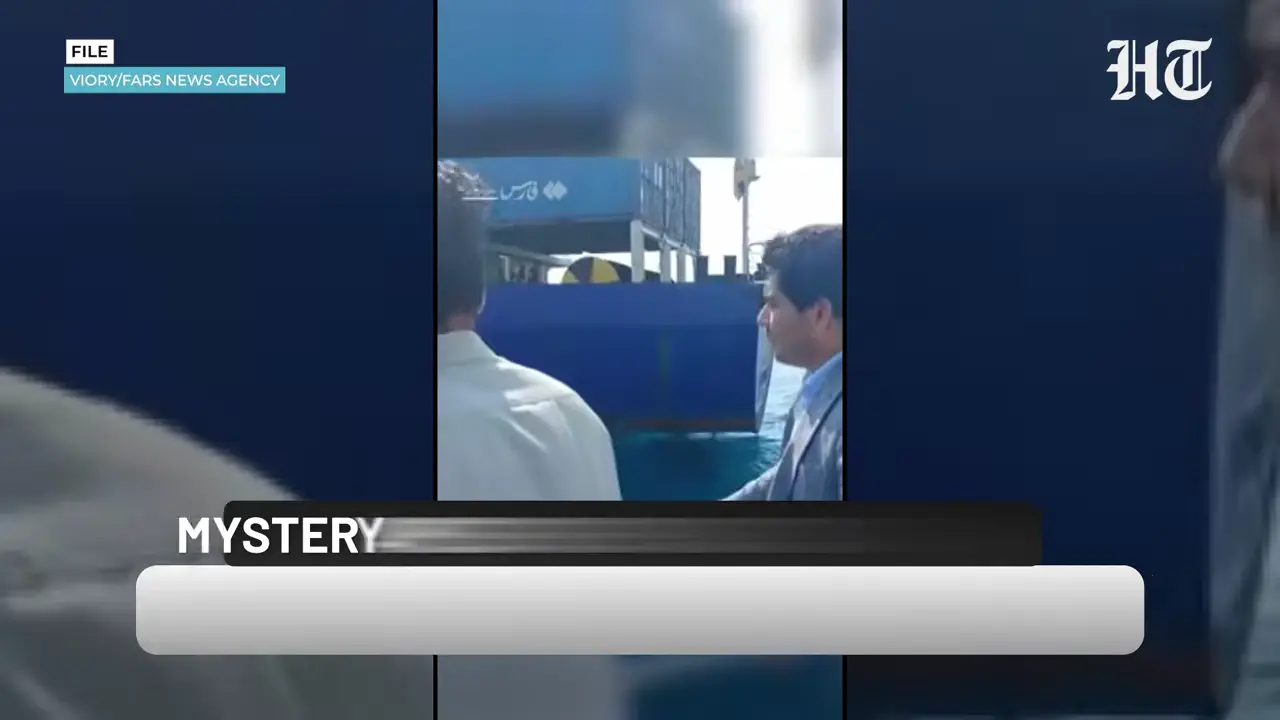
An unidentified armed group seized a cargo vessel off Yemen, prompting a UKMTO warning. Iran's IRGC reported tanker explosions in the Strait of Hormuz, while US forces disabled a ship in the Gulf of Oman. Iran also unveiled a new twin-missile launcher and reportedly developed hybrid missiles.
1Armed Group Seizes Cargo Ship Off Yemen, UKMTO Issues Warning
An unidentified armed group has seized a cargo ship about 64 nautical miles southwest of Yemen's Balhath, the UK Maritime Trade Operations said. Armed individuals reportedly boarded the vessel, and the UKMTO issued a warning on November 28th telling ships in the region to stay alert and report suspicious activity immediately.
The seizure has raised fresh concerns that maritime threats could spread beyond the Strait of Hormuz into the Gulf of Aden, a strategically vital shipping corridor. The Times of Israel reported the boarding, and questions remain over who ordered the hijacking and what the attackers wanted.
The UKMTO urged all vessels navigating surrounding waters to proceed with caution. Iran's IRGC Navy also claimed that two oil tankers caught fire in the Strait of Hormuz, adding to regional tensions.
2Iran's IRGC Claims Two Oil Tankers Caught Fire in Strait of Hormuz
Two oil tankers caught fire after separate explosions in the Strait of Hormuz, Iran's IRGC Navy claimed, according to Iranian state media reports on November 27th. The IRGC said both vessels had used unauthorized routes to cross the strategic waterway.
One tanker struck a naval mine near the entrance to Quesa port, triggering an explosion, the IRGC claimed. Another allegedly exploded and caught fire while traveling along an unauthorized route in the eastern Strait of Hormuz.
The Iranian Navy accused both vessels of switching off their tracking systems to cross without being detected. The US Central Command also issued a separate statement.
3US Forces Disable Commercial Vessel in Gulf of Oman
American forces disabled a commercial vessel in the Gulf of Oman on November 26th, US Central Command said, after the ship tried to breach the US blockade of Iranian ports. The Palau-flagged Pacific Archer had departed from Iran's Band Abbas port before US forces intercepted it.
CENTCOM said US forces struck the ship's stern with precision munitions after issuing multiple warnings to its crew. The strike disabled the vessel's propulsion system, but all crew members remained unharmed, according to CENTCOM.
CENTCOM claimed its forces have disabled six ships and redirected another 158 vessels since the blockade began. Iran's Mehr news agency shared an AI-generated video threatening US tech companies.
4Iran's Mehr News Agency Shares AI Video Threatening US Tech Companies
Iran's Mehr news agency shared an AI-generated video threatening Amazon, Microsoft and Elon Musk's SpaceX with drone attacks, explosions and fires at their headquarters. The clip was posted on Telegram on November 26th.
The video accused the companies of supporting the war against Iran, which it said began in February, and demanded reparations and repentance, threatening destruction if the demands were not met. Mehr's accompanying post cited the February bombing of an elementary school in Minab, which reports said killed 175 people, most of them children.
A preliminary military investigation found the United States responsible for the strike, according to the report. Mehr also accused the companies of secretly cooperating with American and Israeli military units.
5Iran's IRGC Unveils New Twin-Missile Launcher
Iran's Islamic Revolutionary Guard Corps unveiled a new missile launcher on November 21st that carries two liquid-fueled ballistic missiles on a single platform instead of the usual one, according to Defense Security Asia. The twin configuration could let Iran fire more missiles using fewer launchers, increasing its ability to conduct larger salvos without proportionately expanding its launcher fleet.
However, the launcher's ability to fire both missiles simultaneously has not been publicly demonstrated, leaving questions about its actual combat performance. IRGC chief Ahmad Bahiti and aerospace force commander Majid Musavi were seen inspecting the system.
"What the enemies have faced is only the beginning," Bahiti said, "and you will witness their humiliation and their immense helplessness."
6Iran Highlights Missile Guidance and Twin-Launcher Limits
Iran has not disclosed how many twin missile launchers it possesses, nor confirmed whether the newly showcased system has been formally inducted into operational military service. Iran also highlighted the missile's trajectory control and guidance capabilities, suggesting the system is designed for greater control over its flight path and better ability to reach designated targets.
Iran has previously reported deploying a twin launcher configuration for solid-fuel ballistic missiles, indicating the latest Resvan system is not its first attempt to increase capacity through multi-missile platforms.
Tehran has also claimed its missile systems can operate without GPS-based navigation, potentially keeping guidance capabilities even if satellite signals are disrupted or denied during a conflict.
7Iran Develops New Ballistic Missile Variants to Evade Interception
With no peace deal in sight and reports that the United States and Israel are weighing fresh strikes, Iran is developing new ballistic missile variants to improve accuracy and evade interception. Iran International reported details of the program on November 25th, citing assessments of its evolving weapons capabilities.
The Institute for the Study of War and the Critical Threats Project said the new missiles appeared designed to make interception more difficult, potentially complicating Israeli and US air defense efforts. Researchers said Iran developed hybrid missiles by combining different propulsion systems and warhead technologies, and the variants could be manufactured with minimal changes to Iran's existing supply chain.
ISW said the scale of Iran's remaining missile stockpiles and production capacity remained unclear after US-Israeli strikes on Iranian facilities. The report said the economic costs of the US blockade were becoming increasingly unbearable for Tehran, and Iranian officials were reportedly weighing attacks on US regional assets involved in enforcing the blockade, as well as sending oil tankers through it.