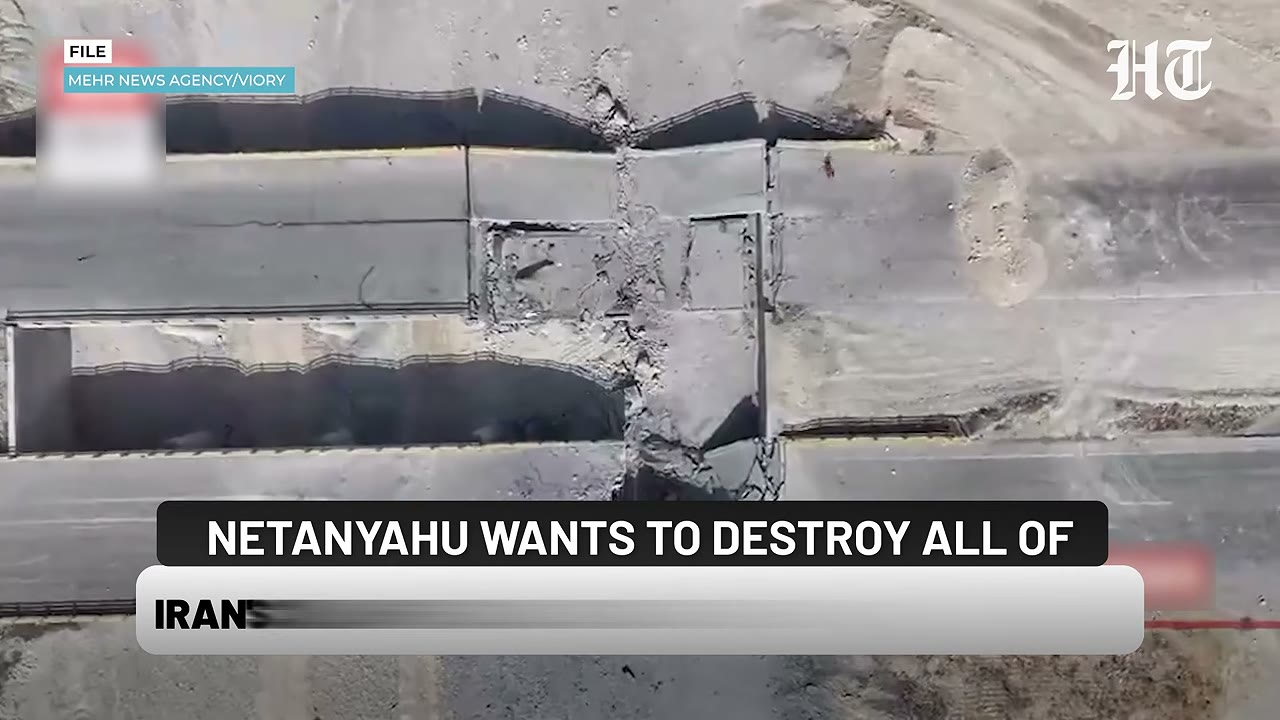
Israeli PM Netanyahu reportedly plans to strike Iran's civilian infrastructure, including water and power grids, with officials calling it 'crazy'. Iran unveils a new twin-missile launcher and develops ballistic missile variants to evade interception, as US-Israel weigh fresh strikes amid a blockade.
1Netanyahu Reportedly Plans to Strike Iran's Civilian Infrastructure
Benjamin Netanyahu is reportedly weighing a plan to strike Iran's water systems and power grids — a campaign one Israeli official called "crazy." The proposed strikes would go beyond nuclear sites and hit civilian infrastructure, including energy facilities and oil installations, according to a report cited by Israeli officials.
A senior Israeli official said the plan aimed to leave Iran poorer and significantly reduce the country's ability to function. Another warned the strikes could disrupt essential services and set Iran's development back by decades.
The campaign would also seek to restrict Iran's ability to rebuild its ballistic missile program and to advance its nuclear program. Senior Israeli military and Mossad commanders reportedly backed the proposal, describing it as an untried option.
One official called the proposed campaign crazy and warned that Israel was preparing to take an extremely dangerous step.
2Iran's IRGC Unveils New Twin-Missile Launcher
Iran's Islamic Revolutionary Guard Corps unveiled a missile launcher that carries two missiles on a single platform instead of the usual one, state-linked reporting said on November 21.
The system reportedly holds two liquid-fuel missiles. The configuration could let Iran fire more missiles using fewer launchers, increasing its ability to conduct larger salvos without proportionately expanding its launcher fleet.
Whether it can fire both missiles simultaneously has not been publicly demonstrated, leaving questions about its combat performance. IRGC chief Ahmad Bahiti and aerospace force commander Majid Musavi inspected the system.
"What the enemies have faced is only the beginning," Bahiti said. Iran has not disclosed how many twin launchers it possesses or whether the system has been formally inducted into operational service.
3Iran Develops New Ballistic Missile Variants to Evade Interception
Iran is developing new ballistic missile variants designed to make interception harder, as the United States and Israel reportedly weigh fresh strikes with no peace deal in sight.
Iran International reported details of the program on November 25, citing assessments of Iran's evolving weapons capabilities. The Institute for the Study of War and the Critical Threats Project said the new missiles appeared designed to complicate efforts by Israeli and US air defense systems.
Researchers said Iran built hybrid missiles by combining different propulsion systems and warhead technologies to improve existing weapons. The variants could reportedly be manufactured with minimal changes to Iran's existing industrial supply chain, letting Tehran adapt its arsenal.
ISW said the scale of Iran's remaining missile stockpiles and production capacity remained unclear following US-Israeli strikes on Iranian facilities.
4Iran Weighs Attacks on US Assets and Challenges Blockade
Iranian officials are reportedly weighing attacks on US regional assets involved in enforcing a blockade, as the economic costs of that blockade become increasingly unbearable for Tehran.
Iran was also considering sending oil tankers through the US blockade to challenge the restrictions and resume shipments, according to the report.
Researchers said Iran had developed hybrid missiles by combining different propulsion systems and warhead technologies to improve its existing weapons. The new variants could reportedly be manufactured with minimal changes to Iran's existing industrial supply chain.
ISW said the scale of Iran's remaining missile stockpiles and production capacity remained unclear following US-Israeli strikes on Iranian facilities.
5Iranian Lawmaker Declares Era of Sanctions and Blockades Over
An Iranian lawmaker declared that the era of sanctions and blockades is over, arguing that countries are no longer willing to accept such measures.
Ibrahim Aisi said countries were pushing back against sanctions and blockades by expanding cooperation and developing alternative economic and political partnerships.
Responding to what was described as the economist's axis of malice cover, Aisi claimed a new world order was emerging and challenging the existing global balance. He also cited what he described as the West's failures.