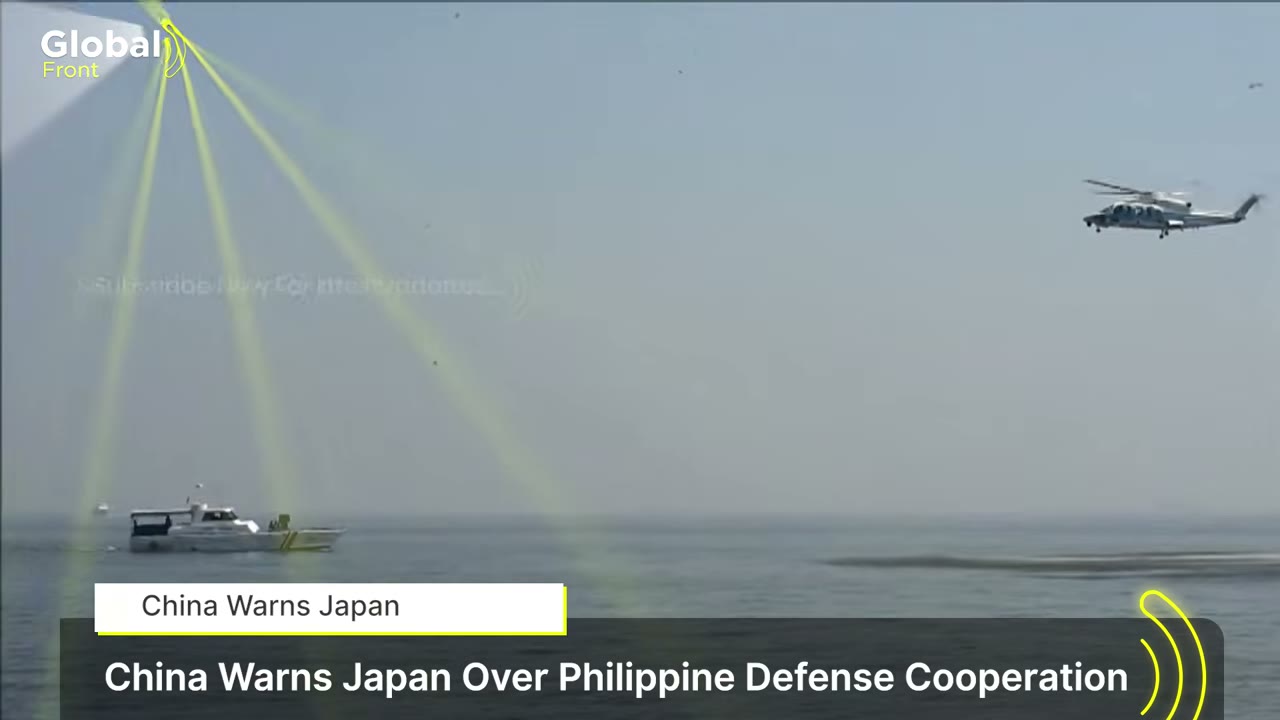
China has accused Japan of interfering in South China Sea disputes and inflaming tensions, after Tokyo signed a $27 million security assistance package with the Philippines. Beijing's warning comes as Chinese vessels near Philippine features rose from 19 to 48 in a week, deepening a wider geopolitical standoff.
1China Warns Japan Over Military Involvement in South China Sea
China warned Japan to stay out of the South China Sea, accusing Tokyo of interfering in regional maritime disputes and inciting confrontation.
The warning came on November 26, 2026, weeks after Japan announced a major security assistance package for the Philippines. Beijing's Ministry of National Defense spokesman, Senior Colonel Chen Shi, said Japan is not a direct party to the disputes and has no right to intervene.
He accused the Japanese government of exaggerating external security threats to justify military expansion and stronger exclusive regional military groups. The warning lands amid rising tensions between Chinese and Philippine vessels in disputed waters, and growing military cooperation between Manila, Tokyo, Washington and Canberra.
2Beijing Rejects Japan's 'China Security Report 2027' as Biased
China rejected Japan's "China Security Report 2027" as biased, saying the defense study distorts Chinese naval operations.
Chen Shi said that under the guise of academic research, the report openly justifies Japan's interference in South China Sea affairs and inflames tensions in the Asia-Pacific. The report was released on November 13 by Japan's National Institute for Defense Studies and examines China's maritime activities and the strategic implications of its expanding naval capabilities.
Chinese authorities accused Japan of using security concerns as an excuse to move away from a traditionally defensive military posture.
3Japan Signs $27 Million Security Assistance Deal With Philippines
Japan and the Philippines signed a security assistance agreement worth about $27 million — 4.3 billion Japanese yen, or roughly 1.72 billion Philippine pesos.
The deal was signed in Manila on November 9 by Philippine Foreign Secretary Maria Teresa Lazaro and Japanese Ambassador to the Philippines Katsuro Kitagawa. Japan will give the Philippine Navy a coastal radar surveillance system, while the Philippine Air Force receives unmanned aerial vehicles for monitoring and reconnaissance.
Beijing's warning focused on this rapid growth in Japan-Philippines defense relations, calling the package a significant development in Japan's security assistance policy.
4Radar and Drones to Boost Philippine Maritime Surveillance
The $27 million package marks the first transfer of equipment classified as defense-related under Tokyo's official security assistance program.
For the Philippines, the added surveillance could significantly improve its ability to monitor maritime activity, identify approaching vessels and gather intelligence in strategically important waters. For Japan, the agreement reflects a growing realization that security in the South China Sea is closely linked to its own national and economic interests.
Beijing sees the deal differently and has pushed back.
5China Demands Japan Stop Fanning Flames in South China Sea
China demanded Japan "stop fanning the flames" on the South China Sea issue, issuing a direct warning to Tokyo.
Chen Shi said China insists that external military intervention complicates maritime disputes, which should be resolved through negotiations between the countries directly concerned. Beijing also accused Japan of supplying military equipment to countries in the region under the pretext of strengthening security, which it says contributes to greater regional instability.
The demand came as Beijing pushed back on Japan's deepening defense ties with the Philippines.
6Marcos and Takaichi Reaffirm Defense Ties at ASEAN Summit
Philippine President Ferdinand Marcos Jr. and Japanese Prime Minister Sanae Takaichi reaffirmed their commitment to strengthening bilateral relations at a November 16 meeting on the sidelines of the ASEAN Summit.
The two leaders discussed their comprehensive strategic partnership, challenges to regional security and expanding defense cooperation. Marcos expressed gratitude for Japan's continued security assistance, including the latest equipment package worth several billion yen.
Takaichi emphasized closer cooperation with the Philippines, reflecting Tokyo's strategy of strengthening ties with Indo-Pacific partners. Their talks covered the East China and South China Seas and trilateral cooperation with the United States.
7Philippine Military Reports Chinese Ships Jump From 19 to 48
Forty-eight Chinese Navy and Coast Guard ships were spotted near four key maritime features from November 17 to 23 — up from 19 vessels recorded between November 9 and 16.
Retired Rear Admiral Voy Vincent Trinidad, spokesman for the Philippine military in the West Philippine Sea, released the figures. The increase raised questions about China's maritime activities after a temporary decrease during the ASEAN summit.
Trinidad said the numbers alone do not indicate Beijing's intentions, but they show the continued scale of China's maritime activity in areas closely controlled by Philippine authorities. For Manila, the data underscores the need for modern surveillance equipment.
8Japan's Aid Addresses Philippines' Archipelagic Surveillance Gaps
Japan's aid could help the Philippines cover a maritime territory spread across more than 7,000 islands.
Coastal radar systems let the military detect and track vessels, while airborne surveillance platforms can gather information from areas that are hard to monitor through conventional patrols. These capabilities matter for an archipelagic country surrounded by strategically important sea lanes.
Japan's involvement, however, goes far beyond supplying surveillance equipment.
9Japan and Philippines Expand Military Pacts Beyond Equipment
Japan and the Philippines have already deepened military cooperation through a mutual access agreement that creates a base for military presence and facilitates joint training.
Their defense relationship has also expanded with a mutual logistics agreement, allowing closer logistical cooperation between the armed forces.
The pacts show how far ties have moved beyond equipment transfers, as Tokyo builds a wider security footprint with Manila.
10Four Nations Plan Joint Coordination Center in Philippines
Japan, Australia, the Philippines and the United States announced plans to establish a joint coordination center in the Philippines.
In a joint statement on November 10, the four countries outlined plans to improve defense coordination, align security investments, expand joint exercises and strengthen the Philippines' ability to defend its archipelago.
China has repeatedly criticized such arrangements, arguing that smaller military groups could deepen divisions in the Asia-Pacific. The participating countries insist cooperation is necessary to strengthen deterrence, improve maritime security and prevent unilateral changes to the regional status quo through force or coercion.
11Japan's Economic Dependence on South China Sea Sea Lanes
Japan does not claim territory in the South China Sea, yet it depends heavily on the region's sea lanes for energy supplies, international trade and commercial shipping.
Any significant disruption to those waterways could have serious economic consequences for Japan and other Asian economies. Tokyo also has its own territorial dispute with Beijing in the East China Sea, where Chinese government vessels regularly operate near the Senkaku Islands, which China calls the Diaoyu Islands.
Together, the disputes have fueled Japan's growing concerns about Chinese military and coast guard activity in the Indo-Pacific.
12China Defends Military Exercises Around Taiwan and Western Pacific
China is defending large-scale naval operations in the western Pacific and around Taiwan, conducted in late October and early November.
Beijing insists the operations are legitimate measures to protect national sovereignty and territorial integrity. Taiwanese authorities have expressed concern about the growing scale of China's military pressure and its implications for regional security.
The drills add another layer of tension as the diplomatic standoff with Tokyo plays out, with Taiwan and Japan's southwestern islands sitting close to the operations.
13Competing Claims and 2016 Arbitration Ruling at Dispute's Core
An international tribunal ruled in 2016 that China had no legal basis for its sweeping claims inside the "nine-dash line" — and Beijing still rejects that decision. The July 12, 2016 ruling came in a case brought by the Philippines under the UN Convention on the Law of the Sea. The court found China had no right to historical resource claims within the line beyond what the convention allows, and said certain Chinese actions violated Philippine sovereign rights.
Beijing rejected the verdict and insists it is not binding. Manila treats it as a fundamental part of its maritime position.
China claims sovereignty over numerous islands and features in the sea and asserts broad maritime rights across the region. The Philippines, Vietnam, Malaysia, Brunei and Taiwan all hold their own competing claims or interests.
The dispute has produced repeated clashes near strategic locations, including Scarborough Shoal and Second Thomas Shoal, known in the Philippines as Ayunyan Reef.
14Japan's Aid and China's Warning Shape Future of Maritime Standoff
Japan is expanding security assistance to the Philippines, and China has responded with a diplomatic warning against Tokyo's involvement. The aid is another step in Manila's push to strengthen its maritime monitoring and defense capabilities.
Beijing's warning signals growing opposition to the Philippines' expanded security ties with Japan and other partners. Tokyo and Manila are pressing ahead with their cooperation anyway.
The open question: whether stronger regional defense partnerships deter dangerous clashes at sea, or push the region into a more competitive security environment.
Chinese ships maintain a significant presence, Japan keeps expanding its assistance, and the Philippines deepens cooperation with international partners. Beijing wants Tokyo out of maritime disputes; Japan's growing commitments suggest it links stability in these waters to its own strategic interests. Strengthening the Philippines' ability to control and protect its maritime interests remains a national priority.