A countdown of the ten most advanced military helicopters in the Russian Aerospace Forces, from the light Kazan Ansat to the Ka-52M Alligator. Each entry covers role, speed, range, weight and weapons, with the Ka-52M ranked first for its ejection seats and long-range missiles.
1Kazan Ansat ranks 10th as light multirole scout helicopter
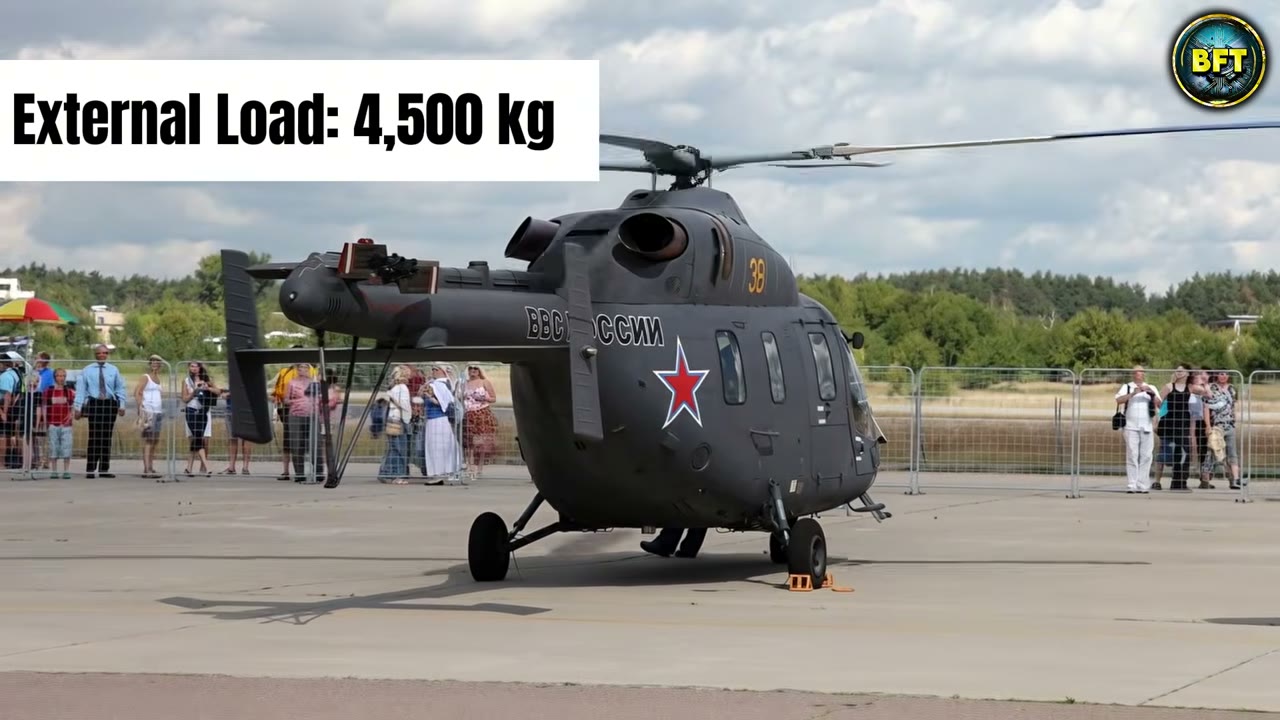
The Kazan Ansat, a twin-engine helicopter with just 630 horsepower per engine, opens a ranking of Russia's most advanced military helicopters at number 10. It is built to work in extreme conditions and can reach 275 kilometers per hour, with a range of about 505 kilometers and a ceiling of 5,500 meters. Fully loaded, it weighs about 3,600 kilograms.
Its roles include pilot training, medical evacuation, VIP transportation and tactical reconnaissance. Modern digital systems keep it stable even during fire maneuvers or flights in difficult mountain conditions.
Think of it as a nimble fleet scout: it appears unnoticed, performs a critical task, and disappears before the enemy realizes what happened.
2Mi-14 amphibious helicopter ranks 9th as submarine hunter
The Mi-14 is a helicopter that lands directly on raging ocean waves — not as an emergency, but as routine. It ranks ninth.
Russian engineers took the robust design of a transport helicopter, added a sealed fuselage, inflatable floats and retractable landing gear. Its mission is to hunt submarines hiding beneath the sea surface.
With full combat equipment it weighs about 14,000 kilograms. Two turboshaft engines push it to 230 kilometers per hour and more than 800 kilometers without refueling, and it can stay airborne for over four hours.
Inside are a submersible sonar station, magnetic anomaly detectors and a compartment for torpedoes and depth charges.
3Kamov Ka-27 ranks 8th with coaxial rotor for shipboard sub hunting
Look at the tail of the Kamov Ka-27 and something is missing: there is no tail rotor at all. Instead, two main propellers sit one above the other, rotating in opposite directions. The coaxial design ranks eighth.
Kamov's layout gives the helicopter stability and power in high winds, and makes it short enough to fit on the tiny decks of military destroyers and cruisers.
With a maximum take-off weight of around 12,000 kilograms, it reaches speeds of up to 270 kilometers per hour and has a range of 900 kilometers. It can climb to 5,000 meters without losing balance.
Its main task is to track modern high-speed submarines and destroy them before they can launch missiles at the fleet. It carries submersible sonar systems, radar and torpedoes.
4Mi-8AMTSh Terminator ranks 7th as armored troop transport gunship
Soldiers call the Mi-8AMTSh the "Terminator," and it ranks seventh. Russian engineers took the classic Mi-8 transport base and turned it into what the ranking describes as a flying fortress.
Thick armor surrounds the cockpit and vital engine components to protect the crew from ground fire. High-tech target tracking systems, night vision devices and mounts for heavy weapons on both sides were added.
It weighs up to 13,000 kilograms and flies at up to 250 kilometers per hour, with a maximum range of 610 kilometers. It can carry 36 fully equipped soldiers into the combat zone or up to 4,000 kilograms of cargo in its cabin.
Its weapons include unguided 80mm rocket pods, 23mm cannons and anti-tank guided missiles capable of destroying armored vehicles from kilometers away.
5Mi-24P Hind ranks 6th as fast cannon-armed flying tank
The Mi-24P carries a 30mm twin-barreled cannon on the side of its fuselage that fires armor-piercing shells at 2,600 rounds per minute. It ranks sixth.
The letter "P" stands for "Cannon," marking its main weapon. Unlike other versions with a machine gun in the nose, this variant mounts the massive gun on the fuselage side.
Two turboshaft engines give it a top speed of 335 kilometers per hour, making it one of the fastest attack helicopters in the world. It weighs about 11,500 kilograms fully loaded and has a combat radius of 450 kilometers.
It can carry eight fully equipped fighters in its armored belly while destroying enemy tanks with guided missiles from outside. Enemy soldiers during the Cold War called it the "flying tank."
6Mi-26T2V ranks 5th as world's largest production helicopter
The Mi-26T2V weighs 28,000 kilograms empty, and its maximum take-off weight reaches 56,000 kilograms. It ranks fifth and is described as the largest and most powerful production helicopter on the planet.
Two engines of over 11,000 horsepower each let it lift 20,000 kilograms of cargo in its fuselage or on an external suspension — an armored personnel carrier, a full-size fire truck, or even another helicopter.
Despite its size, it reaches speeds of up to 295 kilometers per hour and has a range of 800 kilometers. The upgraded T2V variant has a glass cockpit, night vision capabilities and an automated heat-seeking missile defense system.
Flights on the giant previously required a large crew; now most of the complex work is performed by modern computers.
7Mi-35M ranks 4th as modernized night-attack upgrade of Mi-24
The Mi-35M is a modernized evolution of the Mi-24, rebuilt for night combat. It ranks fourth.
Engineers cut excess weight by replacing the heavy retractable landing gear with a fixed one, shortened the wings, and installed a new fiberglass main rotor system with an X-shaped tail rotor. The changes made it lighter, quieter and more responsive in low-altitude maneuvers.
With a maximum payload of up to 11,500 kilograms, it has a top speed of 310 kilometers per hour and a range of 450 kilometers. A 23mm twin-barreled automatic cannon sits in a movable nose turret.
Optoelectronic targeting systems, thermal imagers and laser rangefinders let pilots detect and destroy targets in complete darkness.
8Mi-38T ranks 3rd as new composite mid-range transport
For decades the Russian Air Force had a gap between the medium-class Mi-8 series and the super-heavy Mi-26. The Mi-38T, ranked third, was built to fill it.
The mid-range transport helicopter uses modern composite materials, making it lighter, stronger and stealthier than older models. Its maximum take-off weight is around 15,600 kilograms, and it can carry up to 5,000 kilograms of internal cargo or 40 fully equipped fighters.
Two turboshaft engines of 2,800 horsepower each give it a speed of 300 kilometers per hour and a flight range of up to 1,200 kilometers — enough to deliver troops deep into enemy territory without landing for refueling.
It operates from minus 50°C in the Arctic tundra to plus 50°C in hot deserts.
9Mi-28NM Night Hunter ranks 2nd with mast-mounted radar
A strange ball sits directly above the main rotor blades of the Mi-28NM. It is a 360-degree radar system, and it ranks second.
The radar lets the pilot hide the entire helicopter body behind a hill or tree line, expose only the radar above the ground, scan the battlefield and launch missiles without exposing the aircraft to enemy fire.
At a full weight of around 12,100 kilograms, it reaches speeds of up to 320 kilometers per hour and has a range of 450 kilometers. Dual controls mean both the pilot and weapons operator can fly the aircraft if one is injured.
It carries a 30mm nose cannon and laser-guided Vykhr anti-tank missiles capable of destroying moving tanks from over 10 kilometers. Reinforced armor is built to withstand direct hits from 23mm anti-aircraft guns.
10Kamov Ka-52M Alligator ranks 1st with rocket ejection seats
The Ka-52M Alligator is the only combat helicopter in the world whose pilots eject on rocket-powered seats. Explosive charges blow off the main rotor blades in a split second, then rocket seats fire both pilots clear of the aircraft.
Known as the Alligator, the modernized Ka-52M ranks first among the most advanced combat aircraft in the Russian Air Force. It carries a full weight of around 12,200 kg, flies at up to 300 km/h and has a range of 460 km.
Like its predecessor in eighth place, it uses a coaxial propeller system with no tail rotor. That design lets it perform sideslips, backward flight and sharp turns that would crash almost any other helicopter, according to the ranking.
The M variant adds an advanced radar with an active phased array antenna, thermal imaging sensors and long-range guided missiles such as the LM-305, which can hit targets at over 14 km. It can operate in strong winds, icing conditions and complete darkness.
“This is the only combat helicopter in the world equipped with a pilot ejection system using rocket engines,” the ranking states.