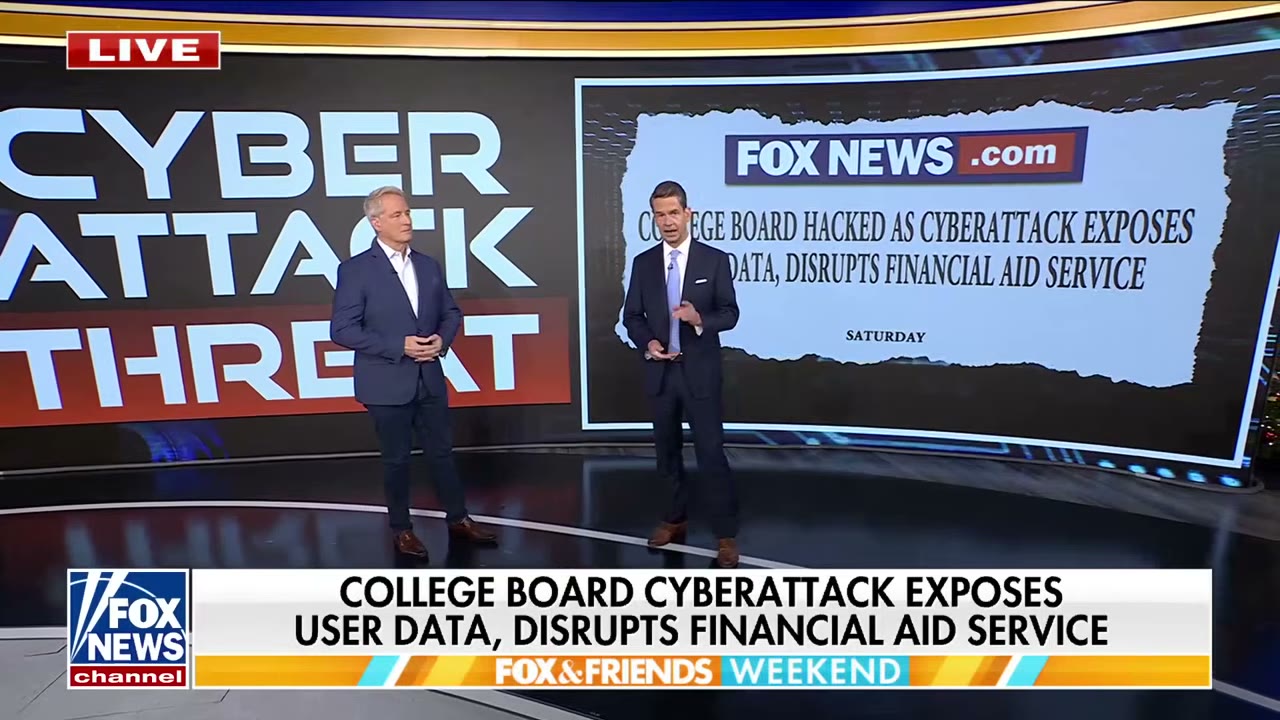
The College Board says hackers accessed systems students use to create accounts and submit CSS Profile financial aid applications, potentially exposing basic account information. A cybersecurity expert urges students to reset passwords directly and warns of a wave of AI-driven and holiday scams.
1College Board Confirms Hackers Accessed Student Account and Financial Aid Systems
Hackers broke into the systems students use to apply for college financial aid — weeks before application deadlines. The College Board, the nonprofit that runs admissions and financial aid services for millions of students, confirmed the breach in a statement.
The activity "involved access to the systems students and professionals use to create new College Board accounts and to submit CSS profile applications for financial aid," the statement said.
According to the College Board, hackers reached some users' basic account information and started password resets. The statement did not say how many accounts were affected or who was behind the access.
2Expert Says New Jersey Users Had Passwords Changed Without Requesting It
The first sign of trouble came from New Jersey, where some users reported their passwords were changed without warning. The automatic alerts arrived, and they realized they had not touched their accounts.
"Wait a minute, I didn't go into my account," cyber expert Kurt recalled them saying.
He said the attack is still unfolding and much about what was taken remains unknown. What is known, he said, is that it all triggered with those New Jersey password-change reports.
3Expert Urges Financial Aid Applicants to Reset Passwords Directly
Anyone who has applied for financial aid and is weighing decisions right now should skip the links and go straight to the source. Log on the way you originally applied — not through any text or email you receive — and check that everything is in order.
Kurt's advice: change your password anyway, and make it one that cannot be guessed.
"I would proactively go and change your password obviously to something extraordinarily strong," he said.
4Expert Warns AI-Driven Attacks Will Surge This Year
Expect AI-driven attacks to keep coming all year, cyber expert Kurt warned — "like a fire hose," he said.
He said investigators suspect AI played a role in the College Board breach, though that has not been confirmed.
One detail stands out: the College Board said no threat actors contacted it. That leaves the motive behind the attack unknown.
5Motive Behind College Board Attack Remains Unknown
Nobody has come forward to claim the College Board attack. The nonprofit said no threat actors contacted it, leaving investigators without a clear motive.
Kurt warned the silence may not last. Attackers gather as much information as they can, he said, until they feel they know their target — then they strike with a clever message designed to get a click.
Even careful, smart people get tricked, he added. The attacks are built for them.
6Expert Warns of Fake Delivery Texts After Black Friday and Cyber Monday
Shoppers fresh off Black Friday and Cyber Monday are now the target of texts claiming their package is stuck. The messages look real — and they are a scam, Kurt said.
One example warned of an unusual delivery address and a package held at a sorting center. The giveaway is the sender: the address was not usps.gov or .com, but an obscure one that only uses part of it.
"If you didn't ask for something, don't click it," Kurt said.
Instead, check your order status on the site where you bought the item — not through the link.
7Expert Warns of Fake Charitable Donation Emails During Giving Season
A heartfelt email about a tragedy or someone in great need may not be what it seems — even when it appears to come from a friend. During giving season, scammers are counting on that generosity.
Kurt's test: ask the friend whether they know the organizer. If they don't, don't give through it.
Instead, find where you can genuinely donate and go there directly. Don't respond to a text, an email or a social post.
"Proactively go after it," he said.