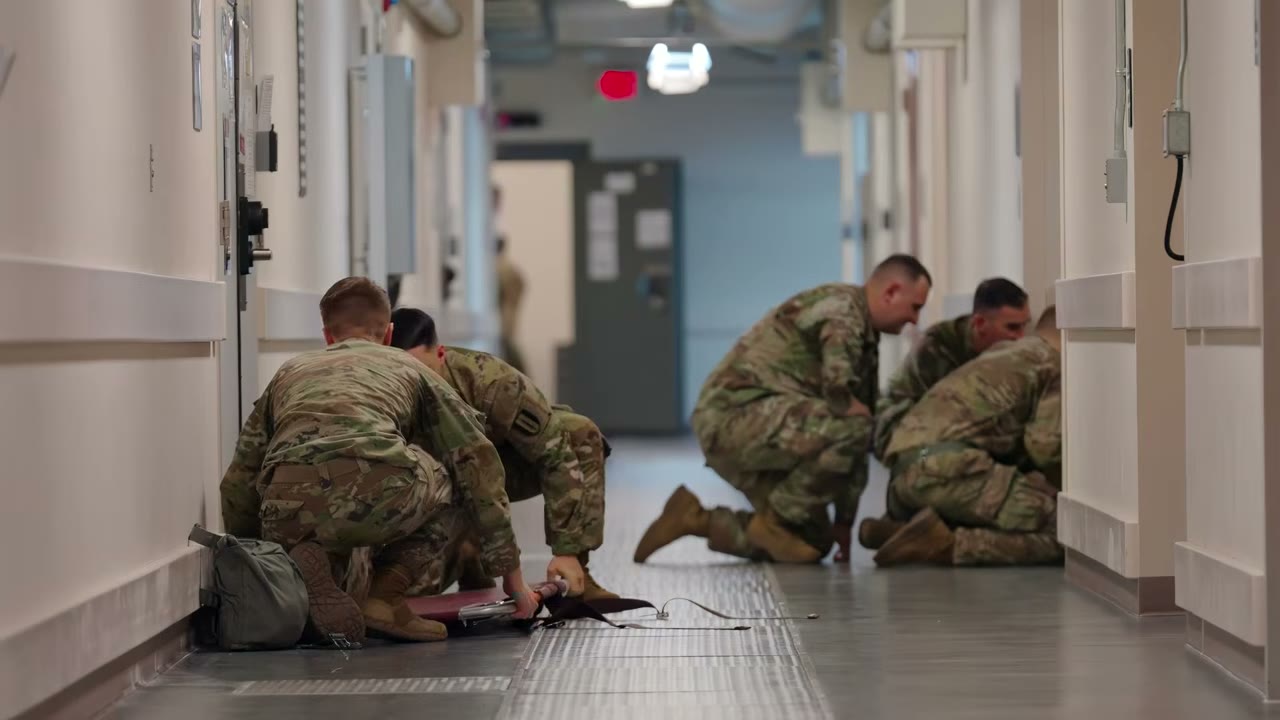
Ukraine's president says Russia is increasingly hitting the same site twice or three times, aiming second strikes at rescuers. Over three days in November, attacks in Kyiv, Kryvyi Rih, Dymer and Vyshneve killed civilians and damaged homes, hospitals and a supermarket.
1Zelenskyy Says Russia Uses Double and Triple Tap Strikes
Ukraine's president says Russia is increasingly hitting the same site twice — or three times — so that the people who rush in to help become the second target. Volodymyr Zelenskyy described the tactic as double tap and triple tap strikes: a site is hit, people rush in to help, then the same site is hit again. He said the pattern is growing more common. The claim comes from the country's top official, and Zelenskyy's own words, expected at the end of the account, are said to explain the whole pattern in a single sentence.
2Double-Tap Strike Hits Kryvyi Rih on World Children's Day
Two ballistic missiles hit central Kryvyi Rih on a Friday evening — then drones struck the same spot as rescuers arrived. The date was November 20th, 2026, World Children's Day, in Zelenskyy's hometown. Oleksandr Vilkul, head of the Kryvyi Rih Defense Council, said the missiles hit near a popular restaurant, with regional officials reporting they came down near residential buildings. Vilkul said the strike came "on Friday evening when there were many people on the streets on World Children's Day." As first responders began rescue work, Shahed-type drones hit the same area. Vilkul said the follow-up was aimed at rescuers, medical personnel and utility workers. A seven-year-old boy suffered a head injury and later died in hospital. A 20-year-old paramedic was also killed.
3Kryvyi Rih Casualty Count Rises From 20 to 52 Injured
The injured count in Kryvyi Rih climbed from 20 to 42 to 52 as the night went on. Early on, Meduza, citing regional governor Oleksandr Hanzha, reported 20 injured, including three children, with the seven-year-old in serious condition. Later Kyiv Independent reports put the figure at 42, then 52 by morning, 25 of them seriously hurt. Six children were among the victims, including a four-year-old boy and a three-year-old girl. Vilkul said another drone struck an infrastructure facility overnight, and air raid alerts kept disrupting rescue crews. By morning, 23 apartment buildings had been damaged, along with a hospital, schools, businesses and ambulances. Water, gas and electricity were disrupted in several districts.
4Kryvyi Rih Hit Earlier the Same Day, Damaging Infrastructure
Before the evening missiles fell on Kryvyi Rih, the city had already been hit that same day. Earlier on November 20th, Vilkul said a massive enemy drone attack struck a major infrastructure facility. An official said it cut power to boiler houses, water pumping stations and hospitals. So the city was under pressure from the small hours before the ballistic missiles reached the center that evening. Kryvyi Rih was not even the biggest attack of the day — that, according to the account, was Kyiv.
5Russia Launches One of Its Biggest Attacks on Kyiv
Russia fired 84 cruise missiles and 404 attack drones at Ukraine in one night, according to Ukraine's Air Force — what Zelenskyy called one of the biggest attacks on the country. Zelenskyy said 27 ballistic missiles were also fired, putting the total above 110 missiles. Air defenses shot down or suppressed three ballistic missiles, 79 cruise missiles and 380 drones, the Air Force said, with strikes recorded at 23 locations. Explosions began in Kyiv around 1:25 a.m., minutes after the Air Force warned ballistic missiles were heading for the city. Journalists reported another wave in the central districts and more rounds between 3 and 6:30 a.m.
6Zelenskyy Says Missile Waves Spaced 20-30 Minutes Apart
Russia spaced its missile waves 20 to 30 minutes apart — about the time it takes fire crews to arrive and start working. Zelenskyy described the tactic: "This time, the attack tactics were particularly insidious with several groups of missiles launched at intervals of 20 to 30 minutes to complicate firefighting, clearing debris, and recovery efforts." Among the dead in Kyiv were two water utility workers, Dmytro Petrov and Vitalii Kriuchek, and seven more of the utility's workers were injured. The reports do not say which wave killed them. They were workers out at night keeping water running in a bombarded city.
7Kyiv Death Toll Shifts as Water Workers and Others Are Killed
Official death tolls for the attacks did not agree as the day went on. Meduza first reported that Kyiv mayor Vitali Klitschko said at least three people were killed in the city, with initial reports indicating they worked for the water utility. Prime Minister Serhiy Kretzky at one point gave a national toll of eight dead, including six in Kyiv, and 28 injured. Later, the Kyiv Independent reported that according to Klitschko seven were killed in Kyiv and 17 injured, with two more killed elsewhere — at least nine in total. Interior Minister Ivan Verhivsky put the national injured count at 30. Two of the deaths were in Lviv in the far west, where the mayor reported a direct hit on a railway station ticket terminal.
8Kyiv Damage Includes Bridges, Heritage Site and Film Studio
Three bridges over the Dnipro River were damaged in Kyiv, along with a film studio pavilion and a university building listed as cultural heritage. The bridges were the Podilsko Voskresensky, the Southern and the Darnytskyi. A critical infrastructure facility was hit, and parts of the city lost heat, power and water. A confectionery workshop that made wafer cakes and cookies was destroyed, and the heritage-listed university building lost 40 windows. A pavilion at the historic Dovzhenko Film Studio was destroyed. As of 1 p.m., Interior Minister Ivan Verhivsky said more than 500 rescuers and police officers were still dealing with the aftermath.
9Russia Says It Struck Defense and Energy Facilities
Moscow described the same night very differently from Kyiv. Russia's Defense Ministry said the overnight strike targeted Ukrainian defense industry facilities, warehouses, energy facilities and transportation and port infrastructure. It claimed hits on industrial facilities in the Kyiv, Dnipropetrovsk, Chernihiv, Ivano-Frankivsk, Lviv, Mykolaiv and Odessa regions. Zelenskyy flatly contradicted that, saying every single target was ordinary civilian infrastructure, the kind that keeps people alive. Two governments, two descriptions of the same night: one says military and industrial sites, the other says water, heat and power.
10Attack Follows Putin's Vow of Retaliation for Crimean Bridge
The barrage came a day after Vladimir Putin threatened retaliation for Ukraine's strike on the Crimean Bridge, a section of which collapsed after a Ukrainian Flamingo missile strike overnight on November 17th. Putin said his response would be far more painful than what Ukraine did to the bridge, adding: "with today's precision weapons, it's not that difficult to do." The attack also followed Putin's meeting with Donald Trump and Xi Jinping in Shenzhen, China, where the three signed what was called a declaration of peace. Zelenskyy said Putin made a show of launching the strike after his meetings in China yielded little — his reading, not an established fact.
11Drone Strike Destroys Five-Story Building in Dymer
A Russian drone hit a five-story apartment building in Dymer, north of Kyiv, destroying a section spanning all five floors. The attack came overnight on November 22nd in the Vyshhorod district. Kyiv Oblast Governor Tetyana Tkachenko said a fire broke out and people were trapped under the rubble. The death toll climbed hour by hour: one early report said three dead, a later one at least four. By around 2:30 a.m. on November 23rd, Kotsyubenko confirmed rescuers had uncovered a ninth body. At least nine people were killed, at least six injured, and several more feared trapped, according to officials.
12Fear of Repeat Strikes Forces Rescuers to Suspend Work in Dymer
The threat of a repeat strike was enough to stop the digging in Dymer. Ukraine's state emergency service said the rescue effort was being slowed by the fear of exactly that tactic: "the work of the rescuers is complicated by the constant threat of repeated Russian attacks and air raid alerts, which force them to suspend operations." Every pause, ordered because another strike might come, is time the search does not get back. The double tap does not even have to happen to do damage — the threat alone halts the work.
13Boy David Rescued Alive After Nearly 14 Hours Under Rubble
A seven-year-old boy named David was pulled alive from the rubble in Dymer after nearly 14 hours. Interior Minister Ivan Vihivskyi said rescuers first found belongings his family recognized, then found David himself. "When the boy saw the rescuers, he calmly and without panic began to talk to them, constantly saying that he was okay," Vihivskyi said. An hour before, at about 3:30 a.m., a 79-year-old woman had been pulled out alive and taken to hospital. David's rescue happened because crews kept coming back to the rubble — the work a double tap, or the threat of one, puts at risk. Not every family outside that building got that kind of news.
14Father Waits for News of His Son Roman in Dymer Rubble
A retiree stood at the ruins of a collapsed building in Dymer, waiting to learn whether his 18-year-old son was alive. Arkadii Kotsyarenko told the Kyiv Independent that his son, Roman Kotsyarenko, was in the apartment when a Russian drone hit.
He got a phone call around five in the morning saying a drone had fallen on the building and there had been an explosion. His son was supposed to go to an internship that day.
"We are waiting for the result whether he is alive or not," Kotsyarenko said. He said the family was hoping for the best.
Asked what he wanted from the outside world, he said Western allies should supply more weapons, including Patriot missiles, to defend against the ballistic threat and end the war faster.
15Drone Hits Vyshneve Supermarket During Shopping Hours
A Russian Shahed-type drone hit a Novus grocery store in Vyshneve in Kyiv Oblast on the evening of November 22nd, when people were out shopping. The drone set off a fire inside the supermarket and shelves of food caught fire, according to the State Emergency Service, before it was put out.
Early reports said two people killed and eight injured. Vyshneve mayor Ilia Dykov later said at least three were dead and 15 injured, including three children. A 36-year-old woman was among those killed.
"People were simply going to the store to buy groceries," Governor Kuleba said. He accused the enemy of deliberately terrorizing the civilian population.
According to Kyiv Independent reporting, Russia has increasingly targeted supermarkets, grocery warehouses and other food industry facilities, and stepped up strikes on stores and markets during operating hours.
16Kyiv Oblast Declares Day of Mourning After Strikes
Flags will fly lowered across Kyiv Oblast on Monday, November 23rd, after a day of mourning was declared for those killed in the strikes. Entertainment venues will operate under restricted hours.
"May the memory of all those who perished be eternal," Governor Kachenko said.
President Zelenskyy, in his evening address, was harsher. "Constant Russian terror, constant torment inflicted by these scumbags," he said.
He vowed that the attacks would not go unanswered. "All this terror will be met with our fully justified responses," he said.
17Three Days of Strikes Summarized in Rising Casualty Figures
In one week, Kyiv had 59 air raid alerts lasting more than 34 hours combined, the city's military administration said on November 20th. More than a full day under alert in seven days.
On the night of November 20th, more than 110 missiles and 404 drones were aimed at Ukraine, according to Zelenskyy and the Air Force. Missile groups came 20 to 30 minutes apart over Kyiv, Zelenskyy said, to hamper firefighting and recovery. At least nine people died nationwide, seven of them in the capital, including two water utility workers. Thirty were injured, the interior minister said. Three bridges were damaged.
That evening, two ballistic missiles hit the center of Kryvyi Rih, then Shahed drones struck as rescuers worked. A seven-year-old boy and a 20-year-old paramedic were killed; 52 were injured, 25 seriously, six of them children.
Overnight on November 22nd in Dnipro, a five-story building was torn open from top to bottom. At least nine died and at least six were injured, with several missing. Rescuers stopped work over the threat of repeated attacks. A seven-year-old named David was brought out alive after nearly 14 hours.
18Zelenskyy Tells NBC Russia Aims to Kill as Many as Possible
Russia is increasing double tap strikes and even carrying out triple tap strikes to "kill as many people as possible," President Zelenskyy told NBC News on November 20th, the same day as the Kyiv barrage and the Kryvyi Rih strike.
He described the tactic: the Russians hit a target, a building, school, hospital or military site, and when first responders, journalists and others come to rescue, "they attack the second time and the third time."
The first strike destroys a building. The second, if Zelenskyy is right, is aimed at the response itself: the paramedic, the firefighter, the utility worker, the reporter, the neighbor who runs in.
Even when no second strike comes, the threat is enough to make rescuers stop digging.
19Kyiv and Moscow Dispute What Was Targeted as Deaths Named
Moscow says it targets defense industry, energy and transport. Kyiv says the targets are the things that keep people alive.
The dead include a seven-year-old boy, a 20-year-old paramedic, two water workers named Dmytro Petrov and Vitalii Kriuchek, a 36-year-old woman at a supermarket, and at least nine people in a five-story building in Dnipro.
A father in Dymer was still waiting, at last report, for news of his son.
If a strike is designed to hit the people who come to help, the question is what that does to the rescue itself.