The video ranks the Royal Netherlands Air Force's ten most advanced aircraft, from the AS-532 U2 Cougar helicopter to the MQ-9 Reaper drone. It details each platform's speed, range, payload and combat role, highlighting the Dutch fleet's shift toward stealth and unmanned systems.
1Netherlands ranks top 10 most advanced military aircraft
The Netherlands has rebuilt its air fleet into what one count calls a precision strike machine, from heavy-lift helicopters to radar-evading fighters. A new ranking of the Royal Netherlands Air Force's top 10 most advanced military aircraft puts the country's multi-million dollar fleet under the spotlight, asking which machine is the most deadly. The list spans heavy-duty aircraft able to land on rough ground and stealthy jets designed to stay invisible to enemy radar. The countdown begins at number 10.
2AS-532 U2 Cougar ranks 10th for tactical transport
A twin-engine helicopter that can haul 20 fully equipped troops or 4,500 kg of cargo ranks 10th among the Royal Netherlands Air Force's most advanced aircraft. The AS-532 U2 Cougar is built for rough tactical work in harsh environments, cruising at 250 km/h and reaching altitudes up to 6,000 meters. It can also sling 4,500 kg of external load, such as heavy artillery or cargo containers, on a suspended platform. Dutch pilots value it for simplicity, endurance and reliability, whether dropping special forces into hostile zones or rescuing civilians during floods.
3Cougar's 10th place justified by logistics role
A classic multi-role helicopter outranks stealth fighters on this list because true air power starts on the ground. Reliable tactical mobility and logistical supply routes come first: without heavy tactical transport, no high-tech air force can win a real ground battle, according to the ranking. That logic puts the Cougar at 10th, ahead of far more expensive combat aircraft still to come.
4AH-64E Apache ranks 9th as tank killer
The Royal Netherlands Air Force has upgraded its AH-64 Apache fleet to the latest Echo standard, turning the attack helicopter into what the ranking calls a heavily armed tank killer. The Echo's improved twin engines push it past 300 km/h, with a combat radius over 480 km and a ceiling above 6,000 meters. A 30mm cannon under the nose follows the pilot's helmet — wherever the pilot looks, the gun aims. It carries laser-guided Hellfire missiles that can destroy heavy armor from 8 km, plus 70mm air-to-surface rockets. Digital data channels let the pilot control drones from the cockpit, scouting with a drone before a missile strike, and its radar tracks dozens of moving targets in darkness or smoke.
5H225M Caracal ranks 8th to replace Cougar
The helicopter picked to replace the Cougar can carry 28 armed special forces or 11 stretchers, and refuel in mid-air to keep going. The H225M Caracal ranks eighth on the list and is set to fully replace the older Cougar at number 10. Two turboshaft engines give it a top speed of 324 km/h and a range over 800 km without refueling; mid-air refueling extends missions almost indefinitely, letting Dutch special forces fly deep into enemy territory without stopping for fuel. It carries 4,750 kg internally or on a cargo hook, and comes with a glass cockpit, four-axis autopilot, all-weather radar and electronic defenses against heat-seeking missiles.
6NH90 naval helicopter ranks 7th for submarine hunting
A naval helicopter built to hunt submarines from the air ranks seventh among the Royal Netherlands Air Force's most advanced aircraft. The NH Industries NH90 is built from carbon composite materials to resist salt-water corrosion and stay ultra-light, serving as the distant eyes and ears of Dutch warships. Two engines take it past 300 km/h and up to 3,000 meters, with flights of almost five hours without refueling. Its avionics include a 360° search radar, submersible sonar to detect enemy submarines, and infrared sensors. On finding a submarine, it can launch homing acoustic torpedoes before the threat nears the ship, and it can fire anti-ship missiles or fly search-and-rescue missions in icy storms.
7C-130 Hercules ranks 6th for tactical airlift
A four-engine transport that can land on dirt strips and gravel runways while carrying over 19,000 kg of cargo ranks sixth on the list. The C-130 Hercules is the aircraft most people picture when they think of military transport, and the Dutch Air Force relies on its fleet for rapid deployment of troops, equipment and humanitarian cargo worldwide. It cruises at 540 km/h with a range over 3,800 km fully loaded, and needs no concrete airfield — Dutch pilots regularly drop cargo pallets by parachute through the rear ramp or fly low to avoid radar. Upgrades include modern avionics, digital displays and protection against infrared missiles.
8Gulfstream G650 ranks 5th as VIP command jet
A luxury business jet that can fly from Amsterdam to Asia or North America without a single refueling stop ranks fifth among the Royal Netherlands Air Force's most advanced aircraft. The Netherlands bought the Gulfstream G650 to replace aging VIP transports, giving military leadership range and speed: a top speed over 980 km/h, close to the speed of sound, and a non-stop range over 13,800 km. It cruises up to 15,500 meters, above commercial traffic, with secure encrypted communications so commanders can run global operations in real time. The ranking argues military power is also strategic command and rapid diplomatic movement, not just bombs and missiles.
9C-390 Millennium ranks 4th as jet transport
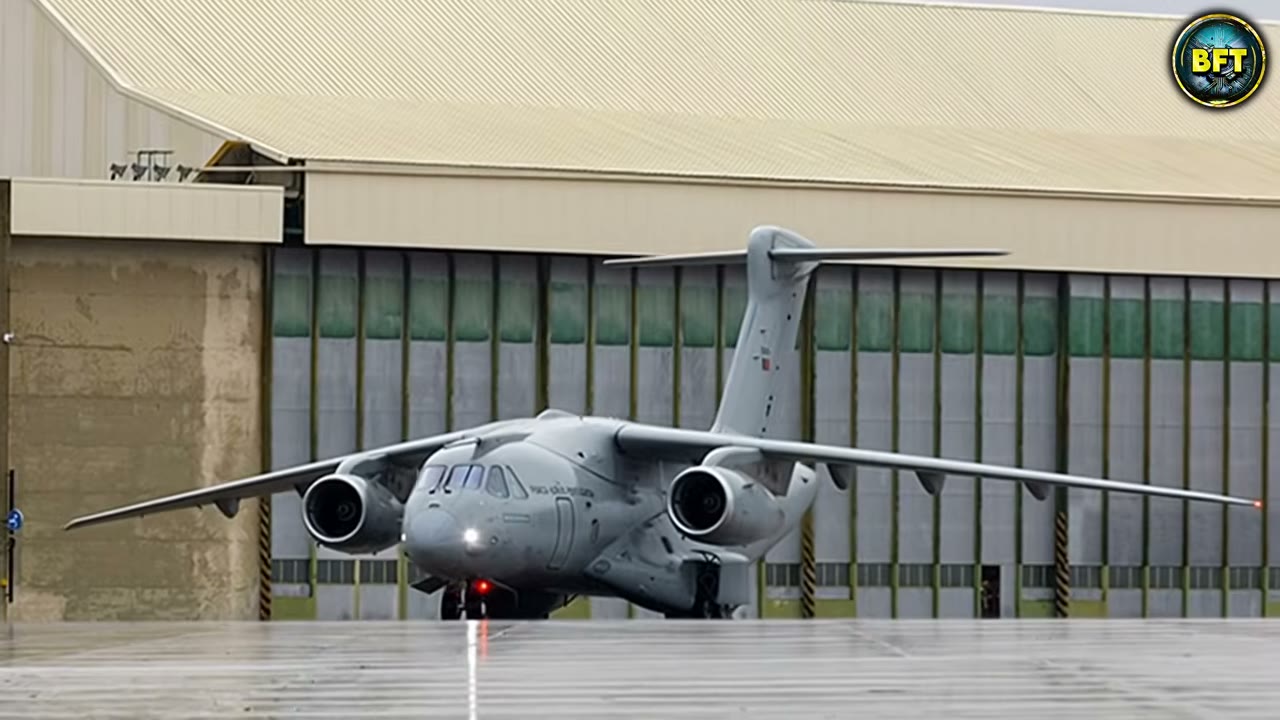
A twin-engine jet transport that carries up to 26,000 kg at 870 km/h ranks fourth — and it is replacing the Hercules. The Netherlands chose the C-390 Millennium to modernize its military transport, and its turbofan engines let it deliver troops and heavy equipment to conflict zones almost twice as fast as older turboprop aircraft. It hauls heavy armored vehicles, field hospitals or up to 80 fully equipped soldiers, with a range over 6,000 km, and can land on short dirt runways like the Hercules. A computerized flight control system eases the pilot's workload, and the cabin converts for aerial refueling or medical evacuation in under an hour.
10Airbus A330 MRTT ranks 3rd as flying tanker
A tanker based in the Netherlands carries 111,000 kg of fuel in its wings alone — enough to keep fighters, bombers and transports flying hundreds of kilometers from base. The Airbus A330 MRTT ranks third on the list and is described as the backbone of European aerial refueling operations, with its main base in the country. Because the fuel sits in the wings, the entire main cabin stays free for up to 300 troops or 45,000 kg of cargo. It flies at 880 km/h with a range over 14,800 km, refueling through a boom or underwing hoses, and can be converted into a flying intensive care hospital.
11F-35A Lightning II ranks 2nd for stealth superiority
On enemy radar, the F-35A appears as an object the size of a small golf ball. The Royal Netherlands Air Force retired its iconic F-16 to make way for the fifth-generation fighter, which ranks second on the list. A radar-absorbing coating and futuristic shape keep it nearly invisible to air defenses, while its single engine pushes it past 1,900 km/h and above 15,000 meters. It carries precision bombs and air-to-air missiles in internal bays to preserve stealth, and its pilot uses a helmet costing over $400,000 that projects flight data and thermal images onto the visor — the pilot can look through the cockpit floor. Its data fusion system pulls from satellites, ground radars and other aircraft, turning the jet into a command center that can destroy targets before the enemy knows it is there.
12MQ-9 Reaper ranks 1st as most advanced system
A Dutch drone can stay over enemy territory for 27 hours without refueling — more than a full day of continuous flight. The MQ-9 Reaper, an unmanned aerial vehicle, ranks first among the most advanced aircraft in the Royal Netherlands Air Force.
Pilots fly it from ground stations thousands of kilometers away. It climbs to 15,000 meters and tops 400 km/h, carrying ultra-high-precision optoelectronic sensors, infrared cameras and synthetic aperture radar.
Its sensors can read a car license plate from above the clouds in complete darkness, according to the account. The drone can track targets quietly for hours, gathering intelligence before a ground operation.
When a mission calls for action, it carries laser-guided Hellfire missiles and precision bombs under its wings. Strikes are delivered "without any risk to the pilots' lives."
Its integration into the Royal Netherlands Air Force marks a step toward network-centric warfare, combining endurance with covert operation.