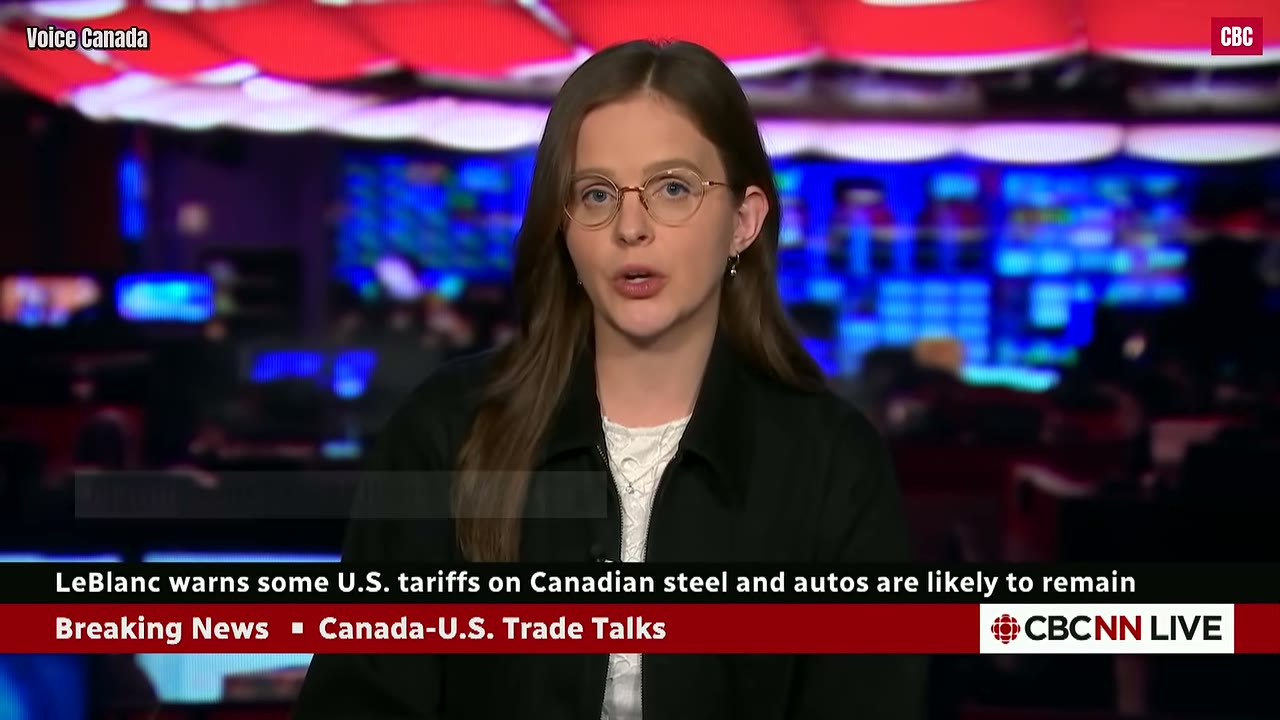
Trump posted a threat to raise auto tariffs on Canada from 25% to 50% starting January 1. Meanwhile, Trade Minister LeBlanc says some tariffs will remain in any interim deal, and strategist Donolo argues Canada should not give in to blackmail.
1Donolo Warns Canada Against Giving In to Trump's Blackmail
Giving in to a bully means you never stop paying, a former communications director for Jean Chrétien warned as Trump pressed Canada for concessions.
"If you give in to blackmail, you will never stop paying," said Donolo, now an independent strategist and not a government representative.
Trump, meanwhile, said Carney was "very nice" and that they met and talked, but claimed Canada has been "robbing us for many, many years" and that "it's time to end this."
Donolo's warning lands as Ottawa weighs how far to go to settle with Washington.
2Donolo Says Trump's Optimistic Talk Echoes Failed August Talks
Trump's optimistic talk is the same refrain that preceded failed negotiations in August, Donolo said.
"This is the same optimistic talk we heard from him a week before the last negotiations, when we ultimately failed to sign the agreement in August," he said.
CBC reported that Canada withdrew from the talks in August. On November 16, CTV National News reported the Carney government would not agree to a deal inconsistent with a viable Canadian auto sector.
On November 18 in Shenzhen, Carney set out his position.
3Carney Sets Limits Before Meeting Trump in Shenzhen
Carney said Canada will do "whatever it takes" to reach an agreement with Trump — but only one that meets Canadian interests.
Speaking in Shenzhen on November 18, he said the United States has "fundamentally changed its trade goals" and that Canada is focused on getting the right deal for Canadians.
"We will do whatever it takes to reach this agreement. But only the agreement that meets the interests of Canadians," he said before meeting Trump later that day.
On November 19, trade minister Dominique LeBlanc addressed the file.
4LeBlanc Says Some Tariffs Will Remain in Interim Deal
Some tariffs will stay in place under an interim deal, trade minister Dominique LeBlanc said, as Ottawa pursues a stopgap agreement in the coming months.
Appearing on CBC's Power & Politics, LeBlanc said duties apply in the so-called 232 sectors and that "some of these duties will remain" — but only under conditions ensuring the sectors' long-term economic viability.
He said the government does not intend to include any base duties in the "Kuzma 2.0" deal.
Donolo told CBC he sees a discrepancy between the two reports.
5Trump Threatens to Raise Auto Tariffs From 25% to 50%
Trump wrote on social media that he wants to raise auto tariffs from 25% to 50% starting January 1, CBC reported.
For now, it is just a post, not on paper.
Asked about tariffs in the interim agreement and what they mean for renewing CUSMA, LeBlanc did not evade, according to Donolo: "I couldn't have said it better myself. You just give them everything. You give them the store and say: tell me the price and I will pay."
Donolo told CBC he sees a discrepancy between the two reports.
6Donolo Says August 22 Relief Shows Canadians Back Carney
Canadians let out a "huge sigh of relief" on August 22 when Carney refused a punitive deal, Donolo said.
"They were worried that the Prime Minister would sign an agreement that would be punitive for Canada, that it would entrench these tariffs. But he didn't do it. And his support was enormous," he said.
Donolo said Trump is now in a weaker position and should be left to "stew in his own juices."
"Let's see what the next few weeks bring," he said.
7Analyst Eric Ham Says Tariff Relief Will Be a Struggle
Quick relief for Canada is far from guaranteed, US political analyst Eric Ham warned from Washington.
Speaking to CTV News on November 18, Ham said tariffs "will be a struggle" and that veto-overriding legislation would be needed — not only to repeal current presidential tariffs on Canada but also to revoke or restore many of the trade powers the president holds.
Donolo interprets it differently.
8Donolo Predicts Veto-Overriding Majority Could Emerge
A majority capable of overriding a presidential veto on tariffs is possible, Donolo argued to CBC on November 20.
He said that could change things in the new year, when lawmakers take office.
He also warned against wishing for a weakened Trump: "I don't see why we should give him a way to save face where he can claim some kind of victory and we will pay the price for it."
He then returned to his main thesis.
9LeBlanc Draws Red Line Against Slicing the Salami
Canada will not "slice the salami" by cutting deals that help one sector while leaving others behind, trade minister Dominique LeBlanc said.
"We have made some progress, but we are not going to 'slice the salami' by making a deal where we get relief in sector X but do nothing for sectors Y or Z," he said on November 19.
CBC reported that talks with the White House have intensified, with industry tariffs and new 50% tariffs Trump imposed in the summer on the agenda.
Donolo's message: "When the blackmailer is on the run, now is not the time to continue paying him."
10Donolo Calls Both China and US Threats to Canada
China is a threat, but so is the United States, Donolo said in a closing argument about how Canada picks its path.
"China is a threat in many ways, economically and geopolitically. But let's be honest, the United States was and remains a threat now," he said.
He pointed to Carney's Davos speech about hegemons and middle powers uniting, saying it should guide decisions.
"Less than a year has passed. It feels like decades," he said of the speech.
11Timeline Comparison Shows Shift From Carney to LeBlanc
Canada's trade message shifted in three days. On November 16, CTV National News reported the Carney government would not agree to a deal incompatible with a viable Canadian auto industry. Two days later, before meeting Trump, Carney said "only an agreement is in the interests of Canadians."
On November 19, LeBlanc said some of the tariffs would remain. LeBlanc also said Canada does not want basic tariffs after CUSMA 2.0 and will not "slice salami."
Don Law, an external strategist and not a government representative, told CBC he sees a dissonance and asked what Canada gets for signing. His "veto-overriding majority" remark is an opinion, not a fact.
12Analyst Says Relief Not Automatic as Deal Unsettled
Nothing has been signed. These are negotiations for an interim agreement, and Eric Ham told CTV News it will be a struggle, so relief is not automatic.
The open questions: does the text protect Canadian automakers and other sectors hit by tariffs? And will the announced 50% auto tax from January 1 stay only on social media, or be put on paper?
The assessment that Canada can afford to remain patient and firm is one opinion, offered with the caveat that it could be wrong.