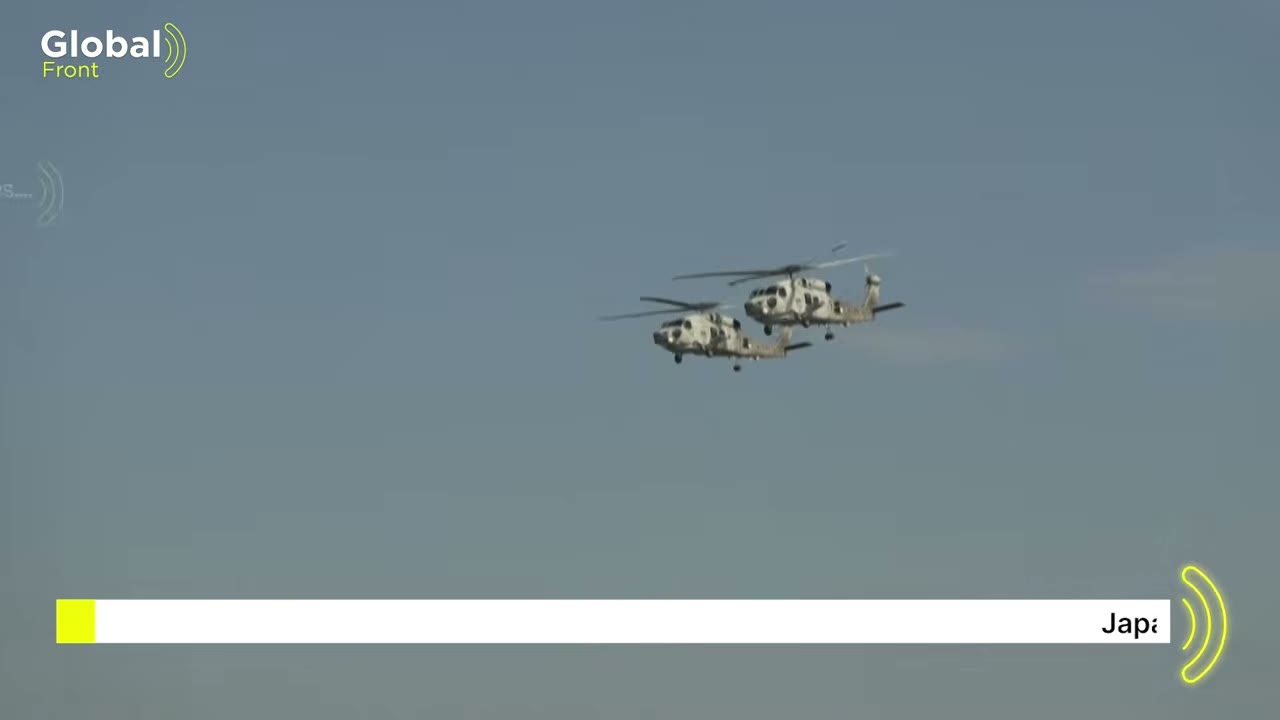
Japan and the Philippines are deepening military cooperation, including talks on transferring Type 88 missiles and Abukuma-class destroyers. China has warned Tokyo against interfering in South China Sea disputes, calling Japan a destroyer of regional peace.
1China Warns Japan Over Interference in South China Sea Disputes
Beijing accused Tokyo of becoming a "real destroyer of peace" in the Asia-Pacific after Japan moved to arm the Philippine military. On November 26, 2026, China's Defense Ministry issued the warning over Japan's growing role in South China Sea disputes.
Spokesman Senior Colonel Chen Shi said Japan was interfering in regional affairs after deciding to send advanced surveillance equipment to the Philippines. The rebuke lands as President Ferdinand Marcos Jr. and Japanese Prime Minister Sanae Takaichi keep widening their strategic partnership.
Japan and the Philippines are already discussing transfers of coastal defense assets and plans to strengthen the Philippine Navy.
2Japan and Philippines Discuss Type 88 Missiles and Abukuma Destroyers
Japan could arm the Philippines with its Type 88 surface-to-ship missile systems — the first such transfer — while Manila plans to buy five Japanese Abukuma-class escort destroyers.
Japan has shown willingness to discuss handing over coastal defense assets. But as of November 28, 2026, neither government had publicly announced a completed contract for the Type 88 systems.
The talks show how far Tokyo and Manila have moved toward closer military ties, with potential consequences for regional security.
3Philippines Reports Surge in Chinese Ships in West Philippine Sea
The Philippines counted 48 Chinese naval and coast guard vessels in the West Philippine Sea in a single surveillance week — up from 19 in the previous period.
The Armed Forces of the Philippines reported the sightings between November 17 and 23. The jump followed the close of the ASEAN summits in Manila.
The surge deepened concerns in Manila about the maritime pressure the country faces, and it came as Japan and the Philippines expanded their own defense cooperation.
4Japan Signs $22.7 Million Security Aid Deal With Philippines
Japan and the Philippines signed a security assistance deal worth 4.3 billion Japanese yen — about 22.7 million US dollars — on November 9.
The package includes a coastal surveillance radar system for the Philippine Navy and unmanned aerial vehicles for the Philippine Air Force. The equipment is meant to improve maritime monitoring and help Philippine authorities track foreign vessels in surrounding waters.
It marks the first transfer of equipment classified as defense-related under Japan's official security assistance program.
5Marcos and Takaichi Reaffirm Security Cooperation at ASEAN Summit
President Marcos and Prime Minister Sanae Takaichi met in Manila on November 16 and pledged to expand economic, diplomatic and security cooperation.
The talks took place on the sidelines of the ASEAN summits. Both leaders said developments in the South China Sea and the wider Indo-Pacific are increasingly affecting their national interests.
The meeting came as Japan's official security assistance program delivered its first defense-related equipment transfer to the Philippines.
6Philippines Expects Five Abukuma-Class Destroyers From Japan
The Philippines expects to receive five Abukuma-class escort destroyers from Japan, with deliveries likely spread over two to three years, Defense Secretary Gilberto Teodoro Jr. announced in July 2026.
Teodoro said administrative details are still being agreed but the deal has been "effectively concluded." Japanese authorities are more cautious, saying preparatory measures, government coordination and technical clearance must all be completed before handover.
On October 28, Japanese Defense Minister Shinjiro Koizumi met Teodoro again to push the transfer forward.
7Japan and Philippines Hold Defense Ministerial on Warship Transfer
Japan and the Philippines agreed to hand over the first Abukuma-class destroyer as soon as possible after it is decommissioned from Japanese service.
Defense Minister Shinjiro Koizumi and Defense Secretary Gilberto Teodoro Jr. confirmed the plan at a defense ministerial meeting in the Philippines on October 28. They also discussed training for Philippine Navy personnel, maintenance conditions, logistics and long-term operational support.
The ships have served Japan for decades, but Manila sees them as added capacity for maritime patrol, surveillance and fleet modernization.
8Japan and Philippines Discuss TC-90 Aircraft and Missile Defense
Japan and the Philippines are discussing a possible transfer of Japanese coastal missile defense systems, with the Type 88 under consideration.
Talks intensified in May 2026, when Defense Minister Shinjiro Koizumi and Defense Secretary Gilberto Teodoro Jr. agreed to deepen cooperation on Japanese defense equipment. Further talks at the Shangri-La Dialogue in Singapore opened the possibility of a surface-to-ship weapons transfer.
The two sides are also discussing sending an additional TC-90 aircraft by the end of Japan's fiscal year 2027.
9Japan Fires Type 88 Missiles in Balikatan 2026 Exercises
Japanese surface-to-ship missiles hit and sank a decommissioned Philippine Navy warship during the Balikatan 2026 exercises.
The Japan Self-Defense Forces fired Type 88 complexes live for the first time in the drills on May 6, during a demonstration in Ilocos Norte. Two missiles struck the BRP Quezon, a training target, and the ship later sank.
Defense Minister Shinjiro Koizumi and Defense Secretary Gilberto Teodoro Jr. watched in person; President Marcos monitored remotely from military headquarters in Manila. Japanese, Philippine, American and Australian forces took part.
10Philippines Weighs Japanese Equipment Alongside BrahMos Missiles
The Philippines already owns India's BrahMos missile system, and Japanese equipment could sit alongside it as Manila diversifies its defense partners.
The acquisitions fall under the country's armed forces modernization program. Buying the hardware is only part of the job, though.
Training, maintenance, financial commitment, equipment compatibility and reliable logistical support will decide how well the new systems actually work in Philippine service.
11Japan Relaxes Military Export Rules to Allow Wider Arms Sales
Japan scrapped decades-old limits on exporting finished military equipment, opening the door to a far wider range of arms sales.
On April 21, 2026, Tokyo relaxed restrictions that had confined overseas transfers to five specified categories. Exports are now considered case by case, subject to government approval and security guarantees.
For the Philippines, the change could open access to Japanese military equipment that was previously unavailable.
12China Accuses Japan of Accelerating Remilitarization
Beijing accused Japan of abandoning the defensive principles it adopted after World War II, saying "Japanese right-wing forces" are pushing to remilitarize the country.
The rebuke from Foreign Ministry spokesman Lin Jian followed Japan's display of military might during the Balikatan exercises. Beijing argues Japan's expanded military activities, higher defense spending and security partnerships could undermine regional stability.
Tokyo says its policy strengthens deterrence and protects maritime security. Manila says repeated confrontations with Chinese government vessels make its own military modernization necessary.
13Scarborough Shoal Dispute and 2016 Arbitration Ruling Explained
An international arbitration court found in July 2016 that China had illegally restricted Filipino fishermen's access to Scarborough Shoal.
The shoal sits about 120 nautical miles west of Luzon Island and is claimed by both China and the Philippines. Chinese government vessels have kept a significant presence there since the 2012 naval standoff.
The ruling did not decide sovereignty over the shoal. It found China had no legal basis to claim historical rights beyond what international law allows, and it recognized traditional fishing rights.
14China Holds Joint Naval and Air Drills Around Scarborough Shoal
China's military ran joint naval and air exercises around Scarborough Shoal on August 1, 2026. The Southern Command of the Chinese People's Liberation Army called the drills necessary to protect China's territorial and maritime interests.
Beijing continues to reject a ruling on access to Filipino fishermen in the disputed waters. Manila sees the exercises as another reason to strengthen its national defense capabilities.
What comes next is not spelled out, but the pattern is clear: more drills and more pushback.
15Japan and Philippines Sign Reciprocal Access and Logistics Pacts
Japan and the Philippines have signed formal agreements to make their security cooperation practical, including one that lets authorized troops operate on each other's territory. The Reciprocal Access Agreement entered into force on September 11, 2025.
A second deal, an acquisition and mutual servicing agreement, was concluded in 2026. It lets both countries exchange military supplies and logistics services during approved joint activities.
The arrangements do not automatically create a mutual defense treaty between Tokyo and Manila. The United States also remains a key element of the Philippines' security.
16Trump Reaffirms US Commitment to Philippines Defense
US President Donald Trump reaffirmed Washington's commitment to the Philippines during a November 18 meeting with President Marcos at Malacañang Palace. "Together with President Marcos, we are also expanding our defense maritime cooperation, which has always been a key pillar of security for this part of the world," Trump said.
The 1951 Mutual Defense Treaty remains the foundation of the U.S.-Philippines alliance. That includes commitments regarding Philippine armed forces, aviation, and government vessels in the South China Sea.
17Four Nations Plan Joint Coordination Center in Philippines
Japan, Australia, the Philippines and the United States have pledged to set up a joint coordination center in the Philippines. They also plan to expand military exercises and coordinate defense investments.
For President Marcos, the moves are a chance to strengthen the Philippines' maritime security while reducing dependence on any single international partner. For Prime Minister Takaichi, closer cooperation with Manila reflects Japan's increasingly active role in Indo-Pacific security.
In Beijing, however, the expanding network is raising concerns about China's influence in the region.
18Outlook Uncertain for Missile Transfer as Japan-Philippines Ties Shift
Whether Japan will ultimately transfer its Type 88 missile systems to the Philippines remains unclear. Delivery of Japanese naval vessels also depends on completed preparations and fulfilled administrative requirements.
What is clearer is the shift: economic cooperation between Tokyo and Manila now comes with military exercises, surveillance assistance, defense technology talks and long-term security arrangements. The Philippines is building a broader network of international partnerships, and Japan is becoming a more active participant in regional defense cooperation.
The main challenge, as the partnerships grow, will be ensuring the new capabilities prevent confrontation rather than add to instability.