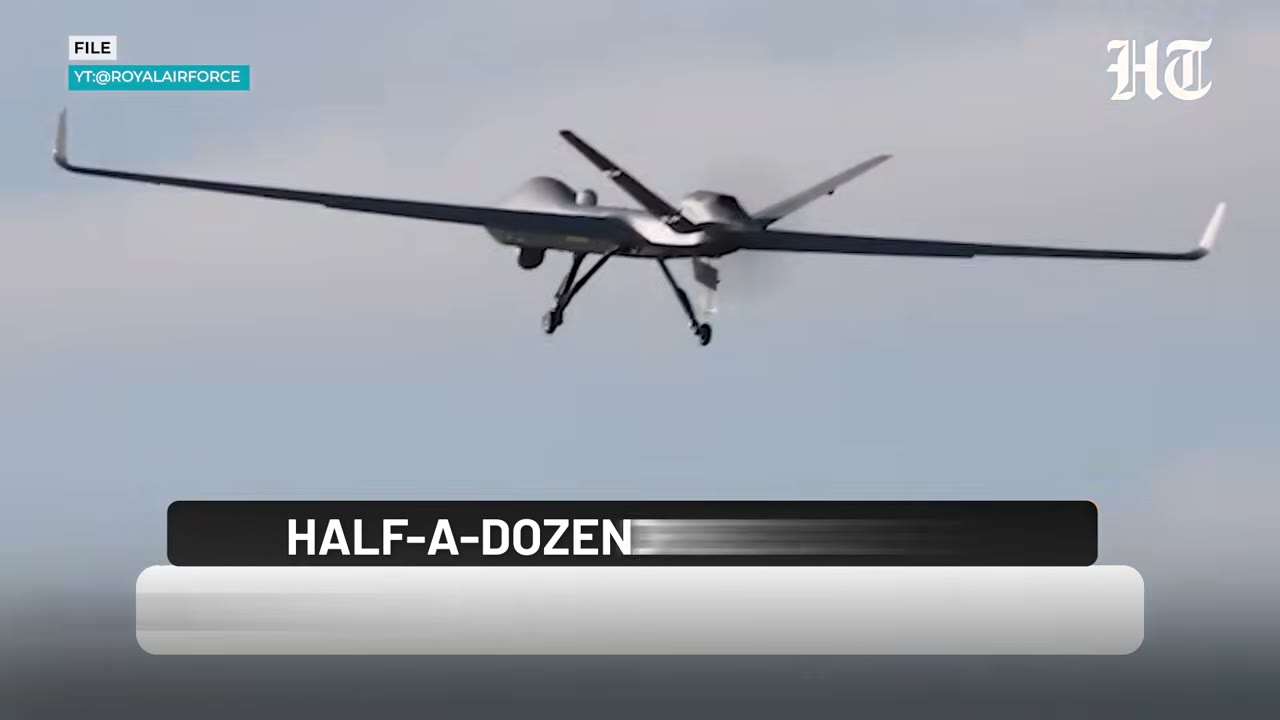
Around half a dozen unidentified drones reportedly swarmed RAF Lakenheath in the UK, and US forces failed to recover any. Iran denies involvement. Tehran also unveiled a twin-missile launcher and new missile variants, and an IRGC-linked outlet posted an AI video threatening US tech firms.
1Unidentified drones swarm UK base used by US forces
Around half a dozen unidentified drones were spotted near RAF Lakenheath in the United Kingdom, a major air base used by US forces, triggering heightened security measures. The US military reportedly deployed counter-drone systems to tackle the swarm, but American forces failed to retrieve any of the drones, leaving questions about their origin and mission unanswered.
The incident follows an earlier drone scare at RAF Fairford, another major military installation used by American forces, raising concerns about a possible pattern of drone activity near US bases. The reported incursion drew serious security concerns and questions about the vulnerability of American military installations on British soil.
2Drone incidents near US bases in Britain suggest pattern
Around half a dozen unidentified drones swarmed Britain's RAF Lakenheath air base on November 13th, according to the Financial Times, raising fresh security concerns around one of the most important US military installations in Europe. The US military reportedly deployed advanced counter-drone technology to intercept the aircraft, but American forces failed to recover any of the drones involved.
Very few details emerged publicly at the time, and the incident is now drawing renewed attention amid growing concerns over security at US-used bases. With tensions involving Iran extending beyond the Strait of Hormuz, the incidents are fueling speculation about whether the conflict could increasingly reach Western military installations far from the Middle East.
3Iran suspected of drone link but denies involvement
Iran is suspected of having a possible connection to the drone activity near the British base, the Financial Times reported, citing people familiar with the matter. No publicly established evidence has confirmed Iran's involvement, and Tehran has denied any involvement in the reported drone incursion.
Iran rejected suggestions that it was responsible for the unidentified aerial activity. The reported incident is drawing renewed attention amid growing concerns over security at US-used bases.
4Unanswered questions over drone payload and purpose
The failure to recover any of the drones near the British military installation has left investigators with several unanswered questions, particularly over whether the aircraft were carrying equipment or any potentially dangerous payload. Experts have raised the possibility that the drones could have been fitted with weapons or specialized espionage equipment, potentially allowing them to conduct surveillance or gather sensitive information about military operations.
The latest incident adds to a growing series of security episodes involving British military installations used by American forces.
5Security fears grow over US-used British air bases
RAF Lakenheath is home to the largest US fighter jet operation in Europe, hosting nearly 7,000 military personnel and supporting some of Washington's most important air combat capabilities on the continent. In September, the base was reportedly placed under Charlie Alert, the US military's second highest threat level, indicating a heightened security posture amid concerns about potential threats to American forces.
Security concerns this year also include an alleged terror plot targeting RAF Fairford in Gloucestershire, another major British air base that serves as an important operating location for American military aircraft.
6Iran announces naval upgrade and advanced military systems
Iran has announced plans to upgrade its naval capabilities and introduce advanced military systems, signaling Tehran's continued focus on strengthening its maritime forces amid escalating regional tensions. Iran's news agency shared an AI-generated video alongside the announcement.
7Iran-linked outlet posts AI video threatening US tech firms
Iran's news agency shared an AI-generated video threatening American technology companies, posted on Telegram on November 26th. The video threatened Amazon, Microsoft and Elon Musk's SpaceX, depicting drone attacks, explosions and fires at the companies' headquarters.
The clip accused the companies of supporting the war against Iran, which began in February, and demanded reparations and repentance, threatening destruction if those demands were not met. Its accompanying Telegram post specifically cited the February bombing of an elementary school in Minab; according to reports, the strike killed 175 people, most of them children, and a preliminary military investigation found the United States responsible.
The post also accused the companies of secretly cooperating with American and Israeli military units.
8IRGC unveils twin-missile launcher
Iran's Islamic Revolutionary Guard Corps unveiled a new missile launcher on November 21st, according to a report by Defense Security Asia, showcasing another addition to Tehran's expanding ballistic missile capabilities. The newly revealed system reportedly carries two liquid-fuel ballistic missiles on a single launcher, allowing the platform to accommodate two missiles instead of a conventional single-missile configuration.
This twin launcher configuration could potentially allow Iran to deploy and fire more missiles using fewer launcher platforms, increasing its ability to conduct larger missile salvos without proportionately expanding its launcher fleet. However, the launcher's ability to fire both missiles simultaneously has not yet been publicly demonstrated, leaving questions about its actual operational capabilities.
9IRGC chief inspects new missile system
IRGC chief Ahmad Bahiti and aerospace force commander Majid Musavi were seen inspecting the newly unveiled missile system, highlighting the importance Tehran appears to be attaching to this development. "What the enemies have faced is only the beginning and you will witness their humiliation and their immense helplessness and we too shall witness that God willing," Bahiti said.
Iran also highlighted the missile's trajectory control and guidance capabilities, suggesting the system is designed to offer greater control over its flight path and improve its ability to reach designated targets. Iran has previously reported deploying a twin launcher configuration for solid-fuel ballistic missiles as well. However, Tehran has not disclosed how many of these twin launchers it possesses, nor confirmed whether the newly showcased system has been formally inducted into operational service.
10Iran claims missiles can operate without GPS
Iran has claimed that its missile systems can operate without relying on GPS-based navigation, potentially allowing them to maintain guidance capabilities even if satellite navigation signals are disrupted or denied during a conflict. With no peace deal in sight, the claim adds to concerns over Tehran's expanding missile capabilities.
11Iran develops new missile variants to evade interception
Iran is building new ballistic missiles designed to slip past US and Israeli air defenses, according to Iran International, which reported details of Tehran's program on November 25. The Institute for the Study of War and the Critical Threats Project said the variants appear built to make interception harder, potentially complicating defensive efforts.
Researchers said Iran combined different propulsion systems and warhead technologies into hybrid missiles, improving on existing weapons. The new variants could reportedly be made with minimal changes to Iran's existing industrial supply chain, letting Tehran adapt its arsenal quickly.
ISW said the scale of Iran's remaining missile stockpiles and production capacity remains unclear after US-Israeli strikes on Iranian facilities. The report also said the economic costs of the US blockade are becoming increasingly unbearable for Tehran, and Iranian officials were reportedly weighing attacks on US regional assets involved in enforcing it.