Britain's defense secretary warns the country has just over 1,000 days to prepare for war, while three of four nuclear submarines went to sea at once. The video examines military warnings, Russian naval activity, undersea cable threats, new drone technology and a 10 billion pound Ukraine package.
1Three British Nuclear Submarines Deploy Simultaneously in Unusual Move
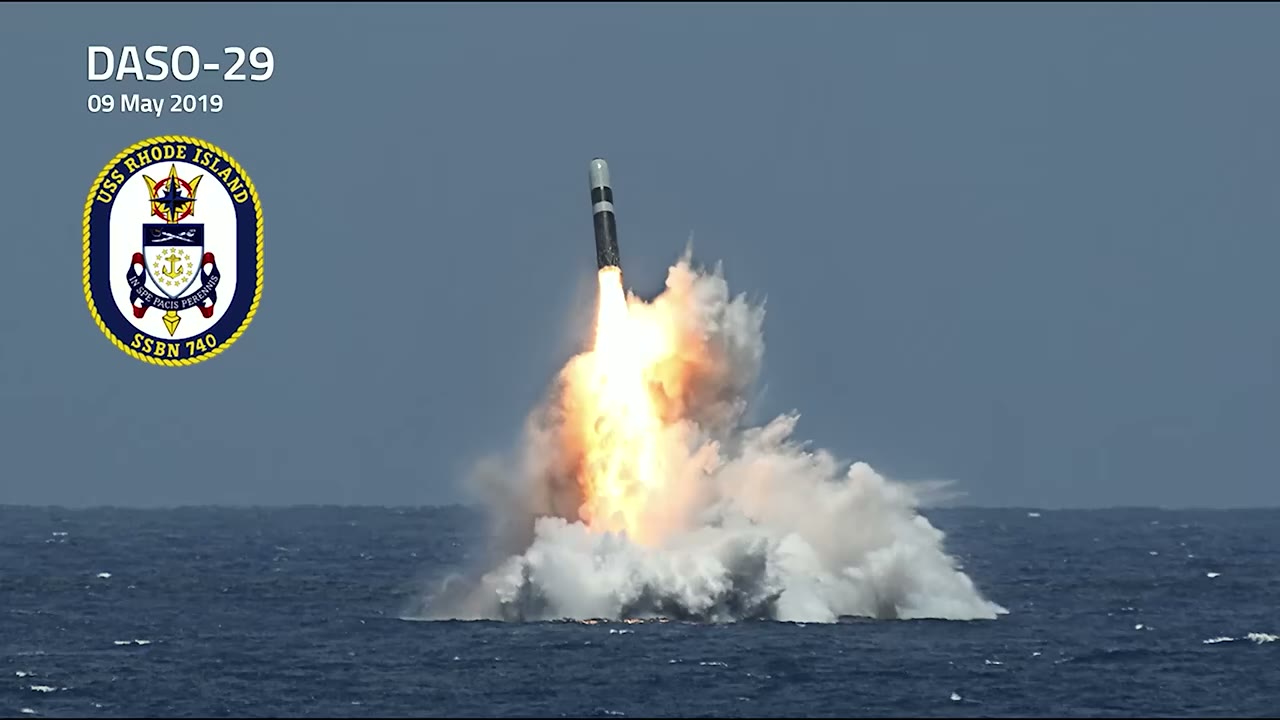
Three of Britain's four nuclear submarines are at sea at the same time — a rare sighting of the country's ultimate deterrent. The head of the British military says this is the most dangerous period of his adult life, while the defense secretary says the country has a little over 1,000 days to get ready to fight and win. Officials insist war is not coming and that all of this is about preventing one. Countries that feel safe, though, don't ask families to keep cash and a wind-up radio at home.
2Defense Secretary Ben Wallace Calls Russian Threats State-Sponsored Terrorism
Ben Wallace called hostile governments' threats "state-sponsored terrorism" in an October 22 interview, dropping the usual talk of hybrid warfare and gray-zone threats. The defense secretary said those technical phrases don't tell the public what is really happening. He insisted the threats are not hypothetical and are showing up closer and closer to home. He asked people to picture a cyber attack shutting down payment systems, disruption choking supply chains feeding local shops, and also natural dangers like widespread flooding and forest fires.
3Britain Given 1,000 Days to Prepare for War Under Be Ready Campaign
Britain must be ready for war within 1,000 days, the defense secretary wrote in a national newspaper days later. His logic: Britain's adversaries have always been willing to hurt it, but by 2030 their forces and war economies could be strong enough to attack. That leaves a little more than 1,000 days to be ready alongside allies to fight and win. It followed the launch of a public campaign called Be Ready, asking households to keep three days of tinned food and bottled water, some cash, and a wind-up radio.
4Top General Richard Knighton Stockpiles Food and Warns of Dangerous Period
Air Chief Marshal Sir Richard Knighton, the chief of the Defence Staff, told the BBC he had taken the stockpiling advice personally. He and his wife spent the weekend clearing out cupboards, and he found, in his words, "a lot of tins in the Knighton household." He even put up extra shelves. In an interview with the Financial Times, the 57-year-old said this is the most dangerous period he has known in his adult life. Back in June, he called it the most dangerous time of his entire 35-year career.
5Knighton Lists Assassinations, Sabotage and Cyber Attacks as Russian Threats
Knighton says the threat, mainly from Russia but rising across the world, is growing — and that Moscow has become more comfortable with risk. He told the Financial Times that the phrase hybrid activity no longer captures the scale of what's happening. Instead he listed targeted assassinations, sabotage and cyber attacks. He said the Russian state is behind these things, that there is proof, and that it has happened in Europe and, to some extent, in Britain.
6Europe Investigates Suspected Russian Bomb Threats Against Airlines
European security officials are investigating whether a wave of bomb threats against European airlines and news organizations came from Russia. Nobody has proven that yet. Intelligence agencies in several countries are still trying to trace where the threats came from, and officials said there is a long way to go before anyone can point the finger for certain. Some in the intelligence world are confident Russia is the most likely culprit. Russia has denied involvement in this kind of attack before.
7Knighton Says Britain Must Catch Up With More Alert European Allies
Britain needs to catch up with its European allies because they are more awake to the danger, the head of the British military said. He backed it with numbers: NATO jets have scrambled 700 times in response to Russian activity, and Russian long-range strategic aircraft had by June already appeared as often this year as in the whole of last year. His summary was blunt: "This is not about preparing for war. It's about preventing it." Deterrence, in his view, means convincing your enemy the cost of attacking will far outweigh any gain.
8Three Vanguard Submarines at Sea Puzzle Experts Over Reason
Three of Britain's four Vanguard-class submarines were at sea at the same time in late October, the Times reported: HMS Vanguard, HMS Vigilant and HMS Vengeance. Only HMS Victoria stayed behind in maintenance at Devonport. Britain normally keeps one nuclear-armed submarine at sea at all times, without a break since 1969. The Ministry of Defense declined to comment on submarine movements. A campaign group, Nukewatch, first told a Scottish news outlet on October 15 that three had sailed; naval sources confirmed it to the press nearly two weeks later.
9Longer Submarine Patrols Raise Questions About Fleet Use
Submarine patrols have grown longer, from two or three months to past six. HMS Vanguard came home in April after more than 200 days at sea. That prompted one defense analyst to ask a simple question: if you finally have three seaworthy boats, why not use them to shorten those patrols? Why do something else instead? Nobody has answered that.
10Critics Warn Submarine Move Could Escalate Russian Alert Level
Critics say the submarine deployment is risky. One campaigner warned that Russia could read the move completely differently from how London intends it and raise its own alert level in response. The consequences of a misunderstanding, he said, could be grave. That leads to the next problem, because there is a basic tool for avoiding misunderstandings — and Britain doesn't seem to have it.
11Britain Lacks Military Hotline to Moscow Since 2022
No serving chief of the defense staff or defense secretary has spoken to a Russian counterpart since 2022, according to the Financial Times — four years. The defense secretary says he wants a phone line to Moscow. He said Britain has an embassy in Moscow, which is useful, but he would much prefer additional channels, especially at the military-to-military level, because there is always a risk of miscalculation. British officials say attempts to reopen contact have so far been rebuffed.
12Russian Aircraft and Warship Conduct Dangerous Maneuvers Near UK Forces
In July, a Russian maritime patrol aircraft flew low past the carrier HMS Prince of Wales in the Norwegian Sea and dropped sonar buoys near her. Britain's Ministry of Defense called it unsafe and unprofessional. A Russian frigate, the Admiral Grigorovich, also fired warning shots near a British yacht south of the Isle of Wight. The ministry said it was an attempt to prevent a possible collision.
13Britain Weighs More Military Help for Saudi Arabia
Britain is stretched on other fronts too. The defense secretary left the door open to more British help for Saudi Arabia, where the RAF has already supported with Typhoons, transport aircraft and advisors. But he was careful to say the country doesn't want to be dragged into the war. So Britain is preparing at home, flexing at sea and stretched in the Middle East at the same time.
14Russian Frigate Escorts Gas Tanker Near German Island
A modern Russian warship carrying hypersonic missiles slipped past a German holiday island with its tracking signal dark. In August, the frigate Admiral Kasatonov appeared near Famon, a German island in the Baltic known for its beaches. The Telegraph reported its location transponder was switched off, making it far harder to track.
The ship is one of the Russian Navy's most modern and carries Zircon hypersonic missiles, which Russia says can take conventional or nuclear warheads. Analysts say it was escorting a gas tanker called the Portavi out of the Baltic.
A destroyer, the Admiral Levchenko, had arrived in the region only weeks earlier. One analyst called it "quite a commitment of naval resources" just to keep trade moving.
15Russia Threatens Merchant Ships Over Shadow Fleet Seizures
A senior Russian official says merchant ships of enemy states could be fair game. Dmitry Medvedev claimed Russia has the right to attack any merchant ship belonging to an enemy state if it suspects the cargo helps that enemy.
It follows Britain and France intercepting or seizing vessels suspected of working for Russia's shadow fleet — aging, poorly insured tankers that help Moscow dodge sanctions. During an inspection of a warship, Vladimir Putin called that piracy and said Russia would respond in kind in any area it considers appropriate.
Ukrainian naval drones have already damaged gas tankers, and Moscow is adapting. The Royal Navy says it is already feeling the pressure.
16Royal Navy Tracks Russian Vessels as Convoys Head Toward Atlantic
Russian convoys are reaching the English Channel with escorts that have gone dark. In early November, open-source analysts tracked a corvette called the Stoikiy escorting groups of cargo ships out of the Baltic through the Danish Straits.
The ships had come from Baltiysk in Kaliningrad, a naval base where military equipment had earlier been seen loaded onto civilian vessels. Satellite imagery showed one group moving with an unidentified escort that had no active tracking signal.
By November 6th, the first convoy had reached the western approaches to the English Channel and was heading for the Atlantic. Analysts suggest the cargo could be meant for Russian forces in Libya or elsewhere in Africa, but the destination is unconfirmed. In July, Royal Navy ships and aircraft spent 21 days tracking Russian vessels — up 25% from the same month last year.
17Royal Navy Orders 20 Kraken Drone Boats to Modernize Fleet
Britain's navy has placed its first ever order for operational drone boats — 20 small uncrewed vessels for about 12.5 million pounds. Built by British company Kraken, each boat is roughly 8 metres long and works out at about 615,000 pounds.
The First Sea Lord, General Sir Gwyn Jenkins, says they reached the Royal Marines in just months. He wants buying times for some systems cut to as little as 3 months.
His inspiration is Ukraine, where sea drones have disabled about a third of Russia's Black Sea fleet. Jenkins says Navy war games show the hybrid approach triples missile capacity, and that Russian incursions into British waters have risen by nearly a third in 2 years.
18Britain Launches Atlantic Net to Track Russian Submarines
Britain is building a 90 million pound surveillance net across the North Atlantic to track Russian submarines. On November 10th in Oslo, aboard HMS Prince of Wales, Defence Minister Luke Pollard announced Atlantic Net.
The ministry signed an agreement with Southampton company Ocean Infinity Solutions to build the network, which is meant to help protect undersea cables. The target is to have it working from 2027.
Private companies will own and run the ships and sensors, with the Navy providing oversight. Sonar, uncrewed vessels and artificial intelligence combine to warn warships earlier about activity beneath the surface. The first focus is the gap between Greenland, Iceland and the UK — the narrow doorway Russian submarines use to reach the Atlantic.
19Britain Announces 10 Billion Pound Ukraine Package
Britain has announced a further 10 billion pounds for Ukraine — the largest package it has ever offered. On October 28th, Prime Minister Andy Burnham and Chancellor John Healy set out the plan.
Seven billion is economic support over three years. Another three billion is added to export finance capacity, prioritized for military purchases. And 500 million pounds goes to Ukraine's air defenses this winter as Russian strikes keep hammering its infrastructure.
It comes on top of the three billion pounds a year Britain has already promised. The government says the total commitment since the invasion reaches 35 billion pounds. Ukraine's president, Volodymyr Zelenskyy, said the timing mattered because Russia must see that Ukraine will not be left alone with the problems Russia is so eager to escalate.
20Defense Spending Debate and Unanswered Questions Remain
A general says the public will have to be told what more defense spending costs elsewhere. Knight said the state must explain the Russian threat while justifying higher defense budgets, and earlier in the year said Britain must spend more and faster, with ministers facing difficult trade-offs.
The government's argument is that Ukraine is the front line of Britain's own security — every pound spent there keeps the danger away from home.
Questions remain unanswered: why were three nuclear submarines at sea at once, why won't Moscow pick up the phone, and what was in those cargo ships sailing toward the Atlantic? The advice at home is ordinary — keep some food, water, cash and a radio.