This video ranks the Portuguese Navy's most modern warships, from shallow-water river patrol vessels to Trident-class submarines and the planned FREMM EVO frigates. It covers patrol, survey, logistics and combat ships, and highlights Portugal's 2026 agreement with Italy for three new frigates.
1Rio Minho Class Patrol Boats Use Water Cannons for Shallow River Border Duty
Portugal's Rio Minho class patrol boat moves through water too shallow for ordinary warships — using two water cannons instead of propellers and a rudder. Built in Portugal in 1991, the vessel was designed for patrol missions along the Minho River, which forms part of the border between Portugal and Spain.
The water-jet setup makes it extremely maneuverable in shallow water where larger ships struggle. Its duties include border surveillance, preventing illegal activities, and supporting rescue operations.
It is not built to fight enemy frigates or launch missiles. Its strength lies in working where more powerful warships cannot reach.
2Cassin Class Patrol Ships Retire After Five Decades of Service
Ten patrol ships commissioned in the early 1970s stayed useful for over 50 years. The Cassin class was a familiar element of Portugal's coastal fleet before replacements began arriving, originally designed to patrol coastal waters and rivers, including missions in Africa.
The ships later took on maritime surveillance, counter-smuggling, search and rescue, and support to civil authorities. Lightly armed, their advantage was staying on patrol without the resources a large frigate needs.
Several have already been decommissioned as newer patrol platforms take over. Their 1970s sensors, speed and combat systems cannot compete with modern warships.
3Argos Class Fast Patrol Boats Chase Suspicious Speedboats Near Shore
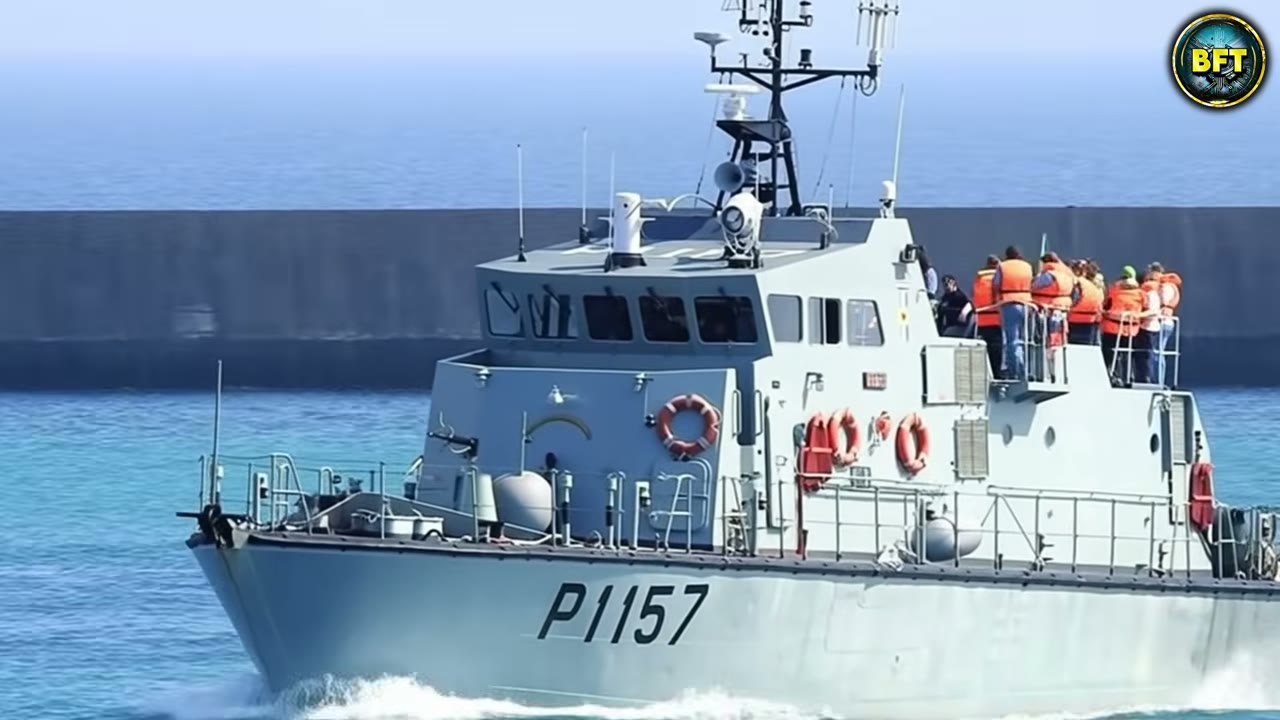
Sending a frigate after a suspicious speedboat is like using a tank to catch a bicycle — which is where Portugal's Argos class comes in. Five high-speed patrol boats entered service in 1991 for maritime security operations, with fiberglass hulls keeping them lightweight and compact for patrolling near shore.
The class includes Argos, Dragao, Escorpiao, Cassiopeia and Hydra. Their duties cover monitoring fisheries, preventing maritime crime, search and rescue, and assisting government agencies in maintaining law and order at sea.
Their weapons are built for limited security missions, not large naval battles. Their edge is quick response and cost-effectiveness.
4Centauro Class Adds Speed and Aluminum Hulls to Coastal Patrol
Four patrol boats displacing about 94 tons each reach roughly 48 km/h — enough to intercept many suspicious vessels near the coast. The Centauro class entered the fleet in 2000-2001, each about 27 meters long, with aluminum construction cutting weight and resisting corrosion from constant salt water.
Diesel engines drive the speed. Armament includes a 20mm cannon for limited defense and law enforcement, and a crew of just eight runs patrol, rescue and security missions.
The boats can also support naval exercises and escort larger ships in restricted waters.
5Andromeda Class Survey Ships Map the Seabed for Submarine Navigation
Portugal's Andromeda class was built not to launch missiles but to understand the ocean itself. The hydrographic survey vessels entered service in the late 1980s — Andromeda in 1987 and Auriga in 1988 — measuring about 31 meters long for research in coastal waters, estuaries and other areas where accurate seabed data is critical.
Their equipment supports hydrographic surveys, oceanographic research, marine geology studies and environmental monitoring, with diesel-electric propulsion allowing flexible scientific missions.
They carry no direct firepower, but their data matters for submarine navigation, mine countermeasures and planning naval operations.
6Tejo Class Turns Danish Modular Warships Into Portuguese Patrol Boats
Portugal's Tejo class patrol boats began life in Denmark as part of the Flyvefisken family of modular warships, designed so different equipment sets could be installed depending on the mission. Portugal acquired several and converted them for coastal patrol, with the first entering Portuguese service in 2016.
Their duties include maritime surveillance, fisheries protection, search and rescue, and support for operations against illegal activity at sea. They patrol coastal areas and may operate near Madeira, where conditions can quickly become difficult.
The Portuguese versions are not heavily armed missile ships. Their value is versatility along a large coastline.
7Dom Carlos I Class Started as a US Navy Underwater Surveillance Ship
One of Portugal's key oceanographic vessels began its career with the US Navy. Launched in 1989 as the American surveillance ship Audacious, it was built to collect underwater acoustic information, particularly related to submarine activity. Portugal acquired it in 1996 and commissioned it as Dom Carlos I in 1997.
After modernization, its main role became hydrographic surveys and oceanographic research — studying underwater conditions, mapping the seabed and collecting data that aids navigation and naval operations.
The class also includes Almirante Gago Coutinho, another former American ship adapted for Portugal. Understanding the ocean can matter as much as weapons.
8Trator do Mar Unmanned Vessel Tows Passive Sonar to Hunt Submarines
A small vessel travels the ocean with no sailors on deck and no bridge full of officers — its operators stay safe on shore. Trator do Mar is an experimental unmanned surface vessel developed by the Portuguese Navy, unveiled during naval exercises in 2024 to support underwater surveillance, including submarine detection.
Its key capability is towing passive sonar that listens to underwater sounds without transmitting active signals. Several such vessels could eventually work together with other sensors to improve surveillance of important maritime areas.
Until 2026, the system was also demonstrated during remotely operated hydrographic survey operations. It remains experimental, not a traditional warship class.
9Viana do Castelo Class Offshore Patrol Vessels Cover Azores and Madeira
Portugal must control vast expanses of Atlantic water, including the maritime zones around the Azores and Madeira — a problem small patrol boats cannot solve alone. The Viana do Castelo class was designed for it: offshore patrol vessels displacing approximately 1,850 tons, typically operating with a crew of around 44.
The first ship entered service in 2010, followed by additional vessels built in Portugal. They are built for long-term missions in difficult ocean conditions, monitoring fisheries, supporting rescue operations, combating maritime crime and assisting international security missions.
They are not designed to fight modern destroyers. Their weapons and sensors mainly support patrol and security operations.
10Portugal Orders Luis de Camoes Support Ships From Turkish Shipbuilders
Even the most modern warship becomes useless if it cannot keep operating — which is why Portugal is investing in new Luis de Camoes-class logistical support ships. Built in partnership with Turkish shipbuilders, they are designed to carry fuel, supplies, ammunition and other necessary equipment.
The planned structure is approximately 137 meters long with a displacement of about 11,000 tons. Each ship is expected to carry thousands of cubic meters of fuel, large amounts of fresh water and significant cargo, support helicopter operations, and transport up to 20 light armored vehicles.
Construction of the first vessel began in 2025, with delivery scheduled for 2028.
11Dom Joao II Drone Carrier Launched in Romania for 2027 Delivery
A 107-meter Portuguese ship designed to launch drones rather than crewed aircraft has been launched in Romania. Dom João II uses a related design to Damen's MPSS 7000 concept, known as MPV 10720 — not quite the same class — and is built to support unmanned aerial vehicles, surface drones and underwater vehicles.
Its large flight deck will let various drone types operate from the ship, while interior spaces provide for research and maritime surveillance. Think of it as a mobile base for robotic systems, not a traditional aircraft carrier.
Launched in April 2026, it is scheduled for delivery in 2027 and has not yet entered operational service.
12Vasco da Gama Class Frigates Face Modernization After 30 Years
Three German-built guided missile frigates commissioned in the early 1990s form Portugal's Vasco da Gama class — about 116 meters long, displacing around 3,200 tons, and based on the Meko 200 project. They can combat threats above, on and under water.
Armament includes a 100mm naval gun, Harpoon anti-ship missiles, Sea Sparrow air defense missiles, anti-submarine torpedoes and the Phalanx close-in defense system, and they can base a Lynx naval helicopter.
But the frigates are over 30 years old, and without modernization their initial technology cannot match the most modern warships. They remain important assets for Portugal and international maritime missions.
13Bartolomeo Dias Class Frigates Specialize in Hunting Submarines
If a submarine is hiding somewhere under the Atlantic, Portugal's Bartolomeo Dias class is among the surface combatants built to find it. The two frigates initially served in the Royal Netherlands Navy before transfer to Portugal, where they were commissioned in 2009 and 2010.
Their design emphasizes anti-submarine warfare, though they also counter surface and air threats. Armament includes a 76mm naval gun, Harpoon anti-ship missiles, Sea Sparrow air defense missiles, torpedoes and the Goalkeeper close-in defense system.
A hull-mounted sonar and a towed sonar system let crews search beyond the ship's immediate area, and a naval helicopter extends the search further. Portugal has invested in modernizing their combat control systems and air defense.
14Trident Class Submarines Use Fuel Cells to Stay Hidden Underwater
Two Portuguese submarines can stay hidden underwater for long stretches without surfacing, powered by fuel cells instead of diesel. The Tridente and the Arpão, built in Germany and commissioned in 2010 and 2011, are the Trident class boats behind that threat.
Each is about 68 meters long and displaces roughly 2,020 tons when submerged. Their edge is a mix of advanced sensors, low noise levels and an anaerobic power plant. The fuel cells generate electricity, letting the boats stay down for long periods without surfacing regularly or using a snorkel for diesel engines, which makes them much harder to detect.
They carry heavy torpedoes and can travel underwater at over 37 km per hour. Missions include maritime surveillance, intelligence gathering and underwater warfare. Small crews can operate covertly over vast areas, making them valuable to NATO operations in the Atlantic, and unlike surface ships they do not need to reveal their location just to observe the enemy.
15Portugal Signs 2026 Deal With Italy for Three FREMM EVO Frigates
Portugal signed an agreement with Italy in July 2026 to acquire three FREMM EVO frigates, with deliveries scheduled for 2029–2030. The ships are meant to be a significant step forward from the frigates currently in the fleet.
They are designed for modern naval warfare, combining advanced radar technology, missile systems, electronic warfare equipment and powerful underwater sensors. Planned radar systems use fixed antenna arrays operating in two frequency bands, allowing the ships to track airborne and surface threats more effectively. Combat control systems are built to process large amounts of information and coordinate defensive responses.
The design also includes vertical missile launchers, advanced anti-submarine equipment, and improved anti-drone and anti-missile capabilities. Portugal's final weapons configuration still depends on program decisions, so not every proposed system should be considered confirmed.