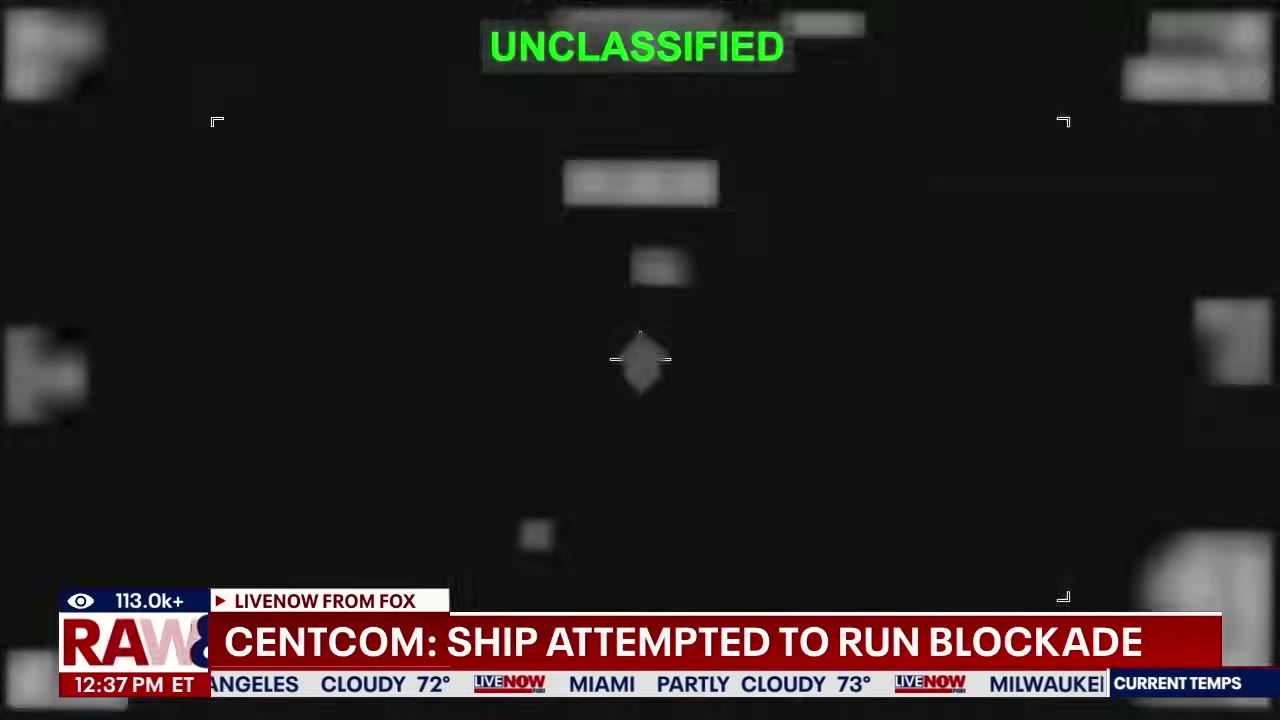
CENTCOM says a US aircraft disabled the MV Pacific Archer after it tried to break a naval blockade leaving an Iranian port. Iran's IRGC claims it is mining the Strait of Hormuz and that a tanker hit a mine, while Trump says there are no immediate plans to resume strikes.
1US Aircraft Disables MV Pacific Archer for Breaking Gulf of Oman Blockade
A US military aircraft fired precision weapons into the stern of a civilian bulk carrier in the Gulf of Oman, disabling its engines after the crew ignored repeated warnings and tried to run a US naval blockade. The ship was the MV Pacific Archer, a vessel flying the flag of Palau.
US Central Command said the crew had left an Iranian port and was attempting to break the blockade when the strike came yesterday. The hit knocked out the ship's engines. No one in the civilian crew was injured.
The carrier had departed Bandar Abbas, a port in southern Iran, before heading into regional waters. CENTCOM described the warnings as repeated before the aircraft opened fire on the stern.
The strike marks a direct US move against a commercial ship, not a warship, in one of the world's busiest oil shipping corridors. Bulk carriers of this kind normally carry dry cargo, not crude.
CENTCOM has not said what happens to the Pacific Archer now that it is dead in the water, or whether its crew will be taken off. The command says it is still enforcing the blockade.
2CENTCOM Says 158 Vessels Redirected and Six Stopped Under Blockade
US forces have redirected 158 commercial vessels and stopped six that refused to cooperate as they enforce a naval blockade near the Strait of Hormuz, US Central Command says.
The command said the ships that complied turned back under its demands. The six that did not were stopped. It did not say how those six were halted.
CENTCOM is urging all sailors in the Gulf of Oman and the approaches to the Strait of Hormuz to follow its blockade warnings. The command released footage of one stopped vessel, the MV Pacific Archer, a Palau-flagged bulk carrier left with its engines disabled after a precision strike on its stern.
The numbers give a sense of scale: more than 160 ships have now been turned back or halted since the blockade began. The Strait of Hormuz is a narrow passage that carries a large share of the world's seaborne oil, so any disruption there reaches far beyond the region.
CENTCOM says enforcement continues. It has not said how long the blockade will last or what happens to ships that keep trying to run it.
3IRGC Claims It Is Laying Mines and Tanker Hit One in Strait
Iran's Revolutionary Guard says an oil tanker struck a naval mine and exploded in the Strait of Hormuz this morning, forcing a second tanker to turn around.
The IRGC Navy said it is continuing to lay mines in the strait. It claimed the two vessels were trying to slip through north of the Gulf of Oman on what it called, quote, "an unauthorized shipping route."
That account comes from Iran's side only. US Central Command has not confirmed an explosion or a mine strike, and the claim could not be independently checked.
The two sides are telling sharply different stories about the same waters. CENTCOM says it is enforcing a blockade and has redirected 158 commercial vessels and stopped six. The IRGC says it is still mining the strait, the narrow channel that carries a large share of global oil shipments.
If mines are being laid in the Strait of Hormuz, the risk extends past the ships involved: tankers carrying oil to world markets use the same passage. Iran also said it is not resuming military strikes, even as its navy claims to keep sowing mines.
What happens next depends on whether more ships hit explosives, and on how the US responds.