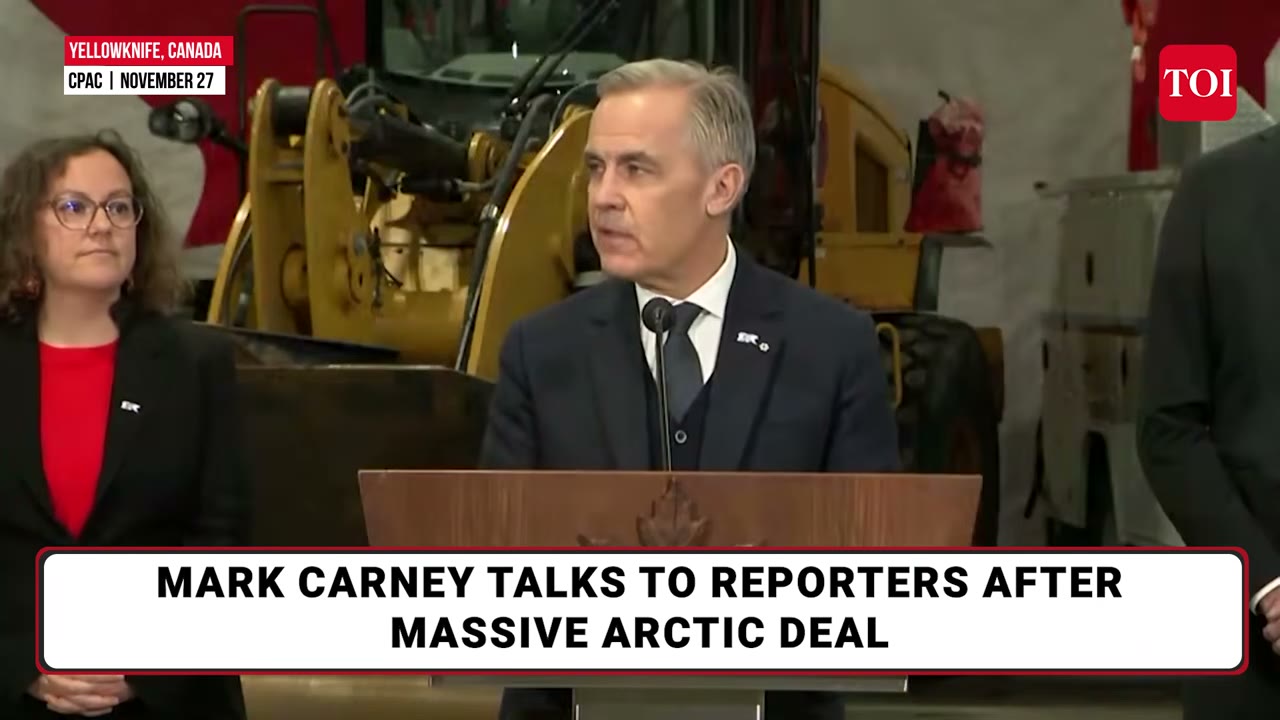
Canadian Prime Minister Mark Carney announces federal listing of the Mackenzie Valley Highway as a project of national interest and over $120 million for an Arctic corridor. He cites new trade deals and infrastructure spending to connect the North and reduce reliance on a single market.
1Carney Touts Connections and New Trade Deals to Reduce Single-Market Reliance
Canada has signed seven new trade and investment agreements since March, Prime Minister Mark Carney said in Yellowknife, and launched negotiations toward seven more. The push, he said, is to build "a dense web of reliable partnerships around the world" and cut reliance on a single market.
Canada now holds 20 free trade agreements covering 60 countries, giving preferential access to more than two billion consumers — over two-thirds of global GDP, Carney said.
He framed the deals as part of a wider drive to make Canada "the best connected economy in the world," linking trade abroad to investment and infrastructure at home.
2Canada Deepens Domestic Trade and Infrastructure Links Across Provinces
Canada is tearing down barriers to trade between provinces and territories and building at a speed not seen in generations, Carney said. He pointed to new roads to critical minerals in Ontario's Ring of Fire and new transmission lines to power growth in Northern British Columbia.
A line is planned to connect the BC grid to the Yukon, doubling the country's electricity grid and linking power east, west and north.
Ottawa is also exploring high-speed rail from Toronto to Quebec City and from Edmonton to Calgary.
3Carney Details $40 Billion Plan for Northern Defense and Infrastructure
An 800-kilometer all-season road will run from Wrigley to Anuvic, connecting Tulita, Norman Wells and Fort Good Hope to the south by road year-round for the first time. The plan is backed by more than $40 billion in investments, Carney said.
The money covers defense and security capabilities and critical infrastructure to connect communities and unlock what Carney called the North's extraordinary potential.
The road will cut the driving distance between Yellowknife and Anuvic by 1,300 kilometers.
4Mackenzie Valley Highway Work Advances Through Wildfire Season
Work has begun to resurface Highway 1 toward Wrigley, and crews are in place so that work on the Oscar Creek Bridge relocation and the Christina Creek realignment can start once the winter road is built in early 2027.
The highway was referred to the major projects office in March, and the office moved with speed through a difficult wildfire season, Carney said.
In September, more than $400 million was announced for the Great Bear River Bridge and the Prohibition Creek Access Road, plus engineering and design on two more bridges.
5Canada Lists Mackenzie Valley Highway as Project of National Interest
The Mackenzie Valley Highway is now officially listed as a project of national interest under the Building Canada Act, Carney announced in Yellowknife.
He said the listing brings the federal government to the table as one entity, streamlining processes so communities, Indigenous governments, the territory, workers and businesses know where Ottawa stands. "It gives certainty for the Mackenzie Valley Highway," he said.
Carney described it as a new way to build, with federal departments working in full partnership with Indigenous peoples, and said the government is bringing the expertise and capacity to manage a project of this scale.
6Federal Coordination and Treaty-Based Review Set for Highway Project
The Mackenzie Valley Highway will go through the Northwest Territories' treaty-based environmental assessment and regulatory regime, including a review by the Mackenzie Valley Environmental Impact Review Board.
The major projects office will coordinate financing and execution so funding, planning and delivery move together, Carney said.
Consultations starting now will inform a conditions document setting construction requirements and consolidating multiple federal permits — "one project, one plan, one set of commitments," Carney said.
7Governments and First Nations Sign Highway Governance Agreement
The Government of Canada, the Government of the Northwest Territories, the Sahtu Secretariat Incorporated, the Gwich'in Tribal Council and the Pedake First Nations signed a new leadership and governance understanding this week to guide the Mackenzie Valley Highway project.
Carney said the agreement establishes how the parties will work together, with shared leadership and shared governance.
It also aims to prepare communities for the opportunities ahead. "We've waited 70 years for this to be built," Carney said, "but it's how we build."
8Budget 2026 Fully Funds Mackenzie Valley Highway With $3 Billion First Tranche
Budget 2026 commits to fully fund construction of the Mackenzie Valley Highway, starting with a first tranche of more than $3 billion.
Carney said decades of incremental funding for the many proposals around the highway were incomplete and stalled progress rather than advancing it.
Full funding means the entire highway can be built as one project, speeding up work already underway.
9Carney Announces $120 Million for Arctic Economic and Security Corridor
More than $120 million from the Arctic Infrastructure Fund will accelerate an all-season road running about 400 kilometers north from Yellowknife to the Nunavut border, through the mineral-rich Slave Geological Province.
With the Grays Bay port and road, Yellowknife would be linked to a deep-water port on the Arctic Ocean, with open access to copper, zinc and gold, Carney said.
The money covers route selection, environmental studies, engineering and regulatory work to make the Arctic Economic and Security Corridor shovel-ready by 2029.
10Arctic Corridor Built in Partnership With First Nations and Territory
The Arctic Economic and Security Corridor is being built in partnership led by the Gwich'in government and the Yellowknife Dene First Nation, together with the Government of the Northwest Territories, Carney said.
Like the Mackenzie Valley Highway, the corridor is meant to connect communities at home and link Canada to the world.
"Generations of Northerners have waited for this moment," Carney said. "I have myself."