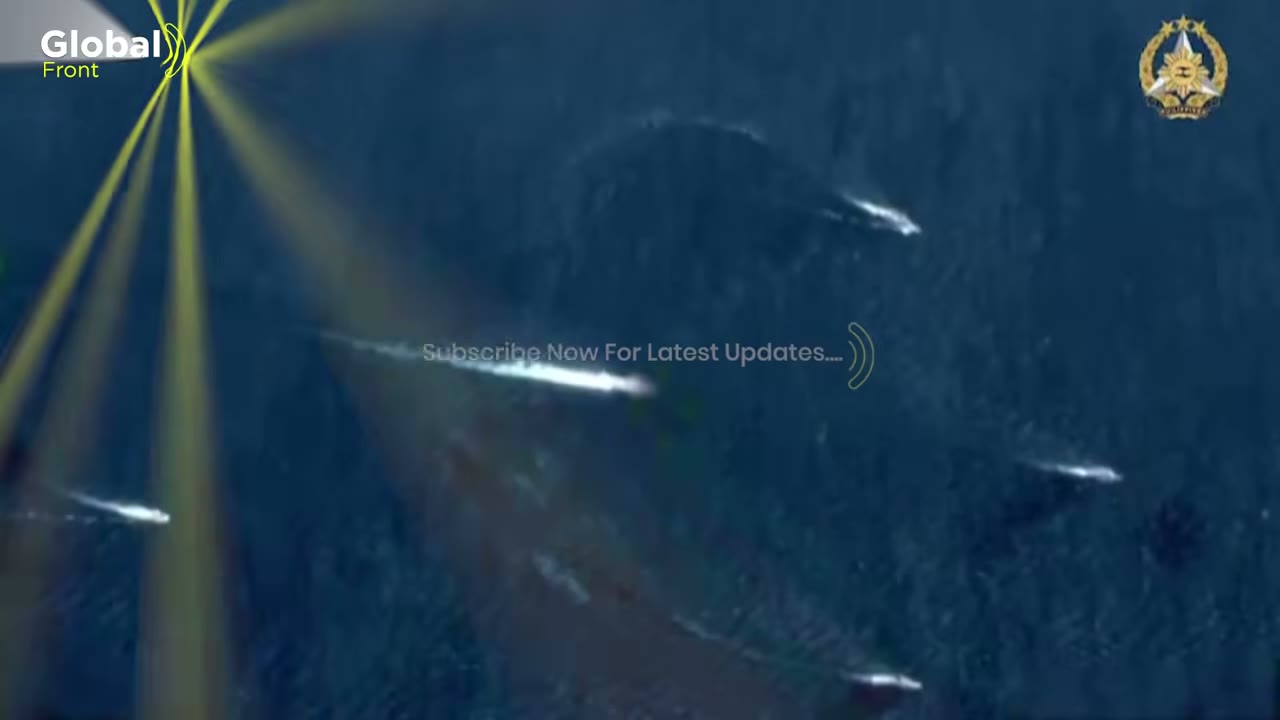
Former Philippine military chief Romeo Brawner Jr. warns that China's aggressive maritime tactics could become permanent and may exceed gray-zone pressure. He recounts violent confrontations, spy recruitment claims, and explains Manila's restraint strategy and its security quartet with the US, Japan and Australia.
1Brawner Warns China's Maritime Pressure Could Become Permanent
Former Philippine military chief General Romeo Brawner Jr. warned that his country cannot let China's intimidation and restrictions on its sovereign rights become a permanent reality.
Speaking on the sidelines of the third Manila Dialogue on the South China Sea, Brawner described dangerous encounters with Chinese coast guard ships, aggressive maneuvers and growing regional security concerns facing Philippine forces in disputed waters.
His remarks come as the Philippines strengthens defense cooperation with the United States, Japan and Australia while continuing to challenge China's expansive maritime claims.
2Brawner Recounts December 2023 Sierra Madre Resupply Confrontation
A small wooden boat carrying supplies for Philippine troops was rammed during a December 2023 resupply mission to the grounded warship BRP Sierra Madre, according to General Romeo Brawner Jr.
Brawner said he personally joined the mission at Second Thomas Shoal, known in the Philippines as Ayungin Shoal. There, Philippine personnel encountered Chinese coast guard ships that used water cannons and physically obstructed their movement.
He recalled the ramming created a dangerous situation for everyone on board. Upon reaching the Sierra Madre, Brawner noticed several Chinese vessels surrounding the area, and described the stress Filipino personnel must feel working under constant supervision.
3Brawner Cites June 2024 Clash Where Filipino Sailor Lost Thumb
A Filipino sailor lost his thumb in a June 2024 confrontation at the Second Thomas Shoal beachhead, one of the most striking examples of how fast maritime clashes can turn physical.
General Romeo Brawner Jr. cited the incident as he described what he called a broader pattern of sea pressure affecting several Philippine positions in the West Philippine Sea.
For Brawner, the confrontations are not isolated incidents. The June 2024 clash showed how quickly collisions involving maritime security ships can escalate into serious physical confrontations.
4Brawner Says Philippine Forces Chose Restraint Despite Wounded Sailor
Philippine forces could have hit back harder after a sailor was wounded in a June 2024 clash, but commanders deliberately held fire to avoid a wider conflict, according to General Romeo Brawner Jr.
Brawner suggested China's actions went beyond the usual "gray zone" pressure, raising concerns about how far Beijing might go in asserting its maritime claims.
Despite that, he stressed the military had been ordered to exercise maximum restraint. He said water cannons should not be used to damage vessels or injure personnel, and that Philippine forces tried to show restraint even when faced with aggressive actions. The balancing act, he indicated, is defending sovereignty without creating conditions for a broader regional confrontation.
5National Security Advisor Oban Warns Peace Must Not Mean Submission
Philippine National Security Advisor Eduardo Oban Jr. warned that peace in the South China Sea must not come at the cost of the country's future.
"Our duty is not only to preserve peace in the South China Sea, but also to ensure that the peace we preserve does not destroy the future we seek to secure," Oban said during the Manila Dialogue. He took office in April 2026.
Oban also said peace should never become synonymous with submission, just as defending sovereign rights should never invite conflict. General Romeo Brawner Jr. backed the argument, saying the Philippines must look beyond individual incidents and protect national interests for future generations.
6Brawner Warns China's Long-Term Pressure Could Distract Smaller Nations
China has the resources and strategic patience to keep pressure on smaller countries for years, potentially forcing them to focus on constant maritime clashes, former Philippine military chief General Romeo Brawner Jr. warned.
He said continued restrictions, harassment and intimidation could become the norm if Manila does not consistently counter them, undermining the country's ability to exercise its sovereign rights.
The concern has pushed Philippine security professionals to think beyond crisis management and consider how the regional environment might evolve over the next five years. Brawner said the challenge is not just responding to the latest confrontation, but making each response part of a broader national security strategy.
7Brawner Questions China's Friendship Talk Amid Continued Sea Pressure
China's diplomatic talk of friendship rings hollow while Filipino vessels and fishermen keep facing pressure at sea, former Philippine military chief General Romeo Brawner Jr. said.
Chinese representatives have repeatedly expressed a desire for friendly relations with neighbors, including the Philippines. Brawner questioned whether those statements can be taken seriously given the ongoing pressure.
He said actions speak louder than words, and that true friendship requires mutual respect, trust and a willingness to resolve differences without intimidation. In his view, ties between Manila and Beijing cannot improve through diplomatic statements alone.
8Philippines Stopped Sending Officers to China Over Spy Recruitment Fears
The Philippine Army stopped sending officers to China for training during General Romeo Brawner Jr.'s leadership over fears some were being recruited to spy.
Brawner said some Philippine military personnel were subjected to ideological influence during training, while others were approached with attempts to persuade them to spy for China. He did not present evidence, and the claims have not been independently established.
He argued such experiences make further military training exchanges difficult to justify, though he did not rule out communication between Philippine and Chinese military leaders. The revelations raise serious doubts about trust between the two armies.
9Chinese Commander Preferred Direct Bilateral Talks Without Other Countries
A high-ranking Chinese commander told former Philippine military chief General Romeo Brawner Jr. he preferred direct bilateral talks on the South China Sea, without other countries involved.
Brawner recalled the conversation, which took place at an event hosted by the U.S. Indo-Pacific Command, where he suggested both militaries could work to reduce tensions. The Chinese commander was willing to discuss the situation but wanted one-on-one negotiations.
Brawner saw this as evidence Beijing prefers direct talks over broader multilateral agreements, an approach he said could leave smaller countries at a disadvantage when facing a far more powerful state alone.
10Brawner Details Security Quartet With US, Japan and Australia
The Philippines, the United States, Japan and Australia have built a "security quartet" designed to keep working even when political and military leaders change, according to former Philippine military chief General Romeo Brawner Jr.
Brawner called strengthening the four-party cooperation one of the most important achievements of his tenure. He said establishing it was just the beginning; the harder goal was creating institutional relationships that outlast leadership changes.
He said the participating armies have taken steps to formalize cooperation so joint actions and strategic coordination can continue over time, and assessed that closer ties could contribute to real regional deterrence. But he admitted he could not determine whether the partnership had changed China's strategic calculations.
11Brawner Says Quartet Deterrence Effect on China Is Unclear
Former Philippine military chief General Romeo Brawner Jr. admitted he cannot tell whether the four-nation security partnership with the United States, Japan and Australia has changed China's strategic calculations.
Instead, he pointed to the practical benefits of the cooperation: improved coordination, exchange of experiences and a better understanding of partner forces' capabilities.
His assessment leaves open the question of whether the grouping has actually altered Beijing's behavior at sea, even as Manila leans on it as a key part of its regional defense strategy.
12Brawner Says Japan and Australia's Taiwan Caution Is Not Weakness
Japan and Australia are holding back on committing militarily to a Taiwan crisis — and former Philippine Army chief Brawner says that caution is not weakness.
Brawner argued that governments are naturally wary of making military commitments before a crisis arises, so hesitation should not be read as a lack of commitment to regional security.
His remarks came as the discussion turned to what happens if tensions over Taiwan escalate into a major military crisis.
Rather than automatic mutual defense commitments, Brawner suggested that expanding defense agreements, force presence arrangements and joint exercises could strengthen practical cooperation.
That points to deeper day-to-day military ties between like-minded partners, even while governments keep their options open on Taiwan.