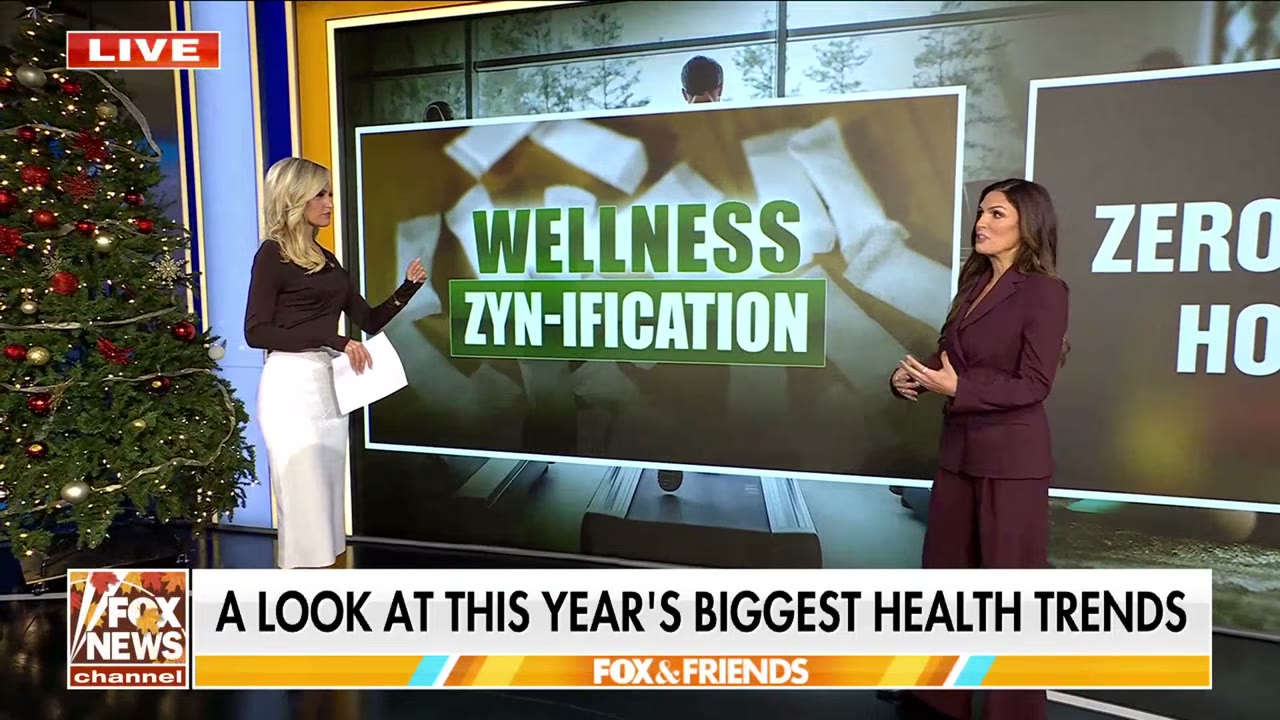
An emergency medicine physician discusses the year's biggest health trends, including pouches delivering nicotine, caffeine and vitamins, the rise of zero-proof holiday drinks, and matcha's reported benefits. She says long-term effects of pouch use remain unknown.
1Doctor says long-term effects of nicotine, caffeine and vitamin pouches unknown
Pouches that deliver nicotine now come in caffeine, melatonin and even vitamins — and doctors say nobody knows what happens when you keep them against your gum for years. "We don't have great data really tell us what the long-term effects of this is," a doctor said.
The format was popularized by nicotine pouches like Zyn, then applied to other substances. The doctor said there is little good data on whether pouches beat taking vitamins, caffeine or melatonin the traditional way — orally — or whether they carry any true benefits.
One concern is the mouth itself. Repeated exposure of the gum line to these products has not been well studied, the doctor said.
Another is dose. Pouches make it easy to take in a lot of caffeine, especially for people already drinking coffee and energy drinks. "It could be easy to kind of overdo it," the doctor said.
The doctor raised one possible upside: pouches may work as a substitute for people hooked on nicotine patches, since the habit involves oral fixation. Swapping in vitamins "may help as a substituted." Whether any of it helps "really remains to be seen."
2Zero-proof holiday drinks gain popularity but may not be healthier
Zero-proof holiday drinks are booming, but non-alcoholic doesn't automatically mean healthier. "Just because something is nonalcoholic does not mean it's healthier," a doctor said. "Check the ingredients."
Some non-alcoholic beverages can contain trace amounts of alcohol, the doctor said. And holiday staples like eggnog can be heavy on sugar — the doctor compared some of them to drinking a dessert.
The popularity is being driven by young adults, many of whom are drinking less. People are becoming more aware of alcohol's downsides and more mindful of their relationship with it, the doctor said, and they realize it is linked to a number of chronic health conditions.
The takeaway: read the label before assuming a zero-proof drink is the better choice.
3Doctor explains health benefits of matcha and compares it to coffee
Matcha is having a moment, and a doctor says there is a good amount of data behind its health benefits. Unlike steeping a tea bag and discarding the leaves, matcha means grinding the whole leaf and drinking all of it.
The doctor said data shows matcha — and green tea itself — helps with cardiovascular disease. It also contains compounds that give a sudden amount of alertness.
So is it better than coffee? The doctor wouldn't pick a winner. "I think there are health benefits to both," the doctor said. "I don't think we can say that one is better than the other."