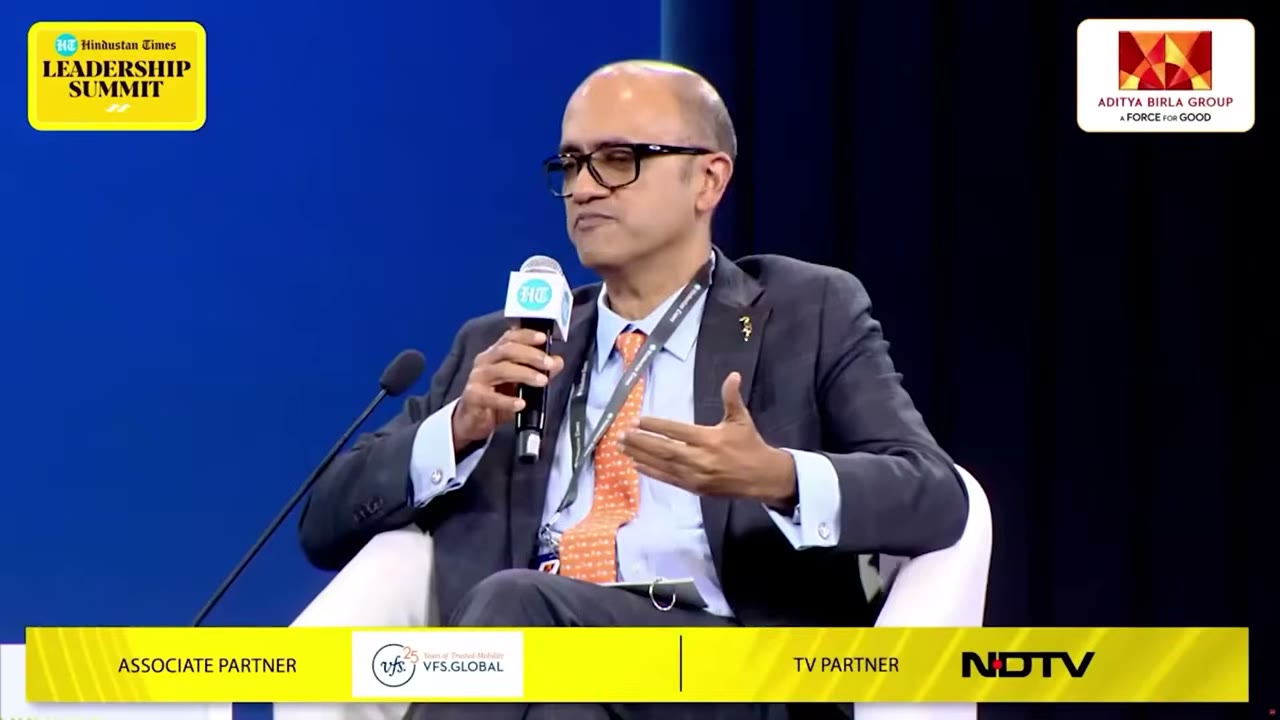
Physician and author Siddhartha Mukherjee explains how AI could speed up clinical trials using synthetic and historical data as controls. He warns of "bias in, bias out" risks and discusses conditional approval as a safeguard against ineffective medicines.
1Mukherjee Says AI Could Radically Change Clinical Trial Testing
AI's computing power could upend the way medicines are tested on humans, physician and author Siddhartha Mukherjee said, as he was pressed on whether the accepted model of clinical testing is too rigid. The questioner noted that simulations can now be run on all sorts of things, and that AI's sheer compute makes probability "as certain as you can try to be." Mukherjee, a doctor, was asked whether there is a way to radically change the process rather than stay "hung up" on the accepted model. He did not dismiss the idea. His answer began with a yes — then turned to whether the change should happen at all.
2Mukherjee Explains Why Medicine Invented Randomized Blinded Trials
Medicine invented the randomized blinded clinical trial — a tool now used in economics and other fields — because human beings are so biased that researchers had to build a mechanism to overcome it, Siddhartha Mukherjee said. Asked whether clinical testing could be radically changed, he gave a quick answer: "yes of course there's a radical way to change it." But the deeper question, he said, is whether it should be changed. Medicine, he argued, has led the charge more than any science in the world to illuminate human biases. The randomized blinded trial was medicine's invention, later adopted by other disciplines.
3Mukherjee Warns Synthetic Controls Risk Releasing Ineffective Drugs
Speeding up trials with synthetic controls could release medicines that "actually don't work," Siddhartha Mukherjee warned. In principle, he said, trials can be accelerated by giving a medicine to people and using historical or simulated data as the comparator instead of a real control group. His general warning: in AI, the problem is "bias in, bias out" — and that bias is a big problem in medicine. If the field goes "whole hog" and relies only on synthetic or historical data as controls, he said, it risks unleashing medicines into the world that don't work, or don't work as well as believed.
4Mukherjee Cites Conditional Approval as Fix for Trial Conundrum
Conditional approval — granting patients early access to a medicine, then withdrawing it if later trials fail — is one way out of the synthetic-data conundrum, Siddhartha Mukherjee said, pointing to Europe. The system lets regulators run a rapid trial, give conditional approval, continue the trial with appropriate controls, and withdraw approval after two or three years, he said, until the trial is complete. It matters most when patients are desperate and need medicines in good time — as was especially true during COVID. Without such a mechanism, he warned, the risk is "selling snake oil in the name of medicine" because of bias in, bias out.
5Host and Mukherjee Debate Stringent Checks for Conditional Approval
Conditional approval only works if its checks and balances are "really very very stringent," Siddhartha Mukherjee said, agreeing with the host that the idea is good. The host noted that drug discovery up to the clinical testing stage is very fast, creating a bottleneck — and that a conditional approval process would need tough safeguards. Mukherjee called that a human question: if people are innovative enough and can accept those checks and balances, he said, it is a tenable process. He added that making medicines that way does not lie outside the possibility of human discovery.