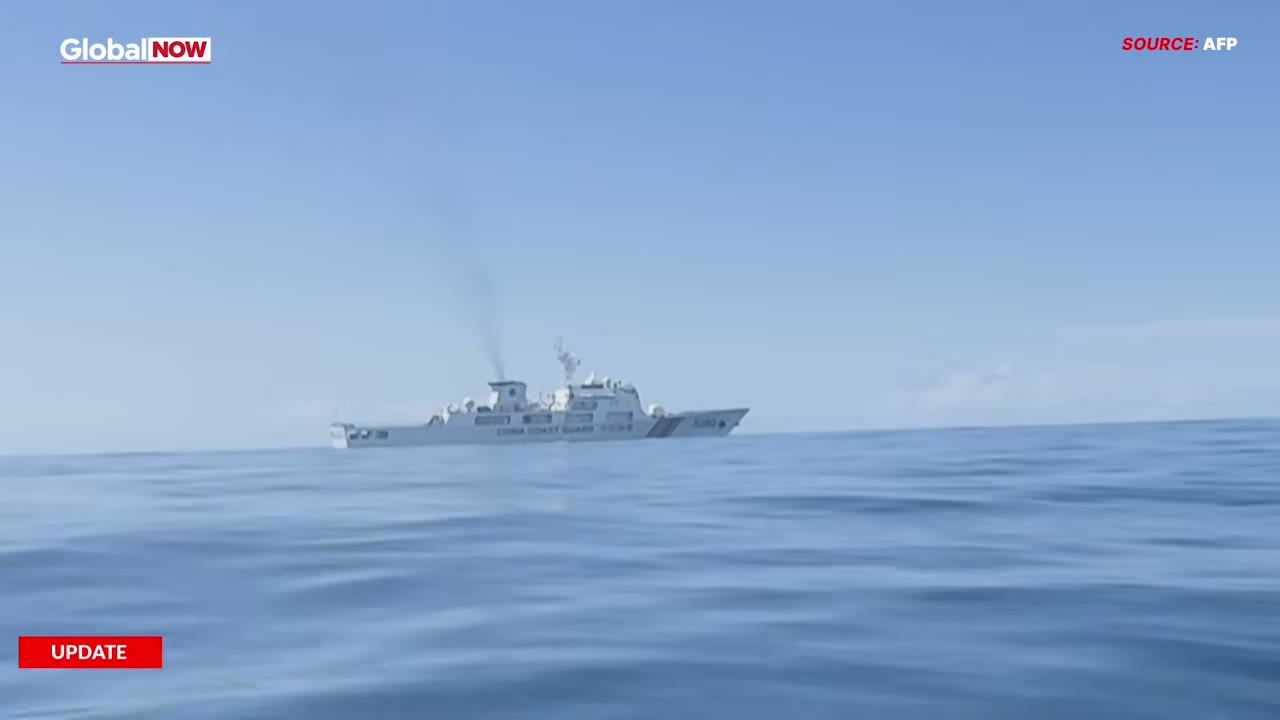
Chinese warships and coast guard vessels blocked a Philippine resupply mission to the BRP Sierra Madre on September 24, 2026, forcing its suspension. Manila condemned the dangerous maneuvers, while Beijing claimed the Philippines violated prior commitments. The incident highlights escalating maritime tensions and the fragile interim agreement.
1Philippines Suspends South China Sea Resupply Mission After Chinese Blockade
Chinese warships and coast guard ships blocked a Philippine convoy heading to a disputed shoal, forcing Manila to suspend its September 24, 2026 rotation and supply mission to the BRP Sierra Madre.
The convoy included the civilian supply vessel MV Lapu-Lapu, escorted by Philippine Navy and Coast Guard ships, and was bound for the Sierra Madre, which ran aground on Ayungin Shoal, known internationally as Second Thomas Shoal.
According to the Armed Forces of the Philippines, three Chinese warships, including two Houbei-class vessels, and five Chinese Coast Guard ships obstructed the operation. Philippine officials said Chinese vessels began approaching about 60 nautical miles from the shoal.
Commanders assessed the risks and decided continuing could endanger personnel. Officials described the suspension as a precautionary measure, not a renunciation of the country's commitment to maintaining its maritime presence.
2Philippine Military Spokesman Calls on China to Cease Dangerous Actions
Rear Admiral Roy Vincent Trinidad, spokesman for the Armed Forces of the Philippines in the West Philippine Sea, called on Chinese forces to stop what he described as dangerous actions.
"We call on the PLA and the Chinese Coast Guard to cease these dangerous actions and exercise restraint," he said.
Trinidad said the safety of staff remains the highest priority, but added that the actions will not force the Armed Forces of the Philippines to abandon their mission.
His statement reflected the military's determination to keep performing its duties without unnecessarily jeopardizing the safety of Filipino personnel.
3Philippine Coast Guard Reports Different Count of Chinese Vessels
The Philippine Coast Guard counted a different lineup of Chinese vessels than the military did: one Chinese warship, nine coast guard vessels, and five maritime police ships.
The figures differed from the military's initial assessment and represented a separate account of China's activities at sea during the clash.
Coast Guard spokesman in the West Philippine Sea Rear Admiral J. Tarriela said Chinese naval maneuvers created the risk of a potential collision.
No casualties were reported, but Philippine authorities said the circumstances were dangerous enough to justify suspending the operation.
4Philippine Task Force Condemns Chinese Intervention, Affirms Sovereign Rights
The National Task Force on the West Philippine Sea condemned the Chinese intervention, stressing that the operation was a legitimate mission to deliver needed supplies and rotate military personnel.
The task force's statement came after the resupply run was suspended over dangerous conditions at sea.
Philippine authorities reaffirmed their commitment to exercising the country's sovereign rights and jurisdiction in accordance with international law.
The condemnation added a formal political response to the military's account of the blocked convoy.
5China Accuses Philippines of Violating Commitments in Resupply Operation
Beijing offered a different account, accusing the Philippines of violating previous commitments by continuing the resupply operation despite warnings from the Chinese coast guard.
Chinese officials said their vessels were monitoring the Philippine convoy and issuing verbal warnings.
Beijing also accused Manila of violating the Declaration on the Conduct of Parties in the South China Sea.
The contradictory statements highlight the fundamental differences between the two countries, with Manila insisting it does not need Beijing's approval for its operations.
6BRP Sierra Madre's Grounding in 1999 Anchors Philippine Presence at Ayungin Shoal
The Philippines intentionally ran the BRP Sierra Madre aground on Ayungin Shoal in 1999 to ensure a permanent military presence.
The shoal, known in China as Zhenyaijiao, has remained one of the most sensitive spots in the South China Sea dispute for decades.
Since the grounding, Philippine military personnel have lived aboard the aging vessel, relying on regular supplies of food, drinking water, medicine and other essential resources.
Beijing continues to assert its claims to surrounding waters.
7Resupply Missions Are Vital for Personnel on BRP Sierra Madre
For the personnel aboard the Sierra Madre, resupply missions are not just a symbolic demonstration of maritime rights — they are vital operations that support living conditions and ensure the safe rotation of military personnel.
After the September incident, the Philippine military command reported that the troops on board had sufficient supplies and maintained high morale.
The statement sought to reassure that the suspended mission had not left the outpost stranded.
8Philippines Conducts Successful October Resupply, Rejects China's Permission Claim
In October, the Philippines successfully conducted another rotation and resupply operation, reaffirming its determination to hold the outpost.
Disagreements arose again when Chinese authorities stated the operation was carried out with their permission.
The Philippine Armed Forces rejected the claim, saying Beijing had no authority to approve Philippine military actions within the country's exclusive economic zone.
The exchange underscored how even a completed mission can become a dispute over who controls the terms.
9Chinese Vessel Presence in West Philippine Sea Rises to 48 After ASEAN Summit
The number of Chinese naval and coast guard ships spotted in four key areas of the West Philippine Sea rose to 48 since the ASEAN summit, the Philippine military reported on November 25.
Among the areas tracked were Ayungin Shoal, Pagasa de Masinloc, Escoda Shoal and Pagasa Island.
The increase showed that diplomatic negotiations had not eliminated the possibility of new naval confrontations.
The count came after months of tense resupply operations and competing accounts of Chinese vessel numbers.
10Interim Agreement Yields 15 Incident-Free Resupply Missions by August 2026
An interim agreement reached between Manila and Beijing in July 2024 was meant to reduce misunderstandings and prevent dangerous incidents during Philippine resupply operations.
As of August 2026, the Philippine Department of Foreign Affairs reported that 15 supply missions had been conducted under the arrangement without any incidents.
The record offered a measure of stability even as tensions at sea persisted.
The deal's full terms, however, have not been made public.
11Filipino Sailor Injured in July 2026 Clash Near Sierra Madre
A Filipino sailor was injured in July 2026 in a separate clash near the Sierra Madre after an incident with a Chinese coast guard official, Philippine authorities reported.
The injury showed the interim arrangement had failed to completely eliminate tensions at sea.
The Philippine government has consistently stressed that the arrangement does not require Manila to seek China's permission, allow Chinese personnel to board Philippine vessels, or relinquish its sovereign rights and jurisdiction.
12Manila Insists Interim Deal Does Not Require Chinese Permission
The full terms of the interim agreement between Manila and Beijing have not been made public, leaving questions about how the two countries interpret their respective commitments.
Manila has stressed that the arrangement does not require it to seek China's permission, allow Chinese personnel to board Philippine vessels, or relinquish its sovereign rights and jurisdiction.
Although the September incident exposed weaknesses in the arrangement, it did not automatically mean the formal termination of the diplomatic agreement.
132016 Arbitration Ruling Backs Philippines' Rights at Second Thomas Shoal
In 2016, an international arbitration court ruled that the Second Thomas Shoal lies within the exclusive economic zone and continental shelf of the Philippines.
The court also rejected China's claims to historical rights to resources within the "nine-dash line," saying they exceeded maritime rights established by the UN Convention on the Law of the Sea.
The decision is legally binding on both sides, although China continues to reject it.
The court considered maritime rights, not sovereignty over land territory or maritime boundaries, but those rights do bind both countries.
14Philippines Updates Nautical Charts to Strengthen Maritime Governance
The Philippines has released updated nautical charts covering Pag-asa Island and other features in the Kalayaan Island Group. The National Maritime Council published the maps, with the National Mapping and Resource Information Authority working alongside the Philippine Navy to gather accurate geographic and hydrographic data.
Research teams measure water depth, tidal conditions and underwater terrain. Assistant to the President for Maritime Security Secretary Andres Centino said charts must be updated regularly because environmental conditions gradually change coastlines and island contours.
Centino said map-making is a sovereign function of any government. Authorities plan to submit an updated maritime map to the United Nations.
15Philippines Plans to Submit Updated Maritime Map to UN
The Philippines will submit an updated maritime map to the United Nations, after filing an official map covering Bajo de Masinloc, known internationally as Scarborough Shoal, on July 29, 2026. Such submissions document geographic information and communicate the government's official maritime position.
They do not resolve competing territorial claims, and they are not a UN decision granting sovereignty.
The cartographic push follows Executive Order No. 111-19, signed by President Ferdinand Marcos Jr. on March 26, 2026.
16Marcos Executive Order Standardizes Names for 131 Marine Features
President Ferdinand Marcos Jr. has approved standardized Philippine names for 131 marine features in the Kalayaan group of islands. Executive Order No. 111-19, dated March 26, 2026, also directs 10 government agencies to use those names in official maps, charts and administrative documents.
The policy aims to strengthen coherence between state institutions while maintaining the country's control over its maritime territories.
17Manny Pacquiao Visits Pag-asa Island, Donates Livelihood Aid to Fishermen
Boxing champion Manny Pacquiao donated 500,000 Philippine pesos in livelihood assistance to fishermen on Pag-asa Island on September 25. Pacquiao serves as secretary and chief organizer of the National Commission on Poverty Alleviation, a cabinet-level post he assumed on September 8, 2026, after being appointed by President Ferdinand Marcos Jr.
Pag-asa Island is home to Filipino families, fishermen, students and government employees. Pacquiao called on Filipinos to remain united in defending the country's national interests, highlighting the sacrifices of military personnel and civilian communities in the area.