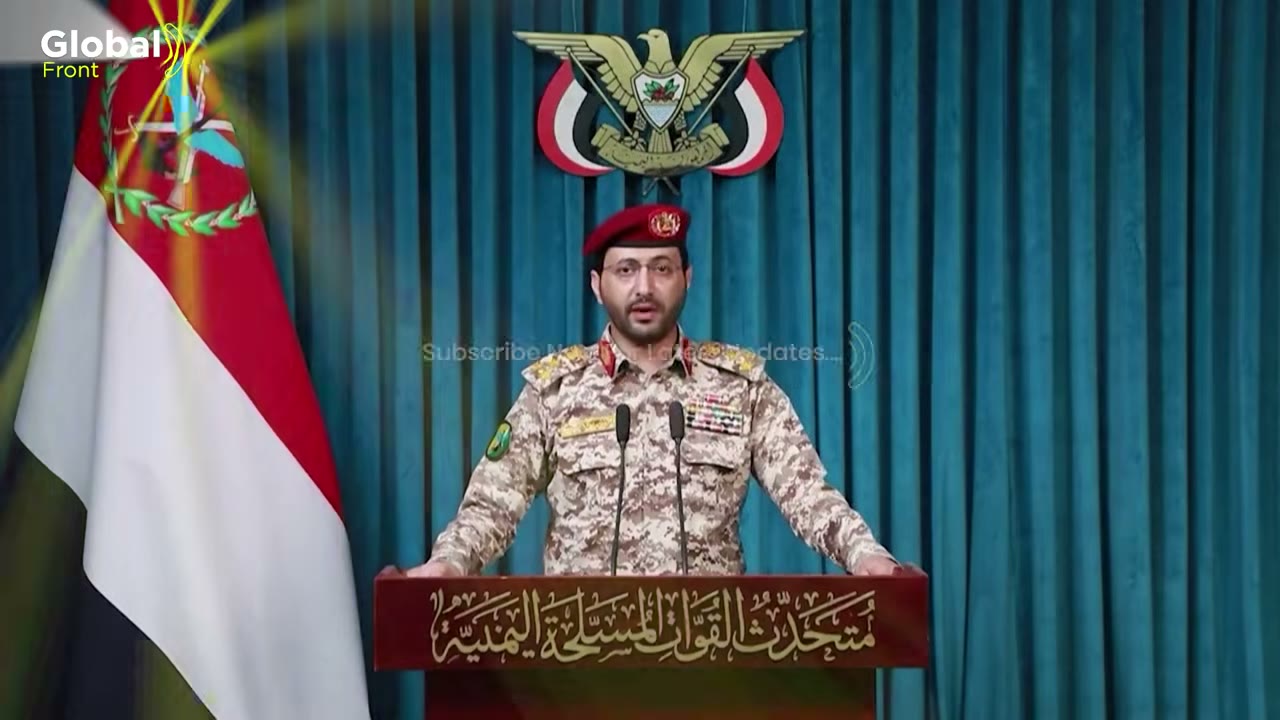
Houthi footage released November 22, 2026 purportedly shows weapons and drones captured from Saudi-backed forces in Mokha. The claims are disputed by a Yemeni government verification center, while the port city's fall reshapes security near the Bab el-Mandeb Strait.
1Houthis Release Footage of Weapons Seized in Mokha
Houthi fighters have shown off what they say is a huge haul of weapons and ammunition seized from Saudi-backed forces in the coastal city of Mokha. Footage released on November 22, 2026, shows aerial views of warehouses, armed Houthi personnel displaying military equipment, and repeated close-ups of weapons and ammunition the group says were taken from the facilities.
One moment shows a fighter holding what appears to be a drone, which the group describes as more equipment recovered from abandoned sites. The movement presents the material as proof of the scale of its gains along Yemen's western coast.
What the footage does not settle is where the equipment came from, who supplied it, or when it was captured. Those questions remain open.
2Mokha's Strategic Position Near Bab el-Mandeb Draws Global Attention
Mokha is small, but it sits near the sea approaches to the Bab el-Mandeb Strait, one of the world's most strategic waterways. Commercial vessels passing through connect the Red Sea with the Gulf of Aden and the wider Indian Ocean.
That location gives control of the area consequences beyond Yemen's borders. Military developments there are being watched closely by Saudi Arabia, international shipping companies and regional governments.
Houthi forces captured Mokha more than two months before the weapons footage surfaced, in a major offensive against forces supporting Yemen's internationally recognized government. The push changed the balance of power along the Red Sea coast.
3Video Shows Warehouses and Weapons Houthis Say Were Left Behind
Aerial footage opens over facilities the Houthis identify as warehouses belonging to Saudi-backed forces. The camera then moves inside, where the group says military equipment was left behind.
Houthi personnel display what they describe as captured weapons, with repeated shots of ammunition and military gear. According to the group's version, a significant amount of equipment stayed in the warehouses because retreating forces did not have time to remove it.
One fighter holds up what appears to be a drone. Its exact model, manufacturer, technical condition and previous owner have not been established by independent sources.
4Questions Raised Over Origin and Status of Captured Equipment
A drone appearing in Houthi footage does not prove it was operational, recently deployed, or supplied directly by Saudi Arabia. That distinction matters when weighing the group's broader claims.
Military equipment can move through many channels in a long conflict, especially in a country where armed groups have received outside assistance and alliances shift. An item found at a position could have been purchased, transferred, supplied through a partner, captured earlier, or moved between units.
Pinning down its origin takes more than a visual match. The same caution applies to the wider collection: the footage does not allow an independent count of the full list or the number of warehouses involved.
5Weapons Haul May Not Translate Into Real Military Gains
A warehouse full of captured weapons does not automatically add up to more fighting power. The equipment has to be usable, maintained, compatible with existing systems, and backed by trained technical crews.
The Houthis tied the stockpiles to their campaign along Yemen's western coast, describing the seizure as part of broader operations against Saudi-backed forces. The group's version suggests battlefield success gave it access to material that could strengthen its military resources.
But the footage does not show what portion of the haul, if any, was integrated into regular Houthi armaments. There is a difference between weapons in storage and equipment in service.
6Houthi Offensive in September Captured Mokha From Government Forces
Mokha fell to Houthi forces in September 2026, when their offensive pushed back government units along Yemen's western coast. The city had been an important base for the National Resistance Forces under Major General Tarek Saleh, a member of Yemen's presidential council.
Saleh's formation operated within the broader anti-Houthi camp, keeping ties with regional partners and its own command structure. His positions around Mokha formed part of the defensive network along the Red Sea coast.
As Houthi forces advanced into the city, government-loyal units retreated from several positions. The Houthis entered Mokha and shifted the military situation around the port.
7Tarek Saleh Calls Mokha Withdrawal a Tactical Retreat
Tarek Saleh called the redeployment of his forces from Mokha a tactical retreat, saying the decision was meant to let troops regroup and reorganize. The statement reflected the government's position: the withdrawal should not be seen as a complete collapse of its military presence in western Yemen.
The Houthis told it differently, presenting their offensive as proof that enemy forces had been pushed out of strategically important positions.
The movement has used its territorial gains to bolster its account of growing military power.
8Both Sides Fight Over How Mokha Events Are Interpreted
The warehouse footage is now part of a larger fight over how the events in Mokha should be read. For the Houthis, displaying alleged enemy equipment keeps claims of battlefield success alive long after the territorial advance.
That lets the movement present its gains as having lasting consequences, not just a temporary shift in control.
For pro-government forces, the images raise questions about what exactly was left behind, what was taken out during the retreat, and whether the footage accurately reflects the war situation.
9Yemeni Government Center Questions Authenticity of Seized Weapons Videos
A media content verification center affiliated with Yemen's government questioned the authenticity of some videos presented as evidence of weapons seized in Mokha. On November 23, the center said certain recordings were filmed earlier and are being re-distributed without proper context.
It also disputed a separate video released on November 20, saying that recording was made near the border of Uzbekistan and Kazakhstan, not in Yemen.
The allegations add another layer of uncertainty. But the presence of manipulative material among the circulating videos does not automatically prove that every image from the warehouses is false.
10Independent Verification of Mokha Weapons Claims Remains Impossible
Confirming what the Mokha footage really shows would require access to the original recordings, reliable location data, identification of objects inside the buildings, and evidence of when the filming took place. Without those details, the circumstances of the alleged capture remain open to investigation.
Timing adds another wrinkle. The footage was released in November, while the large-scale Houthi offensive on Mokha took place in September.
A publication date and the date of the events it depicts do not necessarily match. A cache seized in an earlier operation could be made public weeks or months later. That does not disprove the claim, but it makes careful chronology essential.
11Yemen's Civil War and Saudi Intervention Shape Mokha Conflict
The Houthis, also known as Ansar Allah, have controlled Yemen's capital, Sanaa, since 2014. Their expansion helped spark a protracted civil conflict involving Yemen's internationally recognized government, regional military partners and several competing local groups.
Saudi Arabia intervened in 2015 in support of the internationally recognized government. Over the years the war grew more complex, with different armed groups holding distinct territories, governance structures and political priorities.
A UN-brokered ceasefire in 2022 significantly reduced large-scale fighting but did not produce a comprehensive political settlement. The lull later came under pressure, and the resumption of hostilities in 2026 changed front lines in several parts of the country.
12Red Sea Shipping Risks Rise With West Coast Fighting
Fighting has resumed along Yemen's west coast, close enough to the Bab el-Mandeb Strait that shipping companies are weighing the risk. The strait connects the Red Sea with the Gulf of Aden, letting commercial vessels travel between the Indian Ocean and the Suez Canal.
Any deterioration in security around the corridor could raise uncertainty for shipping firms. Even without a full closure of the waterway, the risk of disruption can affect insurance costs, commercial schedules and decisions about alternative routes.
For Saudi Arabia, instability on Yemen's western coast is a direct threat to regional security. The kingdom has backed pro-government forces for years, trying to stop hostile military activity that threatens its territory and economic infrastructure.
The reported seizure of weapons carries both a local and a regional dimension. Inside Yemen, it concerns military supplies and the ability of opposing forces to keep operating.
13Yemeni Council Head Alimi Says Mokha Events Have Global Impact
The head of Yemen's internationally recognized Presidential Governing Council has tied the events around Mokha to far wider stakes. Rashad al-Alimi has previously stressed the broader significance of what unfolded around Mokha and the Bab el-Mandeb Strait.
At the regional level, those events raise a question now hanging over the Red Sea: whether the balance of power there is changing in the future.
Alimi leads the internationally recognized council, giving his framing weight as the fighting on the west coast continues.