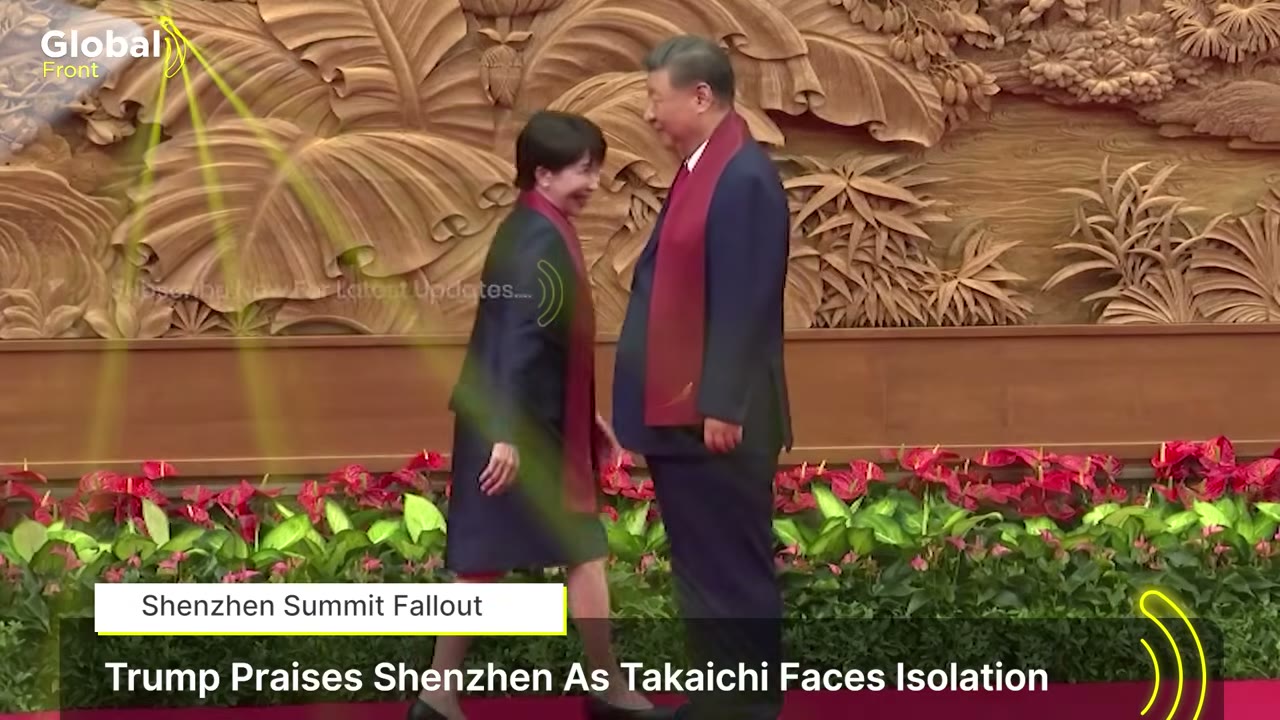
Trump returned from the APEC summit in Shenzhen praising the city's infrastructure while criticizing Chicago and Los Angeles, but sparing New York over his ties to Mayor Mamdani. Meanwhile, Japan's PM Takaichi left Shenzhen without formal talks with Xi Jinping amid Taiwan tensions.
1Trump Praises Shenzhen's Infrastructure After APEC Visit
Donald Trump says a Chinese city is cleaner and better built than some of America's biggest. Fresh from the APEC summit in Shenzhen, the US president praised its roads, buildings and public spaces at the White House on Friday, November 20, 2026.
He compared Shenzhen to major American cities including Chicago and Los Angeles, saying its infrastructure shows what modern urban development should look like. "It's clean there, it's spotless there," Trump said.
He credited Chinese President Xi Jinping, saying what he saw reflected effective planning. Trump said he inspected the highways and fences during his official trips, and described the road surfaces as smooth, without the potholes and patches American drivers often encounter.
Shenzhen has grown from a smaller coastal economy into a hub for technology, manufacturing and finance.
2Trump Criticizes Democratic-Run US Cities Over Crumbling Infrastructure
Trump turned his praise for Shenzhen into a broad attack on America's crumbling roads and neglected urban spaces — aimed mostly at cities run by Democrats.
He linked infrastructure problems to his long-standing criticism of their leadership and public safety policies. Chicago became a main example, with Trump criticizing Mayor Brandon Johnson and questioning his administration's ability to govern the city.
His remarks mixed concerns about damaged infrastructure with accusations about crime and municipal governance. Chicago remains a recurring theme in his speeches, where he has repeatedly argued city leadership has failed on crime and other urban challenges.
The comments feed a wider national debate over policing, government spending and the accountability of city officials. They reflect Trump's personal view of Chicago, not a comprehensive analysis of the city's infrastructure.
3Trump Targets Los Angeles and Governor Gavin Newsom on Transport Projects
Los Angeles became Trump's next target, with much of his criticism aimed at Governor Gavin Newsom.
The president raised problems with transport development and questioned the management of expensive infrastructure projects in California. The state's transportation investments are a constant source of political controversy, with big projects facing complex engineering requirements, environmental regulations, lawsuits and rising costs.
Trump used those difficulties to argue the American government should be able to build public infrastructure more effectively, contrasting California's challenges with the rapid development he saw in Shenzhen.
His criticism went beyond roads and buildings. He tied the state of American cities to crime, government accountability and political leadership, questioning whether Democratic-led cities were meeting residents' expectations.
4Analysts Question Fairness of Comparing Shenzhen to US Cities
Comparing Shenzhen to American cities is misleading, analysts say, because the two developed under very different political, economic and administrative systems.
Their urban planning histories, financing structures, settlement patterns and construction processes are not identical. A motorcade moving along Shenzhen's carefully maintained roads gives only a limited picture of the overall state of affairs, analysts say.
Likewise, potholes or abandoned facilities in individual American areas do not determine the condition of the entire national infrastructure network. Both the US and China have cities with significant achievements and serious development challenges.
Trump's remarks offer insight into his policy priorities and personal observations, analysts say, rather than a definitive ranking of infrastructure quality.
5Trump Spares New York, Citing Good Ties With Mayor Mamdani
Trump skipped New York from his city criticism — because he gets along with its democratic socialist mayor.
"I don't want to mention New York because I actually get along very well with Mayor Mamdani," Trump said. The two represent radically different political traditions: Trump, a leading Republican, and Zohar Mamdani, elected mayor in November 2025 on policies focused on housing affordability and the cost of living.
Their relationship was conflictual during the 2025 campaign, but Trump welcomed Mamdani to the White House on November 21, 2025. They met again on February 26, 2026, and on September 21, 2026, Trump visited Gracie Mansion, where housing development topped the agenda.
One proposal discussed was Sunnyside Yard in Queens, a rail site eyed for redevelopment that could provide about 12,000 homes and 30,000 jobs. No final funding agreement was announced; the two agreed to deepen talks between their teams.
"I will meet with anyone, work with anyone who can deliver results for New Yorkers," Mamdani said.
6Japan's PM Takaichi Leaves Shenzhen Without Formal Xi Talks
Japanese Prime Minister Sanae Takaichi left Shenzhen on Thursday, November 19, without holding formal talks with Chinese President Xi Jinping.
Her visit was closely watched as Tokyo-Beijing relations remained extremely tense following her remarks about Taiwan in November 2025. It was her first trip to China since taking office in October 2025, after attending regional meetings in Manila.
The APEC summit offered a chance to ease tensions, but no full conversation took place. Instead, the leaders exchanged brief greetings twice: a handshake before a ceremonial banquet on the evening of November 18, and another during official summit events on November 19.
That second handshake lasted about 10 seconds. Takaichi said something while Xi maintained a reserved expression. There was no private negotiating session, leaving important differences unresolved.
The contrast drew attention: Xi personally greeted other leaders on arrival, while Takaichi was received by a Chinese Foreign Ministry representative.