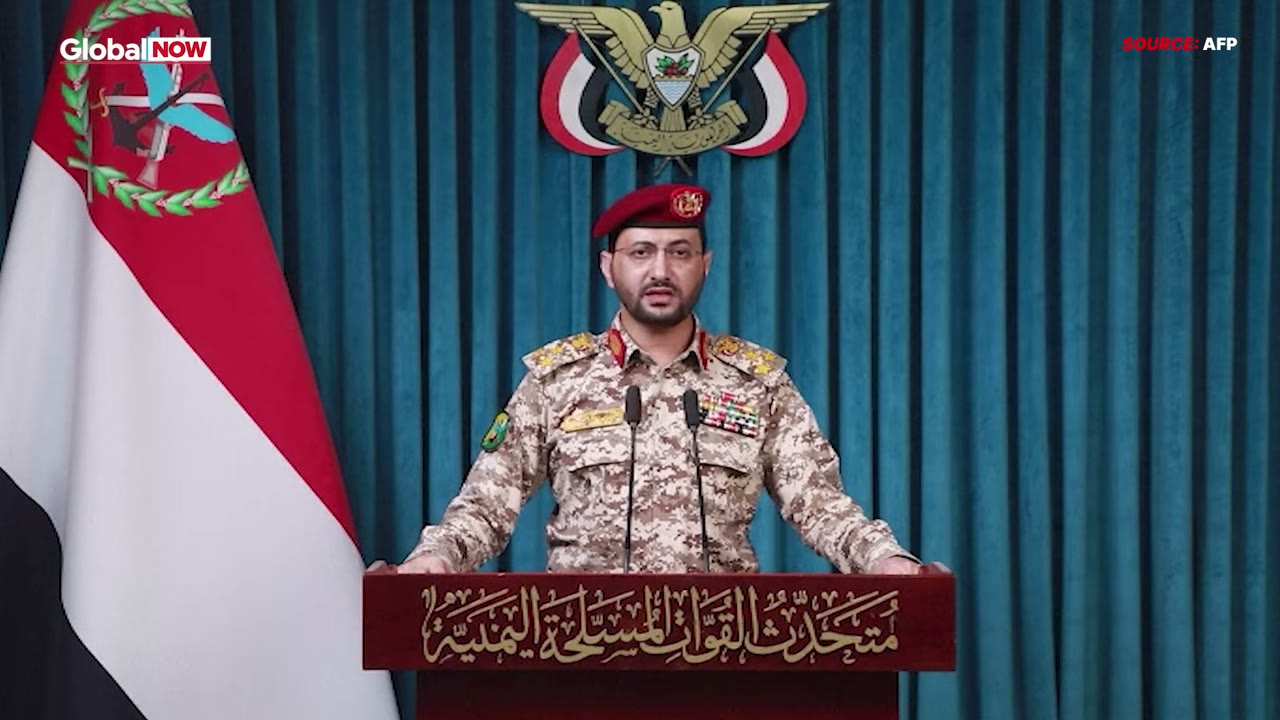
Houthi spokesman Yahya Saree says Yemen's armed forces hit Riyadh airport, radars, oil and gas facilities and power plants in Saudi Arabia within 48 hours. Saudi Arabia disputes the claims as Pakistan announces troop deployment to the kingdom.
1Houthis claim five operations against Saudi airports, refineries and power plants
Houthi forces claim they hit Riyadh's Khalid International Airport in a 48-hour blitz on Saudi Arabia that also struck oil and power sites. The group's military spokesman said five operations were carried out and that the airport strike was "direct."
According to the claim, two radar stations in the Abha and Khamis Mushait areas were hit and disabled. A strike on the Jizan oil refinery was said to have caused large fires.
The fourth operation targeted the Hawija gas processing plant in the Eastern Province, south of Al-Hasa, reportedly causing fires. The fifth hit the Ash-Shakiq and Jizan power plants, with the group claiming significant damage.
All five claims come from the Houthi side only. The statement gave no evidence of damage, and there has been no independent confirmation of the strikes or their results.
2Yahya Saree issues new warning to Saudi ports in the Red Sea
Houthi military spokesman Brigadier General Yahya Sari issued a new warning to Saudi ports in the Red Sea, and to commercial shipping companies and port workers. The statement came from Sanaa on November 29, 2026.
The Houthis accused Saudi Arabia of attacking vital Yemeni infrastructure and warned that further military action could follow. The warning to shipping firms and dockworkers adds uncertainty to maritime operations in the region.
The moves follow reports of a Saudi military operation against Houthi support facilities in Yemen. They also come after 400 clashes in the region, amid rising military pressure from both sides.
The confrontation has raised concerns about regional security, international maritime trade, and the risk of a wider conflict drawing in other Middle Eastern countries.
3Saudi Arabia disputes Houthi claims, says air defenses intercepted missiles
Saudi Arabia says its air defenses intercepted several missiles, directly disputing Houthi claims of successful strikes on the kingdom. The Saudi-led coalition said it carried out military operations against Houthi-controlled areas of Yemen.
The competing accounts follow a Saturday statement by Houthi spokesman Yahya Saree, who said his forces carried out five operations against Saudi Arabia in 48 hours, including allegations about aviation and energy infrastructure.
The reported success of those operations has not been confirmed by independent sources. The conflicting versions highlight how hard it is to assess events on the ground while both sides keep issuing military statements.
The confrontation has brought new international attention to the Red Sea, one of the world's most important commercial waterways.
4Red Sea shipping disruption raises global trade and energy concerns
Any prolonged disruption in the Red Sea could hit international shipping, energy supplies, transport costs and global markets, one of the world's key commercial waterways. Shipping companies may have to reconsider their routes.
Commercial operators could face additional security costs as instability continues. The uncertainty follows Houthi warnings to Saudi Red Sea ports and commercial shipping.
Inside Yemen, the situation remains particularly worrying. Civilians have suffered for years from political instability, economic hardship, food insecurity and the destruction of basic infrastructure.
Further military escalation threatens to worsen those conditions, especially in communities heavily dependent on imported food, fuel and humanitarian aid.
5Yemen civilians face worsening humanitarian crisis as fighting escalates
Yemen's western ports remain vital to the country's economy and its humanitarian supply chain, and disruptions could hit hospitals, transport services and millions of vulnerable civilians.
The warning comes as fighting escalates between the Houthis and Saudi Arabia. Communities heavily dependent on imported food, fuel and humanitarian aid are most exposed.
The current confrontation has deep roots. The conflict escalated after the Houthi movement seized control of Sanaa in 2014.
In March 2015, Saudi Arabia led a military coalition in Yemen in support of the country's internationally recognized government.
6Yemen conflict background: Houthi seizure of Sanaa and Saudi-led coalition
A UN-brokered ceasefire in 2022 significantly reduced hostilities in Yemen, but the resumption of fighting in July 2024 undermined those relative gains and put the country under increasing military and humanitarian pressure.
The war's roots run back to 2014, when the Houthi movement seized control of Sanaa. In March 2015, Saudi Arabia led a military coalition in Yemen backing the internationally recognized government.
Yahya Sari remains one of the most prominent public figures representing the Houthi movement's military leadership. In his television appearances, Sari regularly voices the group's military statements and reports its position on regional events.
Statements by the Houthi military leadership reflect only the group's own version of events, and should be distinguished from independently verified information.
7Pakistan sends military personnel to Saudi Arabia under defense pact
Pakistan's armed forces announced on November 29 that they are sending military personnel to Saudi Arabia under existing defense cooperation agreements. The size and duration of the deployment were not released.
The move follows discussions involving Pakistan, Saudi Arabia and Turkey as part of their collective defense agreement, and comes amid growing security concerns.
Pakistan emphasized that its personnel will operate exclusively on the territory of Saudi Arabia. The announcement shows how the Saudi-Houthi confrontation is shaping the security decisions of other regional states.
Increased military involvement, however, could complicate diplomatic efforts to prevent further escalation.
8Iran's backing of Houthis adds uncertainty to regional security
Iran's relationship with the Houthis remains a key factor in the wider regional equation. The Houthis are widely described as an Iranian-backed armed movement, and their confrontation with Saudi Arabia adds another layer of uncertainty to an already volatile Middle East.
For international observers, the main concern is whether the ongoing clashes will undermine chances for negotiations and create additional risks for civilians. Diplomatic engagement remains important given the potential economic and humanitarian fallout.
Both Saudi Arabia and Yemen face significant challenges from prolonged instability, while neighboring countries have a strong interest in preventing disruptions to regional trade and energy markets.
It remains unclear whether the confrontation is heading toward further escalation or a return to diplomatic dialogue.
9Crisis beyond Yemen's borders threatens trade, energy and civilians
The crisis increasingly extends beyond Yemen's borders, with implications for Saudi Arabia, regional security, international shipping, and the millions of civilians whose lives depend on stability returning to the region.
Discussions now emphasize that the fallout reaches well past the two sides fighting. Regional trade, energy markets and civilian populations are all exposed.
Yemen's western ports, a lifeline for humanitarian supplies, sit at the center of that risk.