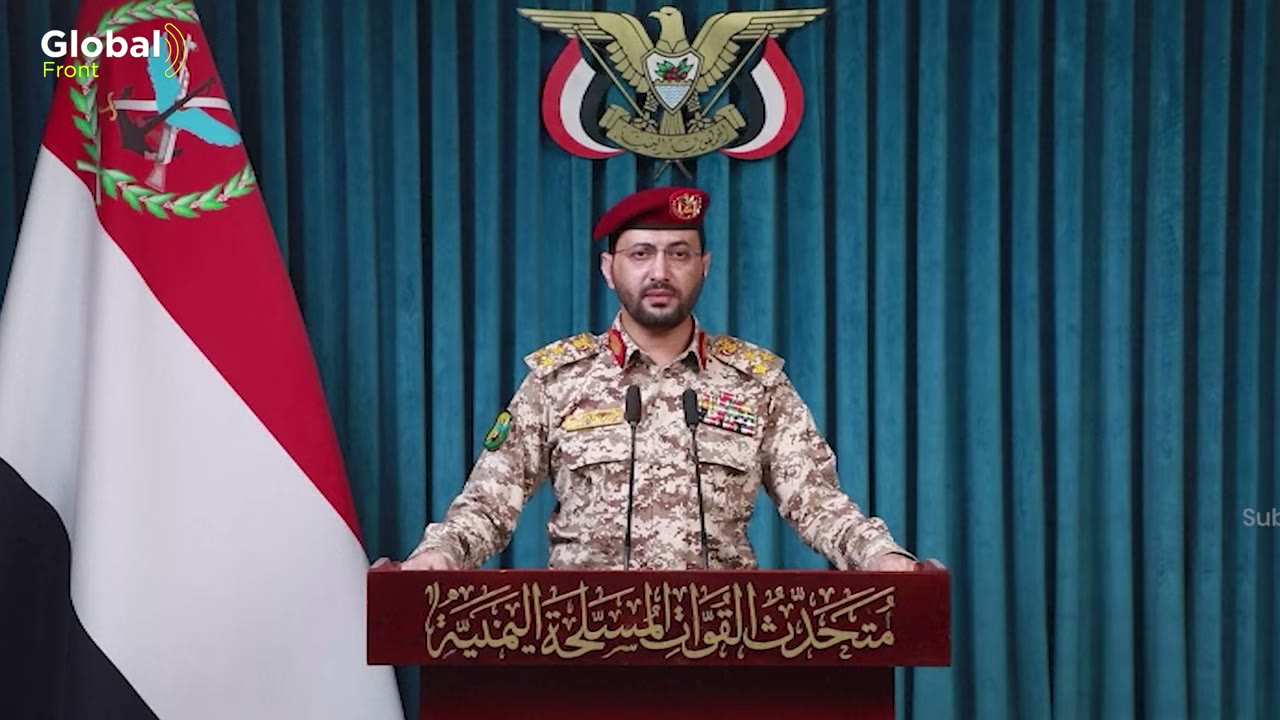
Houthi military spokesman Yahya Saree said the group carried out five operations against Saudi airports, radars, refineries, gas and power plants within 48 hours. Saudi authorities report intercepting projectiles, and the escalation raises concerns over energy markets, Red Sea shipping and Yemen's humanitarian crisis.
1Houthis claim five operations against Saudi airports, radars, refineries and power plants
Houthi forces claim they hit Riyadh's Khalid International Airport and four other Saudi sites in 48 hours. The Yemeni Armed Forces said they carried out five operations, calling each one successful.
Beyond the airport, the group said it struck two radars in Abha and Khamis Mushait, an oil refinery in Jizan, the Hawiya gas plant in the Eastern Province south of Al-Hasa, and power plants in Ash-Shakiq and Jizan.
The Houthis claimed the refinery and gas plant strikes caused large fires and that the radar hits disabled the systems. They said the power plant strikes caused "great damage to the target stations."
All the claims come from the group itself. No independent source has confirmed the damage, and Saudi authorities have not responded to these specific allegations in the statement.
2Saree's November 28 statement raises concerns over regional security and energy
Houthi military spokesman Brigadier General Yahya Sari issued a statement from Sanaa on November 28, claiming five operations against Saudi Arabia in the previous 48 hours.
The statement landed as tensions between the Iran-backed Houthis and Saudi Arabia rise, and as the Houthis and the Saudi-led coalition trade accusations of escalation.
According to Sari, the operations hit Saudi aviation, energy and military infrastructure. He said several sites were damaged.
The full extent of the reported destruction was not confirmed by independent sources, and the fighting has drawn renewed international attention to Yemen's long conflict at a time of broad military, economic and diplomatic uncertainty across the Middle East.
3Conflicting Houthi and Saudi accounts leave strike damage unverified
Both sides are telling different stories about the same strikes. Yahya Sari claimed a direct hit on Riyadh International Airport and significant damage to Saudi energy infrastructure.
Saudi authorities separately reported intercepting approaching projectiles.
The gap between the accounts leaves the damage unverified by independent sources. The Houthis say their operations achieve their objectives; Saudi Arabia stresses its defenses worked.
The dispute also shows economic infrastructure being pulled deeper into the conflict, adding pressure on international energy markets and regional businesses.
4Saudi energy infrastructure at risk as strikes threaten global oil markets
Saudi Arabia is one of the world's most important oil producers and exporters — which is why strikes on its energy sites could reach far beyond the Middle East.
Any significant disruption to the Saudi energy sector could affect international fuel prices, transportation costs and industrial production, according to the concerns raised around the latest Houthi claims.
The November 28 statement follows another claimed operation on November 25, when the Houthis said they targeted the Saudi oil refinery in Ras Tanura.
The exact damage from either round has not been independently confirmed.
5Houthis claim November 25 strike on Ras Tanura refinery
Satellite images showed large amounts of smoke over the Ras Tanura industrial site after the Houthis claimed a November 25 strike on the Saudi oil refinery there.
The exact extent of the damage remained unclear.
The standoff has also hit Saudi aviation, with previous security incidents leading to flight cancellations and disruptions to international events.
The Houthis' November 28 statement followed the Ras Tanura claim, widening the list of sites the group says it has targeted.
6Saudi-led coalition vows immediate response to Houthi attacks
The Saudi-led coalition says it will not hesitate to hit back immediately. Major General Turki Al-Malki, a coalition spokesman, said the coalition would respond without delay to Houthi operations targeting civilians and infrastructure.
The coalition announced further military action against Houthi targets, describing its operations as a response to threats to civilians, infrastructure and international maritime shipping.
It insists its actions aim to protect regional security and prevent more cross-border fighting. The Houthis describe their own operations as retaliation for Saudi military operations inside Yemen.
The opposing positions underline the difficulty facing diplomatic efforts to stop another prolonged confrontation.
7Houthis threaten Saudi Red Sea ports after reported Saudi operation
The Houthis issued new threats against Saudi ports in the Red Sea on November 29, following reports of a Saudi operation supported by RASE in Yemen.
The Red Sea connects shipping routes between Asia, Europe and Africa and carries energy, industrial goods and major commercial cargoes.
As security worsens, shipping companies may reroute vessels, raise insurance coverage or suspend some operations — decisions that can push up transport costs and delay goods reaching international markets.
Countries heavily dependent on imported energy and goods could face added economic pressure if the disruption drags on.
8Pakistan deploys troops to Saudi Arabia under defense cooperation
Pakistan's armed forces announced on November 29 that they are deploying troops to Saudi Arabia under existing defense cooperation agreements. Islamabad said the deployment would help strengthen the kingdom's defense capabilities.
Pakistan, Saudi Arabia and Turkey have built closer defense ties through the Mecca Agreement on Mutual Defense, signed in August 2026. The participating governments called the agreement defensive and said it is not directed against any specific country.
The number of Pakistani personnel and the length of their mission were not publicly disclosed.
The move shows the Yemen-Saudi conflict becoming more intertwined with wider regional security arrangements.
9Yemen's decade-long conflict and fragile 2022 ceasefire under pressure
Yemen's conflict has run for over a decade — and the fighting that resumed in July 2026 is now pressing on the gains of a 2022 UN-brokered ceasefire.
The Houthis, also known as Ansar Allah, seized Sanaa in 2014. In March 2015, a Saudi-led coalition intervened in support of Yemen's internationally recognized government.
Years of war have divided Yemen politically and damaged its infrastructure, government institutions and economy.
The renewed confrontation has raised concerns that Yemen could face another prolonged period of instability while millions of citizens still struggle with the aftermath of previous fighting.
10Saree's claims require independent verification amid competing narratives
Claims of successful military operations need evidence before they count as fact — especially when both sides are fighting for the narrative.
Yahya Sari remains one of the most prominent public figures in the Houthi movement's military activities, and its television statements regularly broadcast the group's demands, positions and responses to events involving its regional opponents.
But statements by parties directly involved in a conflict must be carefully separated from independently established facts, and claims of damage and military effectiveness require additional evidence before being treated as confirmed.
That distinction matters now, as both sides try to convey their positions to the world.
1122.3 million Yemenis need aid as 18.3 million face acute food insecurity
An estimated 22.3 million people in Yemen will need humanitarian assistance in 2026, and 18.3 million face acute food insecurity. That is the scale of the crisis described as fighting continues to threaten the country's hospitals and water systems.
Years of economic decline have weakened public services, cut employment opportunities and pushed basic necessities further out of reach. For many families, finding enough food, clean drinking water and medical care is a daily struggle.
Any further damage to civilian infrastructure could make conditions significantly worse. Power outages can hit hospitals, water systems, schools and other vital services, while disruptions to commercial imports can drive shortages and rising prices, especially in communities already under severe economic hardship.
12UN envoy Hans Grundberg calls for end to cross-border fighting
The UN's special envoy for Yemen, Hans Grundberg, called for an end to cross-border fighting and threats to commercial shipping. He also said efforts to reach a diplomatic agreement should continue.
The United Nations has repeatedly urged the protection of civilians, respect for international humanitarian law and a return to diplomatic engagement.
His appeal comes as the fighting continues and as Yemen's humanitarian crisis deepens.