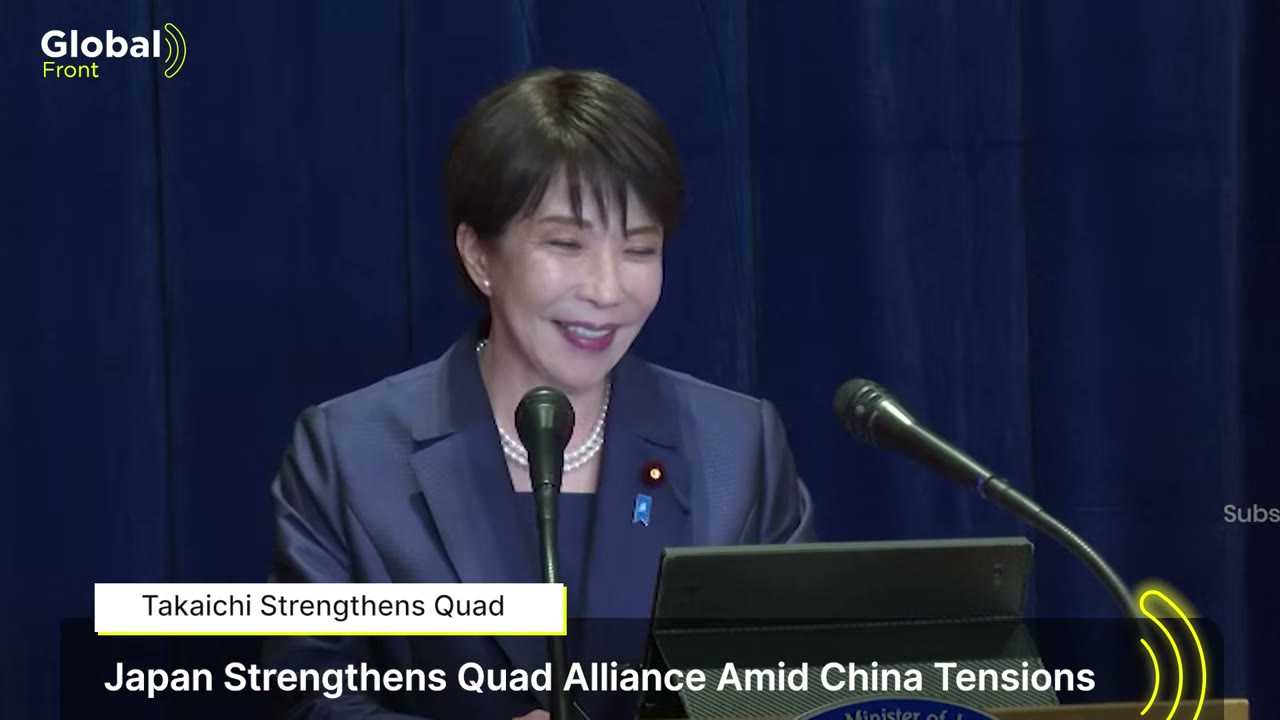
Japanese PM Sanae Takaichi wrapped up a week of summits in Manila and Shenzhen, reaffirming Quad cooperation with the US, Australia and India while meeting Xi Jinping and Vladimir Putin. The balancing act highlights Japan's push for Indo-Pacific resilience amid tense relations with Beijing and Moscow.
1Takaichi Hails Diplomatic Week Across Manila and Shenzhen Summits
Japanese Prime Minister Sanae Takaichi called a week of summits in Manila and Shenzhen an "extremely important diplomatic milestone" for Japan and the region. She met US President Donald Trump, Australian Prime Minister Anthony Albanese and Indian Prime Minister Narendra Modi at a Quad leaders' summit in Manila on November 17.
The four leaders reaffirmed their commitment to a free and open Indo-Pacific, pledging cooperation on maritime security, critical minerals, energy, cybersecurity and emerging technologies. They voiced opposition to attempts to change the regional order through force or coercion, and raised concerns about economic pressure and arbitrary export restrictions.
China was not named in that statement, but the wording reflects long-standing regional concerns about territorial disputes, trade restrictions and the use of economic influence as a strategic tool. Takaichi said the four democracies had shown they can coordinate priorities as the region faces geopolitical competition, economic uncertainty and security disputes.
"This week has become an extremely important diplomatic milestone for the future of our country and the entire region," she said.
For Japan, the Quad offers a way to strengthen partnerships beyond traditional military arrangements, helping smaller Indo-Pacific countries improve their economic and security capabilities. Takaichi stressed that practical results will remain key, with maritime cooperation meant to boost regional awareness and security and critical minerals initiatives aimed at reducing dependence on concentrated sources of essential raw materials.
The four governments also plan to expand work on energy sustainability, cybersecurity and reliable artificial intelligence systems.
Takaichi courted ASEAN too, calling Southeast Asian countries indispensable partners and seeking to reassure them that Japan supports their independence and economic development. She highlighted a joint statement by Japan, the US and ASEAN on regional economic resilience, and proposed strengthening the East Asia Summit format, which she called EAS 2.0, with more emphasis on economic and energy sustainability.
At the APEC Economic Leaders' Meeting in Shenzhen on November 19, she called for stronger international economic rules and more resilient regional supply chains. "I reiterated my call for a strengthened rules-based international economic order, as well as economic and energy resilience to strengthen supply chains in the region," she said.
The week also brought difficult questions. Takaichi met Chinese President Xi Jinping in Shenzhen on November 18, with ties tense over regional security issues, particularly Taiwan, and over Japan's interpretation of its 1972 joint statement with China and later bilateral documents.