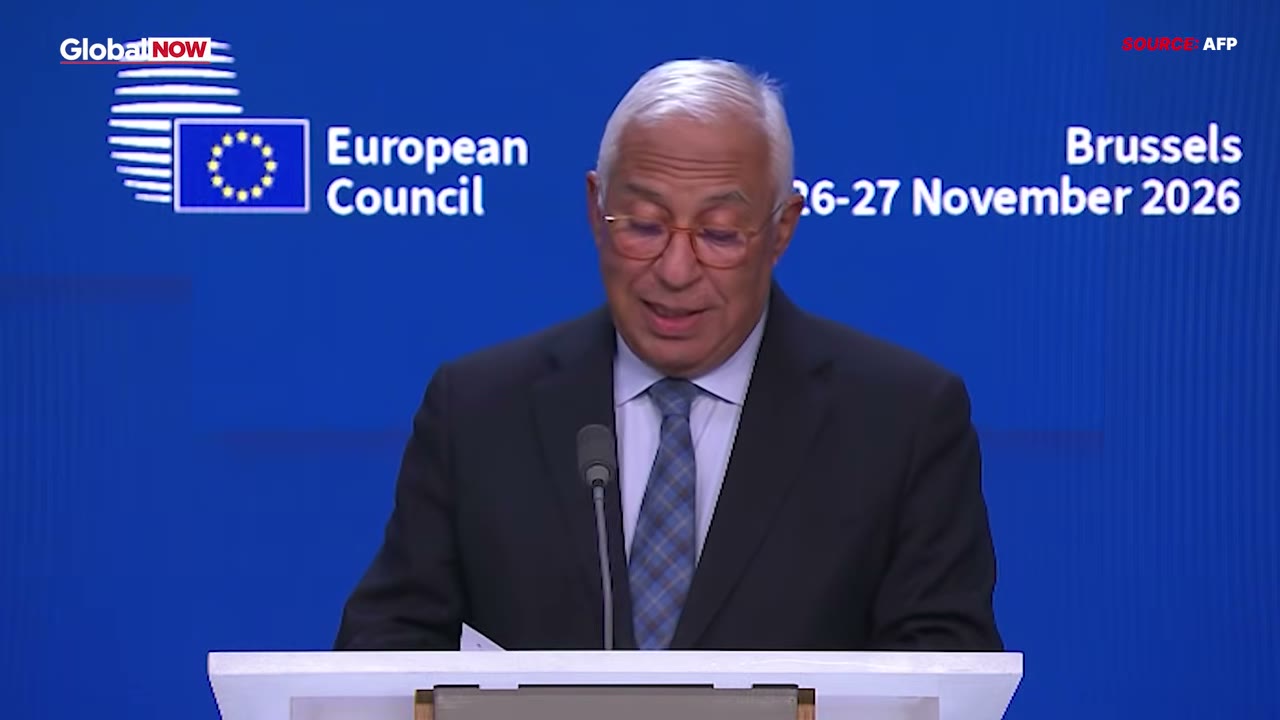
EU leaders remain divided over the next long-term budget, with some states demanding deeper cuts while others oppose them. Ursula von der Leyen also proposed €45 billion in support for Ukraine and discussed Europe's economic outlook.
1EU Leaders Split Over Overall Budget Cuts and Cohesion Funding
Some EU member states want to cut the overall budget even deeper — but most of them said no. The split emerged during talks on the bloc's next long-term budget, with the three sticking points laid out as the total budget, how money is divided between priorities, and a package of new own resources.
On the overall budget, a minority of member states asked for further reductions. The majority opposed more cuts, and some even pushed to reverse earlier cuts, especially to cohesion funding.
On how money is shared out, the vast majority of member states asked not to cut funding for agriculture and cohesion.
New own resources remain open, with work set to continue.
2Von der Leyen Reports Progress on New Own Resources Including Digital Tax
The Digital Services Tax now has broad backing as a way to fund the EU's next budget. Ursula von der Leyen said progress had been made on own resources, calling it an achievement of the latest negotiating package.
She said it offers a possible basis for generating the revenues the next budget needs. With the digital tax drawing wide support, she sees good prospects for a solid package of new own resources.
The talks ran long. Von der Leyen thanked Antonio for his efforts in bringing the parties closer to an agreement on the MFF.
3Von der Leyen Warns Against Further Cuts to Agreed Priorities
The last two negotiation packages have already delivered significant cuts — and von der Leyen is warning against going further. She said she understands the need for compromises, but insisted the bloc must stay true to priorities it agreed on over the past years.
Her argument: at every European Council, leaders called for more European action. Cutting past agreed priorities would undercut that.
She raised the point as her second, on ambition, before turning to deadlines.
4Von der Leyen Says Budget Deal Must Be Reached Despite Challenges
All the pieces of the puzzle still need to be put together — and von der Leyen admits it will be a challenge. She called today's conversations useful, but said much work remains.
Her bottom line: everyone knows an agreement is needed so European funding can flow from day one.
The comments came as she addressed deadlines, after talks that stretched across the day.
5EU Proposes €45 Billion Support Tool for Ukraine Through 2027
The European Commission has proposed a tool to coordinate support for Ukraine worth 45 billion euros by 2027. Von der Leyen said the strategy is clear: give Ukraine the means to negotiate from a position of strength, starting with financial and military support.
The proposal, put forward last week, received broad support, she said.
It is now up to the Council to complete the work. Von der Leyen said the Commission will support that effort all the way and ensure Ukraine is further strengthened for the security of Europe itself.
6Von der Leyen Thanks Christine Lagarde as ECB President and Welcomes Successor
Christine Lagarde has chaired her last discussion with EU leaders as European Central Bank president. The session, on Europe's economic prospects, closed with thanks from Ursula von der Leyen for Lagarde's work for Europe and the euro.
Von der Leyen praised her "skillful management and elegant and effective leadership."
She said she looks forward to working with Lagarde's successor, Pablo Hernández de Cos.
7Journalist Asks If Next Generation EU Was a Mistake Due to Debt Burden
Europe will spend more paying interest on Next Generation EU debt over the next seven years than on Horizon Europe — and nearly twice as much as on defense. An Austrian journalist from Die Presse put that figure to both presidents and asked how big a mistake the program was.
The question, from Oliver, pressed on what went wrong and how leaders plan to limit a debt and interest burden that keeps growing.
He argued it will prove more burdensome than investments in the future, in Europe's defense and in Ukraine.
8Von der Leyen Defends Next Generation EU as Success, Details Repayment Plan
Next Generation EU was "a great success," von der Leyen said, pointing to data showing it saved Europe from a sharp downturn and a slow recovery during COVID. She said investment combined with reforms was the right move, backed by numerous reports.
But 850 billion euros must be repaid with interest — standard procedure for loans, she said — and that will be handled in the budget now being prepared.
She reminded reporters the plan was always to repay it with new own resources: a digital tax and CBAM. CBAM has broad consensus in the Council, not unanimity, and the digital tax is going "very well."
9Costa Dismisses Concerns Over Small Working Groups and Frugal States' Absence
Some member states skipped the small-group meetings — and António Costa says that's their call. Asked about the "frugal" or modernizing countries choosing not to take part, he said leaders had already met twice in plenary and in various group formats.
"Some Member States may have considered that there was no need for a second meeting in small groups," he said. "I don't know, you should ask them."
For Costa, the sessions were useful: they helped him determine the parameters of a possible agreement in December.
10Journalist Challenges Costa on Summit Consensus and Frugal States' Frustration
Frugal states are irritated, cohesion countries are frustrated, France is setting red lines and Ireland calls the digital tax a betrayal — and a reporter asked Costa whether consensus is now further away than ever.
Gavin Reilly of Virgin Media News put the question bluntly: isn't reaching consensus the whole point of a summit? He noted the "frugal" or "smart seven" feel their unity was undermined, the "friends of cohesion" have made no progress, and Ireland says the digital tax breaks earlier BEPS commitments.
He asked Costa directly whether the summit left consensus further away than before.
11Costa Says Summit Was Necessary Step, Agreement Needed by End of Year
A new EU budget is needed from January 1, 2028 — which means a final agreement must land by the end of this year. Costa called the summit a necessary step in the process, saying it is normal for parties to stake out original positions at the start.
"Everyone knows that we cannot let Europe down," he said.
He said there is enough time until the end of the year, but defended member states protecting national interests — drawing on his own time as prime minister.
12Costa Asked About Further Cuts Up to €250 Billion, Stresses Unanimity Need
Some EU member states want cuts of up to €250 billion from the budget, a reporter said at a press conference after a meeting ended. Asked whether he was ready for further cuts in the next negotiating package, the speaker did not give a yes or no.
Most member states have asked for no further cuts to the overall budget, he said, and work continues to bring countries' positions closer together.
Unanimity is required to approve the new budget, he stressed: all member states must agree among themselves. That gives every country a veto.
13Costa Repeats Majority Opposition to Further Budget Cuts
The Council will make the final decision on the budget, with the majority opposed to further cuts, the speaker said after the meeting.
Some went further in the negotiations, he added, without specifying which countries or what they proposed.
He said the Council would return to the issue later. Unanimity is needed to approve the new budget.