The Climate Question podcast examines whether the minerals needed for a low-carbon future can be mined without repeating past harms. Journalist James Crawford reports from Chile's lithium-rich Atacama salt flat and Butte, Montana, where copper mining left a toxic lake in the city centre.
1Chile's Atacama lithium brine mining and its water use
Two lithium mines on Chile's Atacama salt flat pump about 200 million litres of brine a day — from a landscape so otherworldly it has doubled for the surface of Mars in major films.
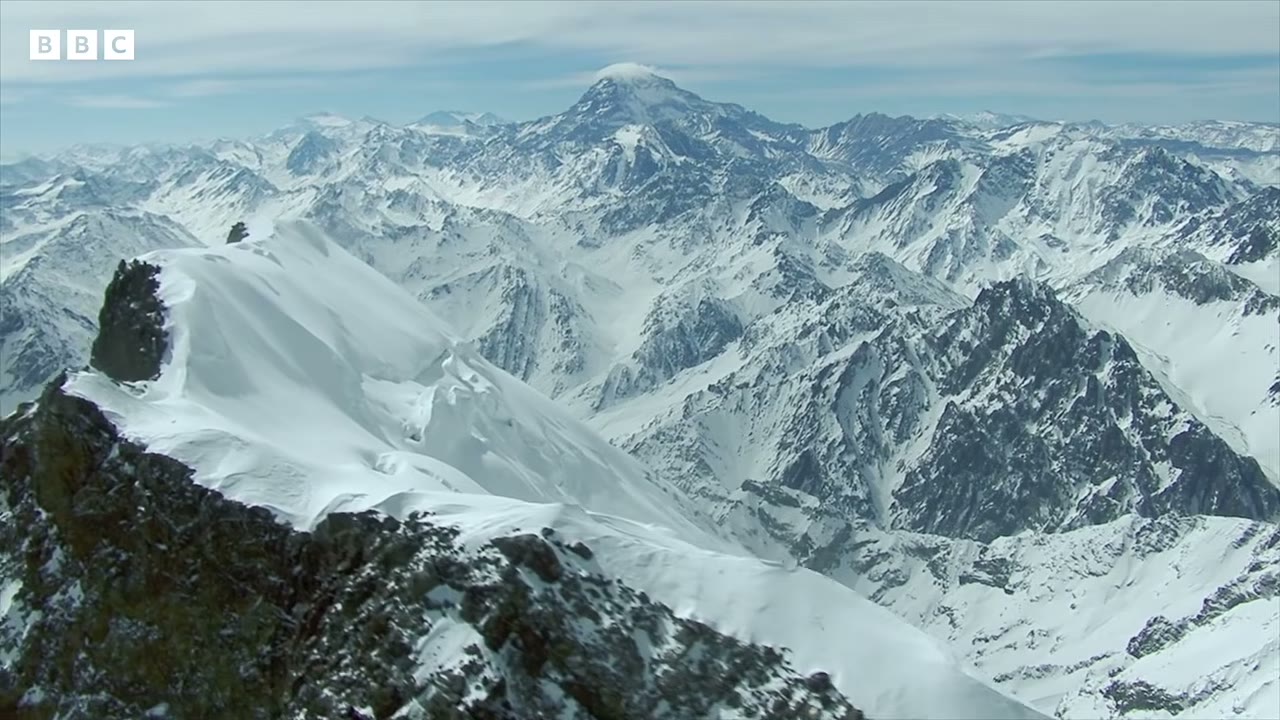
The salt flat is the third largest on Earth, sitting in a mountain basin at around 3,000 metres, with the Andes rising to almost 6,000 metres. Brine lies within the salt deposit down to two kilometres. It is pumped into ponds about a kilometre long and 300 metres wide, where the sun evaporates it over 12 to 16 months until the brine is lithium-rich.
Tankers then carry it about 100 miles west to Antofagasta for processing into electric vehicle and mobile phone batteries. Fresh water is also drawn daily — about 100 litres a second — to stop salt building up in pipelines.
The miners liken the process to harvesting: it is solar-powered and the cheapest way of making lithium on Earth, with the lowest emissions profile. It still comes at an environmental cost.
2Lithium demand projected to rise 12 to 40 times
Global lithium demand could rise 12 to 40 times, according to the International Energy Association.
The mineral is central to the shift away from fossil fuels: electrification of vehicles, electrification of the grids, and its connection to renewable energy. But its uses go further. It has been the fuel in nuclear weapons, and in powdered form it is used to treat mental health issues like bipolar and depression.
That range of applications is why demand is expected to climb so sharply.
3Indigenous communities and shrinking lagoons in the Atacama
Indigenous communities have lived on the rim overlooking the Atacama salt flat for at least 10,000 years, herding goats, llama and vicuña and farming. Now the water they depend on is under pressure.
Most of their meagre water comes from snowmelt running off the Andean rim through deep rock gorges called quebradas into small communities. On the rim of the salt nucleus sit natural saltwater lagoons — breeding grounds for three of the world's six flamingo species. Satellite imagery shows the lagoons shrinking and the flora around them gradually disappearing.
Whether lithium mining is to blame is disputed: the cause could be freshwater drawdown, climate change or other factors. The change itself is not disputed — it is visible. The notoriously hardy Algaroba trees around communities are starting to die. As the communities put it: water is life.
4Chile's state partnership and promises to local communities
Chile's lithium project is now a partnership between the company and the Chilean state, which will receive most of the profits — keeping the money in the country.
Ministers hope lithium will drive economic growth and strengthen Chile's role in the global mineral supply chain. They have also said they are committed to permanent engagement with local indigenous communities and to providing value for them.
New technology, they say, will help reduce pressure on the environment, while sensors provide round-the-clock monitoring of water, air and ground conditions. The desert site is remote, and jobs are being created for local people.
5Can mining jobs leave a lasting legacy for Atacama communities
Extraction can bring jobs — but often only for a generation. When the industry goes, what is left behind is frequently a denuded or destroyed landscape and no more jobs.
That is the question hanging over Chile and lithium mining: can that narrative be changed? Some indigenous people have worked in lithium mining almost since the beginning. One man helped build the very first lithium ponds and has worked with the miners for years. Some communities have profit-sharing arrangements with the companies, which brought photovoltaic plants to villages that had relied on diesel generators.
But about 70 miles south of the Salar de Atacama, the Salar de Punta Negra sits close to the Escondida copper mine, the largest copper mine on Earth. Water drawdown there was so significant that its saltwater lagoons and their flora and fauna are gone.
6Direct lithium extraction and risks to salt flat microorganisms
A new method could cut lithium's water use — but it comes with its own risks. Direct lithium extraction chemically removes the lithium from brine rather than leaving it to evaporate in ponds, bringing the brine straight back down again.
Extensive testing is under way around the world and at the Salar de Atacama. Pumping large volumes of water back in could be a little like fracking, potentially affecting the integrity of the salt flat itself. They don't know what it will do, or what will happen chemically.
The brine contains microorganisms that are potentially very important and understudied. A microbiologist working in Chile said applications might be found with medical value, including for antibiotic resistance and cancer treatments. As she puts it, brine pumping is just a series of micro disasters.
7Chuquicamata copper mine and its abandoned town
The Chuquicamata copper mine is one of the biggest holes on Earth — and its spoil heap grew so large that a nearby town had to be abandoned.
The mine has been there a long time. Che Guevara wrote about visiting it in his Motorcycle Diaries, describing an almost glacial beauty. Flying over it to land at the airport closest to the Salar de Atacama, you can see dust billowing out of it. Its ore trucks are the size of a three-story house, with tyres about 12 feet tall.
It is a long, long process of extraction, spiralling deeper and deeper into the ground.
8Butte, Montana's Berkeley Pit: a toxic lake in the city
A lake holding 50 billion gallons of toxic water sits in the centre of Butte, Montana — not on the edge, but right in the middle of the city.
Mining there started in the mid-1800s; the Berkeley pit was dug in the mid-1900s and no longer operates. Creating it required moving entire neighbourhoods on the back of lorries down to the valley below. Before it was open cast, about 100 pit heads and 10,000 miles of tunnels were dug into the hill across four square miles, like an ant hill. The ore was very high purity, 50 to 100 percent pure copper.
Once dug below the water table, the pit filled with water. For years groundwater had been pumped out into Silver Bow Creek, which by 1898 was designated a dead river. The water picks up metals from the exposed rock, and sulphate in the rock turns it into dilute sulphuric acid, with arsenic, cadmium, manganese, zinc, copper and iron. The lake is around a mile and a half wide and a mile long.
9Toxic water chemistry and the snow geese die-off
As many as 10,000 migrating snow geese landed on the Berkeley pit lake during a winter storm about 10 to 15 years ago. Thousands never took off again.
They drank the water and suffered lesions in their throats and kidney failure; many died. Mitigation measures now ring the pit: a constant siren with an inorganic sound to scare birds off, a bird shack with a stand for shooting at the water next to birds to make them take off, plus drones and boats.
The lake is a lurid green, like a horror film — the dark heart of extraction. It is the largest environmental cleanup site in America.
10How Butte became America's richest hill and then toxic
Butte was known as "The richest hill on earth": by the mid-20th century, a third of all America's copper and a sixth of the world's copper came from just four square miles.
Copper was discovered as electrification and light bulbs were spreading. The equivalent financial value of something like 25 billion dollars came out of the hill. Over time costs rose and demand for copper decreased, and the cost-efficient way to mine was open cast — a shift made around the 1950s. By the 1980s it wasn't profitable anymore, and the mine shut.
That is when water started filling up, with no one doing anything about it. Eventually the 50 billion gallons could overspill into the surrounding water table and contaminate the entire landscape.
11Smelting pollution's legacy on Butte's soil and residents
Children in Butte found bones that had turned blue — copper from the smelting had replaced the calcium. Residents didn't realise soil wasn't yellow when they were growing up.
Copper was smelted on site from the start, and ore piles were burned, filling the city with smoke and toxic lead. The acidic air destroyed all organic matter; the grass is gone and the soil is toxified. Arsenic dust from smelting got into attics and roofs of old buildings and has to be cleaned up. Butte has very high rates of bladder cancer, often the result of arsenic exposure.
When the mine shut, maybe 20,000 to 30,000 people left. Many stayed, and the city has pivoted to environmental reclamation. Test green corridors are being planted with quaking aspen and pines to see whether trees, wildlife and rodents return — or whether the trees dig too deep, reach the toxic soil and die.
12Butte residents pivot to reclamation and perpetual water pumping
Water must be pumped out of a vast open pit in Butte, Montana, forever. One of the copper miners put it plainly: "You got to pump that forever." Asked about that word, he agreed — forever is a long time.
People stay anyway. Many young residents from generations of mining families now study at Montana Technical College, using the scarred landscape to learn mine cleanup and reclamation.
The world may need more miners, the thinking goes, but it will also need more people who repair what mining leaves behind — including biotechnologists. Researchers have found unique microorganisms in the Berkeley pit that, in studies, attacked ovarian cancer cells.
Out of the horror story, some hope.
13What complete repair of a mined landscape should look like
What a repaired mine landscape should look like is fiercely contested, and who pays decides a lot. A company footing the bill wants the cleanup to be just enough. The people living there want it complete.
That tension, the argument goes, offers a model for repairing not just Butte but other mined places.