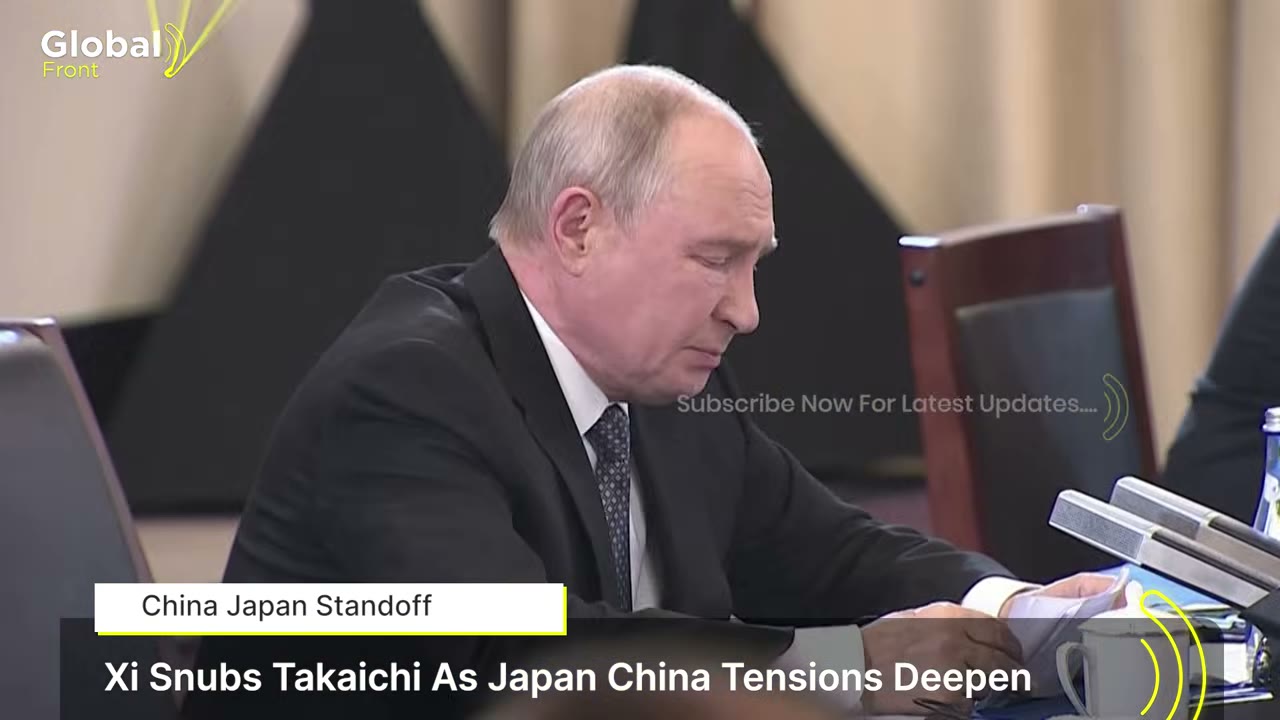
Japanese Prime Minister Sanae Takaichi attended the Shenzhen APEC summit without securing formal bilateral talks with Xi Jinping, despite hopes in Tokyo. A handshake on November 18 was the extent of their exchange, as disputes over Taiwan, security and trade deepen between Asia's two largest economies.
1Takaichi Attends Shenzhen APEC Without Confirmed Xi Bilateral Meeting
Japan's new prime minister arrived at a major summit in China without a confirmed meeting with Xi Jinping. Sanae Takaichi attended the Asia-Pacific Economic Cooperation summit in Shenzhen on November 18-19, where leaders gathered to discuss trade, technology and regional stability.
For Tokyo, the missing bilateral was the story. Japanese officials had sought direct communication with Beijing, hoping a leader-level meeting could stop relations from deteriorating further. No formal sit-down was officially confirmed, raising questions about whether China is willing to engage Takaichi at the highest level.
A handshake and a formal meeting are not the same thing. Leaders at summits often greet and chat briefly without structured talks — contact that keeps communication alive but signals no progress on serious disputes.
Takaichi's government is squeezed between deep economic ties with China and its security stance on Taiwan and the Indo-Pacific. Beijing has repeatedly objected to Japanese statements it says challenge China's claims to Taiwan.
2Tensions Traced to Takaichi's November 2025 Taiwan Emergency Remarks
Five weeks before the Shenzhen summit, Xi Jinping and Sanae Takaichi sat down and talked about keeping relations stable. That was October 31, 2025, at the APEC summit in Gwangju, South Korea. Both sides seemed interested in managing differences.
Then November 2025 changed the mood. Takaichi suggested a serious confrontation over Taiwan could create circumstances affecting Japan's national security and potentially activate provisions of Japanese security legislation. Beijing strongly objected, reading the remarks as a sign Japan might consider intervening in a conflict over Taiwan.
China considers Taiwan part of its territory and opposes foreign military intervention. Japan frames the issue differently: Taiwan sits near its southwestern islands, and the surrounding waters are part of vital trade routes. Disruption in the Taiwan Strait could hit energy imports, industrial supply chains and the economy as a whole.
Neither side shows signs of backing down. China urges caution; Tokyo insists regional developments can directly affect Japan's security.
3Summit Outcome: Handshake on November 18 but No Formal Bilateral Talks
Xi Jinping and Sanae Takaichi shook hands at welcoming events on November 18. They held no formal bilateral talks.
The gap told the story. Takaichi met or spoke with many other leaders at the Shenzhen summit; Xi was absent from her list of meaningful diplomatic discussions. The handshake confirmed basic courtesies remained possible, but it offered no venue for detailed negotiations on Taiwan, trade restrictions or regional security.
Takaichi used her own platform to clarify Japan's position. Speaking in Shenzhen on November 19, she stressed that Tokyo's long-standing policy toward Taiwan has not changed since diplomatic relations between Japan and China were normalized in 1972.
The reaffirmation appeared aimed at preventing further misunderstanding — without abandoning Japan's broader security interests. Beijing has repeatedly criticized her earlier remarks about a possible Taiwan emergency.
4Economic Stakes: Trade Ties and Rare Earth Supply Concerns
Rare earth minerals sit near the center of Japan's economic exposure to China. The materials are essential for high-performance magnets, electric vehicles, electronics and advanced industrial products.
China remains one of Japan's most important trading partners, with ties spanning automobile manufacturing, industrial equipment, electronics and advanced technology. Japanese manufacturers rely on complex regional production networks, and a prolonged deterioration could create uncertainty for companies in both markets.
Japan is working to diversify suppliers and build up domestic and international production capacity. But alternative supply chains demand significant investment, technological expertise and cooperation with other countries.
The friction reaches well past government meetings. It can shape corporate investment decisions, production costs, technological development and confidence in regional stability. For the Takaichi administration, balancing economic cooperation with national security has become a central foreign policy challenge.
5Trump's Shenzhen Talks with Xi and Putin Raise Questions for Tokyo
Donald Trump's presence in Shenzhen added another layer. The US president held high-level diplomatic discussions with Xi Jinping and Russian President Vladimir Putin, drawing international attention to relations among the world's leading powers.
For Tokyo, that raises an uncomfortable question: how might Washington's dealings with Beijing affect security in the Indo-Pacific? The United States remains Japan's most important security ally, and cooperation between the two is central to Japanese defense planning.
Japan must also weigh the possibility that Washington and Beijing strike deals reflecting their own priorities — even where those don't fully align with Tokyo's interests.
That is one reason Japanese officials are seeking close communication with the Trump administration. Tokyo wants Taiwan's security, maritime security, economic resilience and regional stability kept inside the broader diplomatic conversation.
6Japan Builds Southeast Asia Ties and Energy Security Cooperation
Before Shenzhen, Sanae Takaichi stopped in Manila for regional meetings — part of a wider push to widen Japan's partnerships. Tokyo is strengthening cooperation with Southeast Asian governments while keeping ties with the United States, Australia and India.
The relationships cover maritime security, technological development, energy sustainability and protection of international supply chains.
Japan is also pushing stronger coordination on emergency energy supplies, including oil reserves and mechanisms to respond to major disruptions. That matters because Japan depends heavily on energy imports; instability on major shipping routes can quickly hit households and businesses.
The China diplomacy is one piece of a larger effort to prepare for economic and security uncertainty.
7Taiwan's APEC Role Under 'Chinese Taipei' with Acer Founder Stan Shi
Taiwan attended the Shenzhen summit as "Chinese Taipei" — an arrangement that lets it join regional economic discussions despite an unresolved political dispute with Beijing. Its representative: Stan Shi, founder of Acer.
The choice put technology and business cooperation in the spotlight. But Taiwan's presence carries political weight, too. China insists participation must be consistent with established arrangements and its position on sovereignty. Taiwan's government says it has the right to take part in international economic activities with dignity, without accepting Beijing's political pretensions.
For Japan, Taiwan's role is hard to ignore. It is central to semiconductor manufacturing and advanced technology supply chains, and Japanese companies maintain substantial commercial ties with Taiwanese tech businesses. Tokyo backs efforts to expand semiconductor production and build supply chain resilience.
Any major disruption involving Taiwan could hit Japan's manufacturing sector and the wider global tech industry.
8Japan Reviews Security Documents Amid China, North Korea and Russia Threats
Japan is preparing to rewrite the documents that guide its defense. The review covers the national security strategy, the defense strategy and the defense capability building program.
It comes amid concerns about China's growing military capabilities, North Korea's nuclear and ballistic missile programs, and Russia's military activity in the region. Japan is also exploring ways to increase preparedness around its southwestern islands, enhance maritime operations with allies and protect critical infrastructure.
Beijing views parts of Japan's expanding defense posture with suspicion, especially when Tokyo discusses scenarios related to Taiwan. Japanese officials argue stronger capabilities are necessary to deter confrontation and protect national security.
The gap reflects a wider problem in East Asia: measures one government calls defensive can look like a threat to another, feeding more distrust.
9Deep Economic Links Make a Prolonged Japan-China Rift Costly
Neither Japan nor China gains from a drawn-out diplomatic rift. The two economies remain deeply linked through trade, investment, manufacturing and regional supply chains.
Both governments also have reason to avoid an uncontrolled confrontation that could damage economic growth and stability across the region. That shared interest sits alongside the unresolved disputes over Taiwan, security and defense.
The tension is the balance: competing positions that neither side wants to abandon, and costs that both sides would feel if the relationship slides further.