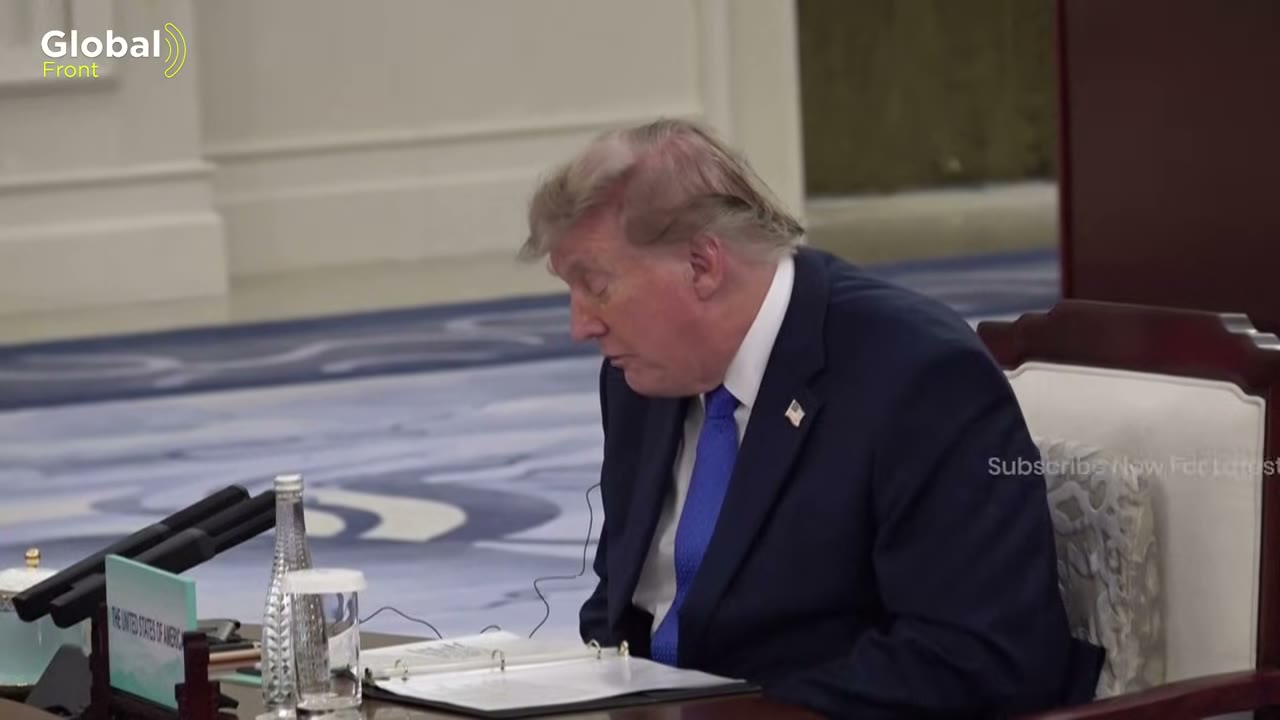
China, Russia and the US held an unprecedented trilateral meeting in Shenzhen on November 10, 2026, agreeing to keep talking on nuclear risks, security and energy. No formal alliance or arms treaty emerged, and deep divisions over Ukraine, Taiwan and trade remain.
1Xi, Putin and Trump Meet in Shenzhen for Unprecedented Trilateral Summit
Three nuclear-armed presidents sat down together in Shenzhen on November 10, 2026 — the first trilateral meeting of its kind. Xi Jinping, Vladimir Putin and Donald Trump met on the sidelines of the Asia-Pacific Economic Cooperation summit.
Talks covered strategic stability, international security, nuclear risks, global energy supplies and the future of international institutions. No formal trilateral alliance was announced.
The leaders did issue a joint declaration outlining areas where cooperation could ease international tensions. The meeting has sparked debate over whether the world is entering a new geopolitical era — one where competition stays fierce but direct confrontation becomes less acceptable.
2Xi Jinping Casts China as Central Diplomatic Force Against Thucydides Trap
Xi Jinping used the Shenzhen summit to cast China as a diplomatic force able to unite governments with radically different strategic interests. Beijing has repeatedly stressed the international community cannot afford an endless struggle between major countries — especially over nuclear capabilities, advanced technologies, financial systems and regional security.
Xi said the "Thucydides trap" is by no means an inevitable fate, challenging the assumption that a great power and its rising rival must enter direct conflict.
He emphasized mutual respect, peaceful coexistence, economic cooperation and constant dialogue as the foundation for regulating relations between Washington, Moscow and Beijing.
3China Weighs Trade Risks and Russia Ties in Complex Diplomatic Triangle
China's leadership sees unstable relations with the United States as a direct threat to its own economy. Beijing realizes a breakdown could disrupt international trade, undermine investor confidence and harm the economic environment that fostered China's development.
At the same time, Beijing maintains a close strategic partnership with Russia. That creates a complex diplomatic triangle in which cooperation and rivalry coexist.
The balancing act shapes how far China can push trilateral cooperation without damaging either relationship.
4Trump Calls Shenzhen Summit a 12 Out of 10
Donald Trump rated the Shenzhen summit above perfect. "On a scale of 0 to 10, I think it was a 12," he said after the meeting.
For Trump, the main attraction was the chance to reduce nuclear risks while strengthening Washington's ability to negotiate directly with other major powers. He has consistently emphasized personal diplomacy and high-level engagement, arguing communication can stop disagreements from escalating into larger international crises.
His enthusiasm reflected satisfaction with the talks, though the diplomatic achievements remain more limited than the symbolism surrounding the meeting.
5Leaders Agree to Nuclear Risk Dialogue but Announce No Arms Treaty
The New START treaty expired in February 2026 — and the three leaders left Shenzhen without a detailed arms reduction treaty or a timetable for negotiations. They agreed only to continue dialogue on reducing nuclear risks and preventing the spread of nuclear weapons.
The United States and Russia still hold the world's largest nuclear arsenals, while China is steadily building up its capabilities. Washington and Moscow possess thousands of nuclear warheads; China's estimated stockpile remains significantly smaller.
Beijing has traditionally argued the US and Russia must make deeper cuts before expecting China to adopt similar restrictions. Those differences could complicate future negotiations.
6Putin Seeks Broader Economic and Security Role Through Summit
Vladimir Putin came to Shenzhen seeking more than nuclear talks. Moscow maintains close relations with Beijing, resists Western sanctions and continues the war against Ukraine — and direct interaction with both Washington and Beijing offers a chance to strengthen Russia's diplomatic position.
Putin said the leaders should discuss global and regional economic ties, as well as food and energy security, pushing the conversation beyond nuclear weapons to economic stability, energy markets and international development.
But the United States remains deeply divided with Moscow over Ukraine and European security. The meeting may open channels of communication; it cannot erase years of confrontation.
7Ukraine War Remains Unresolved After Shenzhen Declaration
The Shenzhen Declaration did not establish a settlement to the war in Ukraine. Issues of Ukrainian sovereignty, territorial security, sanctions and the future of European defense remain unresolved.
Any lasting agreement would require negotiations involving Ukraine and other directly affected countries, according to the discussions.
Closer communication between Washington and Moscow could create diplomatic opportunities — but it also raises concerns among European governments about decisions affecting their security without their full participation. Those concerns feed a broader debate about the changing international order.
8Shenzhen Summit Signals Shift in US-Led Global Order
By hosting the presidents of the United States and Russia, Xi Jinping put Beijing at the center of international diplomacy. For decades, global politics were shaped by American leadership, Western military alliances and international financial institutions; China's economic expansion and Russia's resistance to Western influence are increasingly challenging that system.
The Shenzhen Summit was a vivid illustration of the shift, underscoring China's ambition to shape the global agenda rather than simply react to decisions made elsewhere.
It raises one of modern geopolitics' biggest questions: will the 21st century be the Chinese century?
9Debate Grows Over Whether the 21st Century Will Be Chinese
Calling the 21st century Chinese would be premature — the United States remains the world's largest economy by nominal gross domestic product. Still, proponents of the claim point to China's vast manufacturing capacity, infrastructure development, trade ties, technological progress and expanding diplomatic influence.
Chinese companies hold important positions in electric vehicles, renewable energy, telecommunications, industrial equipment and global supply chains, and Beijing has invested heavily in artificial intelligence, advanced manufacturing, transportation and scientific research.
China also faces demographic pressures, real estate difficulties, uneven consumer demand and questions about long-term productivity growth.
10US-China Rivalry Persists in Tech, Trade and Tariffs
Competition between China and the United States is unlikely to disappear — both governments may instead try to control the risks. Competition in artificial intelligence, advanced semiconductors, international investment and technological standards may continue even as diplomatic cooperation expands.
Trade is another example: American businesses depend on Chinese manufacturing and logistics networks, while China's economy benefits from access to international markets. Both sides used tariffs, export controls and industrial policies to strengthen negotiating positions.
The temporary easing of some trade restrictions created room for communication, but significant differences remain.
11Taiwan and South China Sea Tensions Test Summit Goodwill
High-level diplomacy has not reduced military competition on the ground. Taiwan remains one of the most sensitive issues between Washington and Beijing: China considers Taiwan part of its territory and continues building up military capabilities in the surrounding region, while the United States supports long-standing security interests in the Indo-Pacific.
Regional governments remain concerned about a possible escalation of the crisis.
Disputes in the South China Sea and growing security cooperation between American partners show that engagement at the top does not necessarily calm tensions below.
12Summit Backs UN Reform and Curbs on International Courts
The Shenzhen Declaration backed reforming the United Nations to sharpen its response to global challenges — while raising concerns about international courts. The three governments emphasized state sovereignty and expressed concerns about the exercise of jurisdiction by international judicial institutions.
Supporters may interpret the positions as efforts to strengthen national sovereignty and encourage negotiations between governments.
Critics may argue powerful countries should not be allowed to weaken mechanisms designed to hold accountable serious violations of international law. The positions could have far-reaching diplomatic consequences.
13Energy Security Emerges as Potential Cooperation Area
Russia sells energy, China buys it on a massive scale, and the United States pumps oil and gas — a combination that could move global markets. Energy security has emerged as a potential area of cooperation among the three, according to the discussion. Russia is a large exporter of energy resources. China ranks among the world's largest energy consumers, and the United States has significant oil and gas production capacity. Coordination between them could shape supply expectations, investment decisions and confidence in the global energy market. But sanctions, competing commercial interests and unfinished negotiations on major infrastructure projects mean economic cooperation cannot be taken for granted.
14Smaller Nations Demand Voice in Any New Global Order
Europe, India, Japan and Southeast Asian states are watching the three biggest powers talk — and they want a say in whatever comes out of it. The wider international community will monitor the developing relations closely, with those countries and other emerging economies holding their own security and economic interests. It is unlikely they will accept a global order in which Washington, Beijing and Moscow set international priorities without meaningful consultation. For many developing countries, steadier relations between the three could bring real gains: lower geopolitical uncertainty, more investment, better trade conditions and fewer disruptions to energy and food supplies. Still, smaller countries want assurance their sovereignty, economic interests and security concerns will be respected.
15Sino-Russian-American Partnership Remains a Framework, Not an Alliance
Call it a framework, not an alliance. The idea of a new Sino-Russian-American strategic partnership is better understood as a potential diplomatic framework than an established political alliance, with the three countries' interests still fundamentally different in many important areas. Xi Jinping seeks a stable international environment that supports China's continued development and expanding influence. Donald Trump seeks diplomatic engagement that strengthens American interests and reduces serious security risks. Vladimir Putin seeks greater international recognition, economic opportunities and a more favorable strategic environment for Russia. Whether these ambitions can be reconciled remains unclear. The events in Shenzhen suggest major powers may increasingly recognize the costs of uncontrolled confrontation.