A countdown of the People's Liberation Army Air Force's most advanced aircraft, from the JH-7A fighter-bomber to the WZ-7 Soaring Dragon reconnaissance drone. The video details each platform's size, speed, payload and role, highlighting stealth drones and electronic warfare conversions.
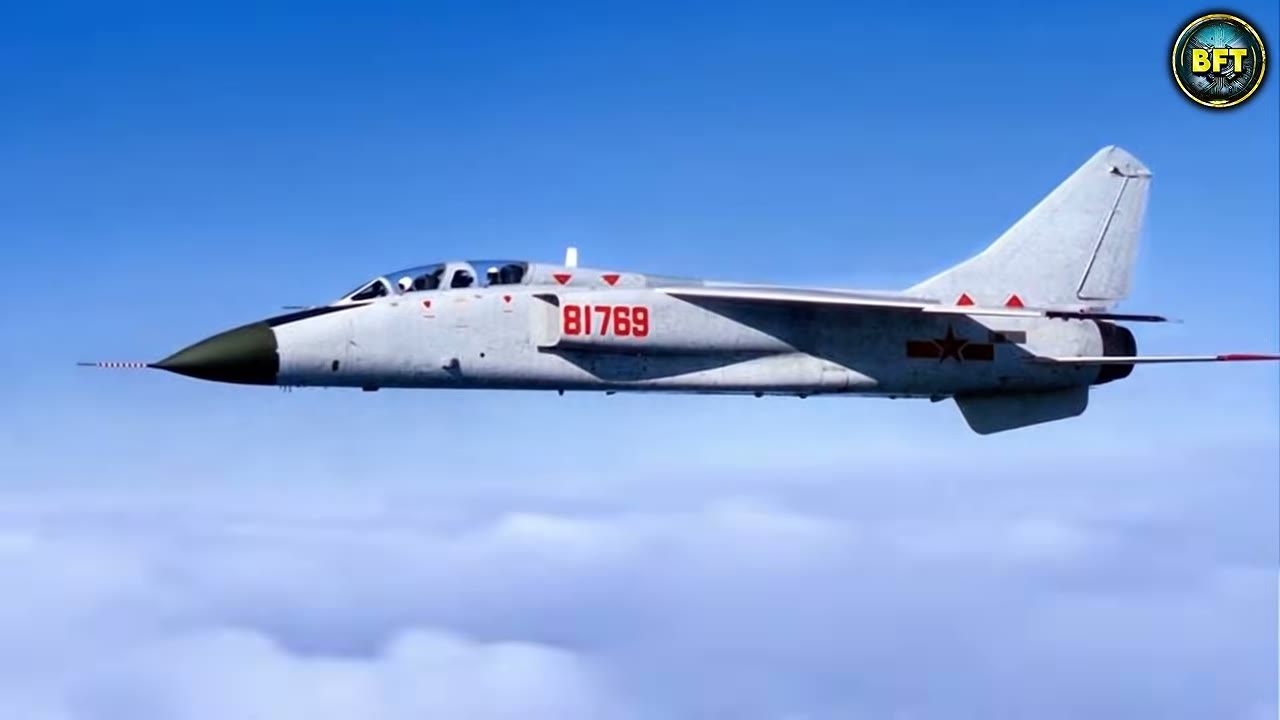
1Xian JH-7A fighter-bomber ranks 10th in PLAAF countdown
China's Xian JH-7A still carries 9,000 kg of weapons on nine pylons, even as military technology races ahead. The two-seat fighter-bomber ranks 10th in a countdown of the People's Liberation Army Air Force's most advanced aircraft.
Designed to hunt enemy ships and deliver precision strikes, the jet is 22 meters long with a 13-meter wingspan. Two turbojet engines with afterburners push it to almost 1,800 km/h.
It can carry anti-ship missiles and heavy precision bombs. The aircraft is described as a legendary workhorse that still commands considerable respect.
2Tu-154 airliner converted into PLAAF electronic warfare spy plane
A civilian passenger jet has been rebuilt into a flying electronic eavesdropping laboratory for China's air force. The Tu-154, a commercial airliner, was heavily modified as an elite intelligence-gathering platform.
The airframe offers cabin space and long-term endurance that specialized military aircraft cannot match, according to the account. At 47 meters long with a 37-meter wingspan, it can carry dozens of electronic warfare operators and racks of sensitive equipment.
Three tail-mounted turbofan engines let it cruise at altitudes up to 11,000 meters, scanning the electromagnetic spectrum for enemy communications and radar frequencies. It coordinates regional electronic warfare campaigns without firing a single bullet.
3CASC CH-4B armed drone offers 30-hour endurance
A Chinese combat drone can stay airborne for 30 hours, scanning the ground below with high-definition cameras and thermal imaging sensors. The CASC CH-4B ranks eighth in the countdown.
The medium-altitude, long-endurance drone has an 18-meter wingspan and is 8 meters long. A piston engine powers its long hours of silent prowling over contested areas.
At maximum takeoff it weighs around 1,300 kg and carries up to 345 kg of precision-guided munitions and laser-guided air-to-surface missiles. Operators at ground control stations thousands of kilometers away watch live video feeds before delivering pinpoint strikes.
4Chengdu WZ-10 attack helicopter hunts tanks at treetop height
A Chinese attack helicopter is built to fire anti-tank missiles from just 10 meters above the treetops. The Chengdu WZ-10 ranks seventh in the countdown of the PLAAF's most advanced aircraft.
The gunship has a tandem cockpit, with pilot and weapons operator sitting one behind the other. Its thin profile is designed to reduce radar and thermal signature, making it harder for enemy air defenses to operate.
Two turboshaft engines on the sides of the fuselage give it maneuverability in difficult terrain. It carries 1,500 kg of combat load, including anti-tank guided missiles, unguided rocket pods and a bow automatic cannon.
5Sukhoi Su-27 heavy fighter brings Cold War design to Asian skies
A Cold War fighter design still reaches speeds over 2,500 km/h in Asian skies. The Sukhoi Su-27 ranks sixth in the countdown of the PLAAF's most advanced aircraft.
The heavy air superiority fighter is 21 meters long with a 15-meter wingspan. Two turbofan engines let it take off like a rocket and hit the high speeds at altitude.
It can carry up to 6,000 kg of weapons and is described as a deadly interceptor capable of establishing air dominance over large maritime borders. Its maneuvers at international air shows have drawn amazed spectators.
6CH-7 stealth flying-wing drone penetrates air defenses
A Chinese stealth drone with a 22-meter wingspan is built to slip past air defense grids and patrol for up to 15 hours. The CH-7 ranks fifth in the countdown.
The flying-wing design is optimized for deep penetration missions and high-altitude intelligence gathering. A turbofan engine mounted on the upper fuselage lets it climb to 13,000 meters while remaining virtually invisible to traditional radar.
With a maximum takeoff weight of 12,000 kg and a range of up to 2,000 km, it carries anti-radar missiles and long-range precision munitions in internal bays. It can detect enemy mobile command centers and fleets.
7Su-30MKI twin-seat strike fighter patrols South China Sea
A twin-seat heavy fighter designed to act as an airborne command post ranks fourth in the countdown of the PLAAF's most advanced aircraft. The Su-30MKI is 22 meters long with a 14-meter wingspan.
Two turbojet engines with afterburners and controlled thrust vectoring give it maneuverability that belies its size, according to the account. It carries 8,000 kg of combat load on 12 suspension nodes, including heavy anti-ship missiles and long-range air-to-air weapons.
Advanced digital cockpit displays and sophisticated radar systems support its role directing other strike groups over the South China Sea. The pilot and weapons systems officer in the back seat work as a team.
8Hongdu GJ-11 stealth drone swarms enemy airspace autonomously
A stealth drone made entirely of radio-absorbing composite materials is designed to swarm enemy airspace in complete radio silence. The Hongdu GJ-11 ranks third in the countdown.
The flying-wing aircraft has a 14-meter span and is 12 meters long, with no vertical stabilizer. A single hidden turbojet engine with a stealth nozzle lets it cruise at up to 1,000 km/h while remaining invisible to enemy radar.
Its empty weight is about 6,350 kg, and maximum takeoff weight can reach 20,000 kg. Internal weapons bays carry precision-guided munitions for destroying air defense targets and command bunkers before the enemy knows about the attack.
9Shenyang FC-31 fifth-generation stealth fighter ranks second
A twin-engine stealth fighter built to challenge Western aviation dominance ranks second in the countdown of the PLAAF's most advanced aircraft. The Shenyang FC-31 is 17 meters long with a 12-meter wingspan.
Its fuselage and trapezoidal wings are optimized for low radar visibility. Two turbojet engines with afterburners push it to speeds up to 2,200 km/h and a ceiling of 20,000 meters.
Maximum takeoff weight reaches 25,000 kg, providing capacity for internal weapons bays and advanced avionics. Designed with maritime operations in mind, it is meant to project air power far beyond traditional ranges.
10Guizhou WZ-7 Soaring Dragon tops ranking as high-altitude spy drone
A Chinese spy drone flies at 18,000 meters, beyond the reach of traditional air defenses, and can stay over strategic maritime regions for up to 10 hours. The Guizhou WZ-7 Soaring Dragon tops the countdown of the PLAAF's most advanced aircraft.
The drone is 14 meters long with a massive 23-meter wingspan. Its interlocking wing configuration minimizes wingtip vortices and maximizes structural efficiency for long-range patrols.
A turbojet engine moves it at about 750 km/h, with an operational radius of 6,850 km. Advanced synthetic aperture radar and satellite communications let it transmit real-time data to anti-ship missile batteries thousands of kilometers away.