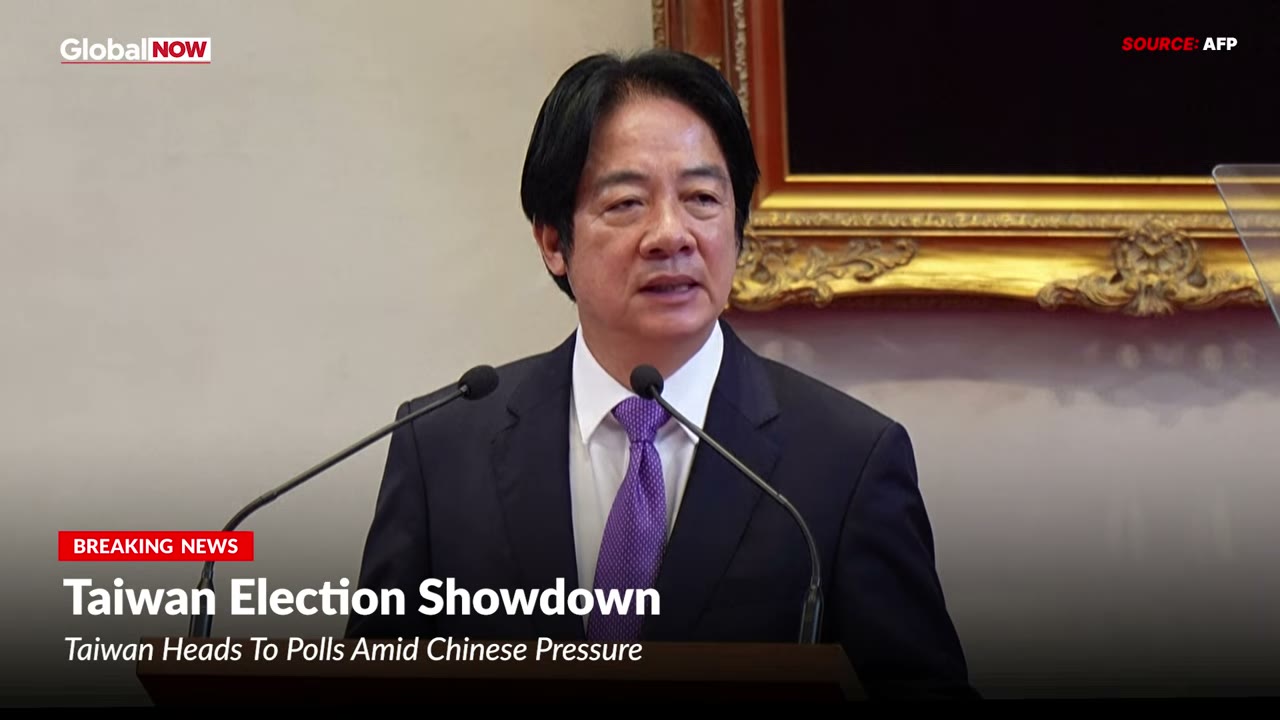
Taiwan holds local elections on November 28, 2026, with 19.6 million voters choosing 11,051 local officials across 22 cities and counties. The vote is a test for President Lai's DPP against the KMT, held as Taiwan's defense ministry reported 30 Chinese military aircraft near the island.
1Taiwan Prepares for Local Elections Seen as Test for President Lai
Taiwan votes on November 28, 2026, in local elections that could reshape its politics — and Beijing is watching closely.
Millions of voters will decide races focused on local governance, public services, economic development and infrastructure. But the results will offer an early read on public sentiment ahead of the 2028 presidential election.
The stakes go beyond the island. Taiwan's ruling Democratic Progressive Party faces a serious challenge from the opposition Kuomintang, and Beijing is monitoring the race closely. The political atmosphere has grown more tense as the campaign enters its final stretch.
2Taiwan Reports 30 Chinese Military Aircraft, 26 Crossing Strait Median Line
Taiwan's defense ministry says it detected 30 Chinese military aircraft around the island on November 27 — and 26 of them crossed the median line of the Taiwan Strait.
The aircraft operated in coordinated actions involving Chinese naval vessels, according to the ministry. The surge came as candidates began the final day of campaigning, with thousands of supporters attending rallies across Taiwan.
There is no confirmed evidence that China's military activity was directly tied to the election. But its timing has drawn significant attention.
3Lai's DPP Seeks Comeback After 2022 Local Election Defeats
President Lai Tsing-de's Democratic Progressive Party is trying to rebuild its local power after losing significant ground in 2022.
The previous local elections dealt the DPP major defeats. Now the party is seeking to strengthen its position in local government.
Nearly 19.6 million voters are eligible to cast ballots across 22 cities and counties, where 11,051 local government positions are up for grabs.
4Taipei Mayoral Race Pits Sanctioned Shen Against Incumbent Chiang
Taipei's fiercest race pits a Beijing-sanctioned candidate against the city's incumbent mayor.
Pyuma Shen, also known as Shen Pao-yang, is challenging Mayor Jiang Wan-an of the Kuomintang. Shen drew international attention as Beijing persecuted him for his political views and civil defense work. China imposed sanctions on him, accused him of supporting Taiwan independence, and added him to a list of people it considers committed supporters of separatism.
Shen rejected Beijing's attempts to intimidate him and kept campaigning, focusing on public services, environmental protection, social welfare and quality of life. He also supported educational programs through the "Ko Academy" to prepare citizens for emergencies, natural disasters and potential security crises.
Ko Wen-jie, the DPP's candidate for mayor, said: "We want everyone to know what threats Taiwan faces."
5Chiang Wan-an Defends Taipei as KMT Seeks Another Term
Taipei has not elected a Democratic Progressive Party mayor since 1998 — and the Kuomintang is defending that streak.
Mayor Jiang Wan-an is seeking another term, drawing on his managerial experience, support from local politicians and promises to continue development. His campaign stresses stability, practical management and better municipal services. The Taiwanese People's Party also backed his candidacy.
A win for Shen would be a significant political breakthrough for the ruling party. But Jiang is a formidable opponent, and the race highlights the different political approaches that have shaped Taiwan's politics.
6DPP and KMT Offer Rival Visions on China and Taiwan's Identity
Two parties, two very different visions for Taiwan's future.
The Democratic Progressive Party emphasizes Taiwan's separate political identity, its democratic institutions and the importance of protecting its autonomy. The Kuomintang has traditionally supported closer economic cooperation and more active dialogue with Beijing, while maintaining Taiwan's existing system of government.
President Lai Tsing-te has repeatedly said Taiwan's future should be determined solely by its people. His administration stresses strengthening defense while remaining open to dialogue with China on terms of equality and dignity.
Beijing considers Taiwan part of its territory and rejects the Lai administration's positions. President Xi Jinping's government advocates unification and does not rule out military force. Chinese aircraft and ships regularly operate near the island.
7Taiwan Warns of Foreign Election Interference and AI Disinformation
Taiwanese authorities are warning that foreign attempts to influence public opinion are growing more sophisticated as the campaign ends.
The Mainland Affairs Council and national security authorities flagged risks from illegal funding, misleading content, AI-powered materials and coordinated influence campaigns.
Qiu Tai-san, minister of the Mainland Affairs Council, said the Chinese Communist Party had for years linked its Taiwan policy to election results, making election interference inevitable. Officials believe such activity aims to sway voter perceptions, deepen divisions and undermine trust in democratic institutions. The allegations require investigation and evidence in each case.
Premier Cho Chun-tae has instructed agencies to strengthen election security and respond to suspected illegal activity. Authorities are especially concerned about fabricated videos, misleading statements attributed to political leaders and false information on social media.
8Voters Prioritize Housing, Wages and Cost of Living Over Geopolitics
Taiwan's chip boom has made it a global player — but many voters are worried about rent, wages and the cost of living.
The island has benefited significantly from the expansion of the global semiconductor and artificial intelligence industries. Yet rising property prices, the cost of living and concerns about the pace of wage growth remain important issues for households.
So candidates have focused much of their campaigns on affordable housing, transportation, employment opportunities, healthcare and environmental sustainability.
9KMT Aims to Hold Local Dominance Ahead of 2028 Presidential Race
The Kuomintang won leadership in 14 cities and counties in 2022 — then lost the presidency in 2024.
Now the party seeks to maintain its extensive network of local authorities and strengthen its position ahead of the next presidential election. The DPP, which won five cities and counties in 2022 while independents and other parties took three, retained the presidency when Lai Qingde won the national vote in 2024.
That history shows local results should not be treated as a final verdict on Taiwan's relations with China or a prediction of the next presidential race. Still, a strong outcome could give any major party momentum, organizational advantages and a platform for potential presidential candidates.
Beyond Taipei, key races are unfolding in New Taipei, Taichung, Tainan and Kaohsiung.
10Taiwan Holds Referendum on Ending Nuclear-Free Energy Policy
Taiwan phased out nuclear power in May 2025. Now voters will decide whether to reverse that policy.
Alongside the local elections, citizens will vote in a national referendum on whether the government should abandon its nuclear-free energy policy and support nuclear energy for economic development.
Growing electricity demand from semiconductor manufacturing, AI infrastructure and other cutting-edge industries has reignited the debate over the island's long-term energy strategy. Supporters say nuclear power could strengthen energy security and reduce dependence on imported fuel. Opponents cite earthquake risks, safety concerns over radioactive waste and the importance of investing in renewable energy.
The referendum adds another dimension to a race with significant domestic and international stakes.
11Analysts Weigh Limits of Local Vote on Taiwan-China Relations
Local elections in Taiwan won't change who sets foreign policy. City and county leaders have no direct say over Taiwan's foreign or defense policy, and a big opposition win won't immediately alter President Lai's constitutional powers or the island's official approach to Beijing. Still, the results matter beyond Taiwan. Washington and other regional governments are expected to watch closely, given Taiwan's strategic position in the Western Pacific and its central role in global semiconductor supply chains. Any serious deterioration in Beijing-Taipei relations could hit international trade, technology markets and regional security. For China, the vote offers a read on the strength of Taiwan's competing political movements ahead of the 2028 presidential election. For Lai, it's a chance to gauge public trust in his party and shore up grassroots organization. For the Kuomintang, it's a chance to show it remains a powerful alternative.
12Taiwan Balances Democratic Vote With Pressure From Beijing
Taiwan votes on November 28 with China's military pressure running in the background. Polling stations are preparing to open as the island balances domestic political competition against significant external pressure. China's military operations continue to draw international attention, while Taiwan's authorities focus on ensuring the democratic process proceeds peacefully and independently. The outcome remains uncertain, and no major party can afford to underestimate the contest. The election will decide who governs Taiwan's cities and communities for the next four years, and offer insight into the island's political priorities while tensions in the Taiwan Strait remain high. The immediate question is which candidates win local trust. The longer-term question is how that choice will affect relations with Beijing.