A countdown of ten US Air Force aircraft, from the veteran UH-1N helicopter to the B-52 bomber that has served over 70 years. The video details each plane's speed, range, payload and combat role, arguing that old designs remain central to American air power.
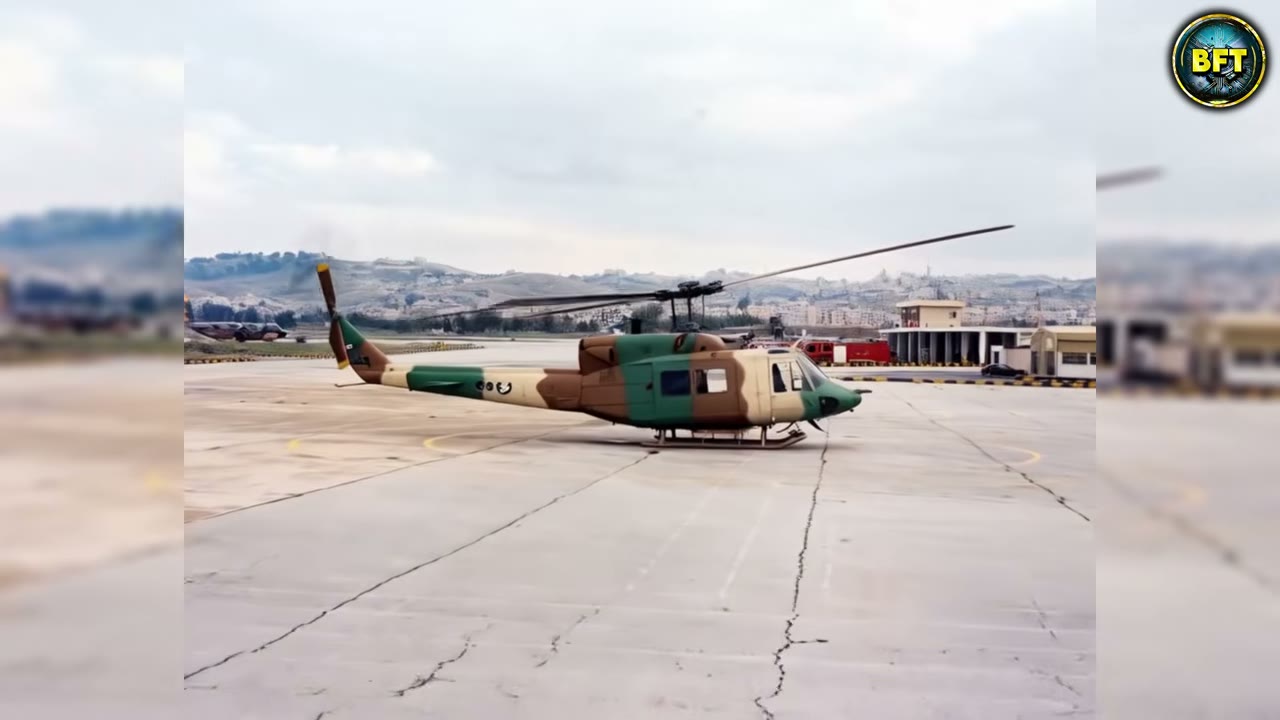
1UH-1N Twin Huey still guards nuclear missile bases after decades of service
A helicopter that looks ready for a museum still patrols America's nuclear missile bases. The twin-engine UH-1N is still active for a reason: someone has to guard the most dangerous places on Earth.
It flies over missile fields scattered across vast open areas, carries VIPs around the capital and runs search and rescue in extreme conditions. Two turboshaft engines push it to about 220 km/h, with a range of almost 460 km on one tank.
It is not about speed, but reliability when everything is at stake. Simple and durable, it is always ready to take off in just 5 minutes.
2KC-46 Pegasus tanker carries 96 tons of fuel with remote 3D-view boom control
A single tanker can haul more than 96 tons of fuel — enough to fill thousands of family cars at once. The KC-46 Pegasus is built to keep an entire air fleet flying high above the clouds.
Based on the Boeing 767 airliner, it looks ordinary from outside but is a high-tech fortress inside, loaded with fuel and defense technology. It flies at over 900 km/h with a range of over 11,000 km.
What sets it apart is the remote boom control: the operator sits in the cockpit wearing 3D glasses, steering the boom with high-definition cameras and sensors instead of peering out a tail window. It can refuel stealth fighters, heavy bombers and transports in darkness or storms.
Without tankers like this, multi-billion-dollar jets would fall out of the sky in hours.
3V-22 Osprey tiltrotor converts from helicopter to plane in 12 seconds
Two huge engine nacelles on the wingtips of the V-22 Osprey can rotate 90 degrees in just 12 seconds. That turns it from helicopter to plane in mid-air.
It takes off vertically from a tiny clearing, then tilts its engines forward and flies at over 500 km/h — twice as fast as most traditional multi-purpose helicopters. It can carry 24 fully equipped soldiers or up to 9 tons of cargo over more than 1,600 km.
For elite special forces, that means rapid strikes deep behind enemy lines without airstrips. The Osprey changed the concept of troop transport.
4C-130J Super Hercules lands on dirt strips and chases hurricanes
A cargo plane that lands on wet sandy beaches and flies straight into Category 5 hurricanes. The C-130J Super Hercules is built to work where conventional passenger planes would be destroyed.
The updated model packs 21st-century technology: a digital cockpit, night-vision compatibility and powerful turboprop engines with six curved composite blades. It takes off and lands on uneven dirt strips, beaches and icy runways.
It carries up to 20 tons of cargo or drops 92 fully equipped paratroopers into a hot spot. Top speed is 670 km/h, with a range of over 3,300 km with a heavy load.
Specialized versions serve as attack aircraft, tankers and storm chasers that fly into the epicenter of Category 5 hurricanes.
5A-10 Thunderbolt II built around 30mm cannon that fires 3,900 rounds per minute
Engineers took the GAU-8 Avenger's huge 30mm rotary cannon and built a titanium aircraft around it. The result is the A-10 Thunderbolt II, known to fans as the Warthog.
The cannon fires armor-piercing shells at nearly 3,900 rounds per minute, with an iconic sound that strikes terror into ground forces. The plane flies low at around 700 km/h, circling the battlefield for long periods.
It is built as a flying tank: the pilot sits in a titanium capsule that can withstand direct hits from armor-piercing anti-aircraft shells. It can keep flying even after losing half its tail, one engine and half a wing.
It carries up to 7 tons of laser-guided bombs, missiles and shells — and ground troops adore it because it saves the day when friendly forces get trapped.
6E-3 Sentry AWACS radar tracks hundreds of targets from 400 km away
A Boeing 707 with a huge rotating disc on its back is a perfect air combat control center. The E-3 Sentry, known as AWACS, carries no weapons — its power is the radar.
The dome is 9 meters in diameter. The plane flies above 9,000 meters at over 800 km/h, and its radar scans the sky in all directions beyond 400 km, tracking hundreds of targets at once, from low-flying cruise missiles to high-speed fighters.
Inside, a team of operators sits behind monitors, directing friendly fighters, warning pilots of threats and coordinating large-scale operations in real time. It is a flying command post for waging global wars.
7KC-135 Stratotanker still refuels the fleet after 60 years
A tanker first introduced in the 1950s still supports Air Force flights today. The KC-135 Stratotanker has carried fuel for over 60 years, and constant upgrades to engines, cockpits and communications keep it at an elite level.
It holds a staggering 90 tons of fuel in its internal tanks and reaches around 930 km/h, keeping up with supersonic fighters and heavy strategic bombers on long flights across oceans.
Over its decades of service it has refueled everything from classic Cold War jets to the latest fifth-generation stealth fighters. It is the main reason the military has true global reach.
8F-15EX Eagle II carries 13 tons of weapons at Mach 2.5
A fighter that flies 2.5 times faster than sound and carries more weapons weight than any other air superiority fighter in aviation history. The F-15EX Eagle II is third on the list.
The original F-15 had over 100 aerial victories and zero losses in aerial combat. The Eagle II adds an advanced electro-remote control system, the fastest on-board computer ever installed on a fighter, and active electronic warfare systems.
It carries 13 tons of weapons on 23 suspension points, including massive hypersonic missiles, heavy precision bombs and up to 12 air-to-air missiles in a single sortie. Two afterburning engines push it past 2,600 km/h — Mach 2.5.
It works alongside stealth fighters: they detect the target silently, and the Eagle II releases a wave of long-range missiles.
9MQ-9 Reaper drone loiters 27 hours and reads license plates from afar
A drone can silently circle a combat zone for up to 27 hours without refueling or landing. The MQ-9 Reaper, controlled by a pilot and sensor operator thousands of kilometers away, changed modern air warfare.
With a 20-meter wingspan, it flies at altitudes up to 15,000 meters — far higher than people on the ground can see or hear it. Its quiet turboprop reaches 480 km/h, but endurance is the real weapon.
Its multispectral targeting system can read a car's license plate or track a single target from several kilometers away, day or night. When commanders order an attack, it carries up to 1.7 tons of weapons, including laser-guided bombs and Hellfire missiles.
It can watch an enemy base for hours, wait for the right moment and strike with surgical precision.
10B-52 Stratofortress to serve 100 years, carrying 31 tons of weapons
A bomber first flown in 1952 is now built to serve 100 years. The B-52 Stratofortress, the US Air Force's eight-engine strategic heavy bomber, is set to keep flying until the late 2050s — over 70 years after it first took to the skies.
New digital upgrades, radar upgrades and modern commercial engines are behind the extended life, according to the account. That would make 100 full years of active military service.
Its crews call it the BUFF. The plane spans a 56 m wingspan and has a maximum takeoff weight of over 220 tons. Eight turbofan engines push it to around 1,050 km/h at altitudes above 15,000 m.
Its combat radius without refueling is over 14,000 km. With aerial refueling support, it can reach any target on the planet.
The real strength is the payload: 31 tons of weapons in its internal compartment and under its wings. It can drop heavy high-explosive bombs, launch long-range stealth cruise missiles hundreds of kilometers from enemy air defenses, or lay high-precision naval mines.
What comes next is more years of service — the upgrades are meant to keep the bomber flying into the late 2050s.