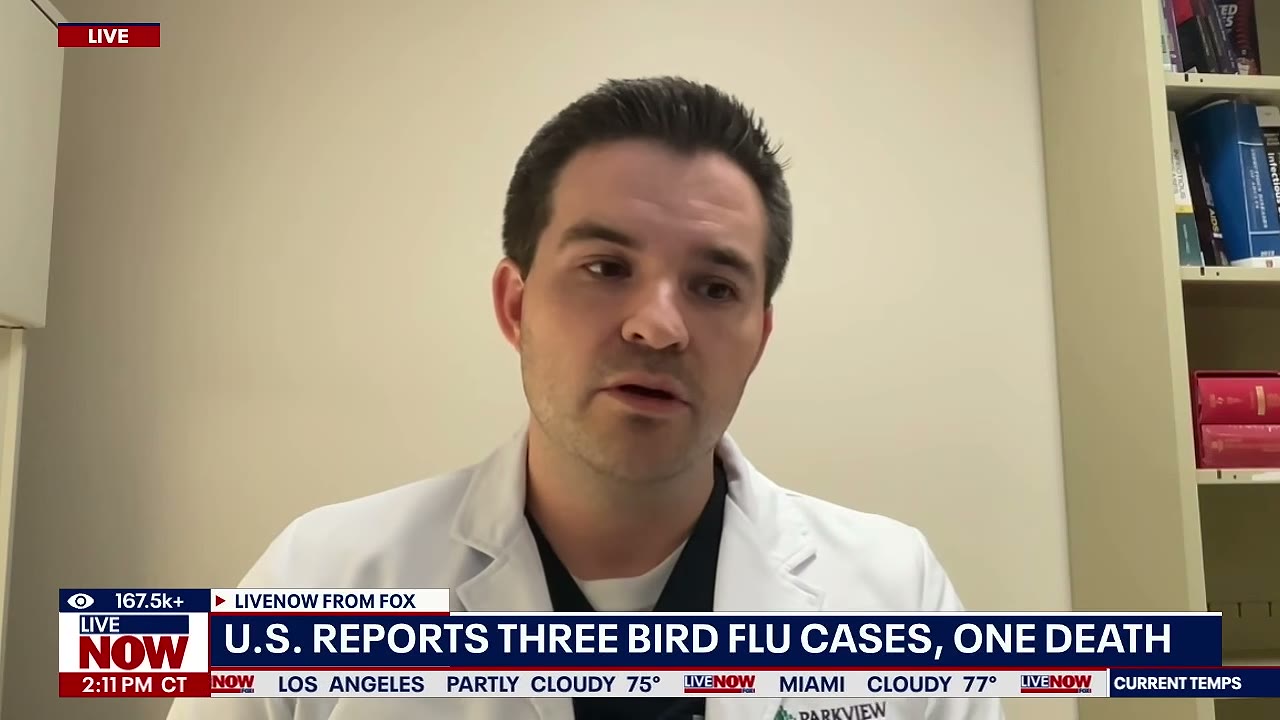
A infectious disease expert discusses bird flu (H5N1) ahead of Thanksgiving, covering its spread from wild birds to poultry and dairy cows, four human cases in Washington and Oregon linked to dairy farm workers, and the safety of turkey and dairy products. He says the general public's risk remains very low.
1Expert explains bird flu origins and spread to poultry and dairy cows
H5N1 has killed about half of the people known to have caught it — and in 2024 it showed up in dairy cows. Bird flu, or avian flu, is mainly a respiratory virus carried by wild birds and waterfowl such as geese, with cases spiking in fall and spring when the birds migrate.
Mixing among those migrating birds has spread the virus among chickens, turkeys and poultry across the United States, and in 2024 it reached cattle, affecting dairy cows. "The shift to mammals has raised some concerns," an expert said, especially about the risk to people.
Four human cases have been reported in Washington and Oregon, all linked to dairy farm workers through direct contact with infected animals. Three had only mild symptoms — conjunctivitis, a runny nose and a mild cough — and recovered. One case was fatal, though CDC reports suggest that patient may have had underlying medical conditions.
The true count may be higher: not everyone with mild symptoms seeks testing, so some cases may have gone undiagnosed.
2Expert says Thanksgiving turkey and dairy products are safe to eat
Pasteurization kills the bird flu virus in dairy products, and cooking meat to 165 degrees Fahrenheit kills it too. An expert said the risk to the general public is "very, very low right now."
No human-to-human transmission has been recorded since 2024, when the initial outbreak occurred, the expert said. That assessment covers chicken, turkey and dairy products.
The USDA oversees cattle and poultry farms with regular testing. When avian influenza is detected in livestock, the entire herd is often destroyed so the products never reach the market, and dairy products that test positive are not sold.
So as Thanksgiving turkey comes out of the oven, the guidance is simple: thorough cooking and pasteurization remove the threat.
3Symptoms of bird flu and how they differ from seasonal flu
Red, watery eyes are the most common first sign of bird flu in the cases found so far — usually picked up through direct contact with infected animals. High fever, a runny or stuffy nose and shortness of breath are also common symptoms.
But right now, those symptoms most likely mean seasonal flu, which is raging across the United States, unless you have had high-risk contact with an infected animal.
That contact history is the key detail to weigh, the expert said, calling it probably one of the most important things to think about.
4Immunocompromised people face higher risk from bird flu
People on chemotherapy, taking immunosuppressive drugs or living with uncontrolled diabetes should be more careful about bird flu, an expert said. The same goes for those with autoimmune conditions, other forms of immunocompromise and progressive COPD.
The warning follows CDC findings that one death may have been related to comorbidities. The expert still considers the risk to the general public low at this time.
Even for higher-risk groups, the danger comes from direct contact with infected animals, the expert said.