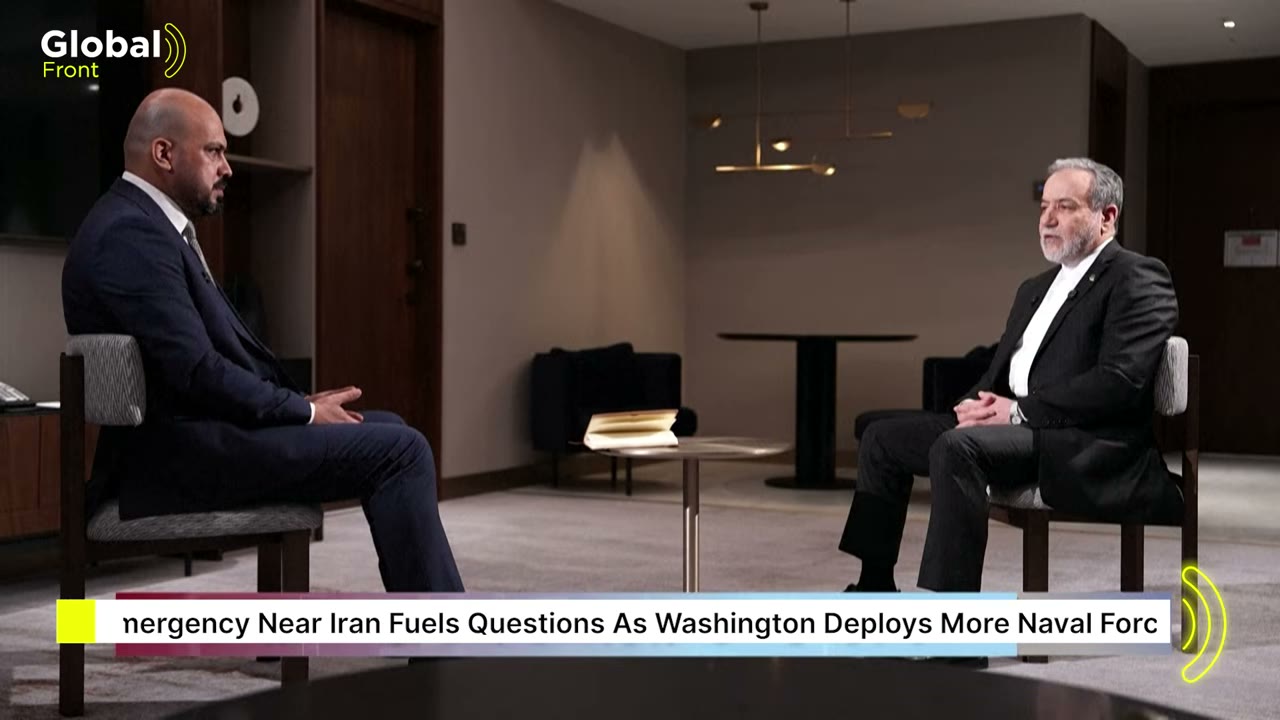
A US F-16 reportedly declared an emergency near the Strait of Hormuz, prompting claims of Iranian missile fire and a sharp altitude drop. The incident comes as Washington deploys three aircraft carriers and Iran offers a shorter timeline to open the waterway.
1US F-16 Declares Emergency Near Strait of Hormuz
A US F-16 Fighting Falcon reportedly squawked emergency code 7700 near the Strait of Hormuz, then landed at Al Dhafra Air Base near Abu Dhabi. The jet was reportedly operating near Iran's Qeshm Island, and some reports claim Iranian air defenses fired an anti-aircraft missile at it — claims that have not been independently verified.
Flight data cited in coverage showed the fighter dropping from about 32,200 feet to roughly 4,500 feet, a fall of nearly 28,000 feet. Code 7700 signals an emergency needing air traffic controllers' attention, but it does not prove hostile fire; it can be triggered by technical problems or other serious situations on board.
According to the emerging account, the confrontation followed an Iranian anti-ship missile launch toward ships escorted by the US Navy near the strait. US Central Command reportedly sent F-16s to the area as the situation developed, and Iranian forces reportedly responded when the plane approached Iranian airspace. The exact flight route remains unknown.
2Strait of Hormuz Oil Route Security at Risk
Roughly one-fifth of the world's oil consumption once passed through the Strait of Hormuz — a narrow waterway whose security now hangs over energy markets in Asia, Europe and beyond. Any disruption there could ripple into shipping insurance, transport costs, supply schedules and energy prices.
The concern goes far beyond a single fighter jet. Even reports of collisions involving military aircraft can raise uncertainty among commercial shipping operators already working in difficult security conditions.
Iran has put forward a diplomatic proposal aimed at opening the waterway, but its terms remain the main obstacle in negotiations with the United States.
3Iran Offers Shorter Timeline to Open Hormuz
Iran's foreign minister says the Strait of Hormuz could open within two hours if Washington meets Tehran's demands. Abbas Araghchi said Tehran was ready to shorten the deadline for its opening proposal if the US agreed to the demands put forward by the Iranian government.
The previous Iranian proposal called for a seven-day timetable. After consultations with regional mediators, that period was cut to two days. Araghchi has now suggested it could shrink further — to one day or even two hours — if the US complies.
"The only thing that matters is that our demands are met," Araghchi said. Iran offers flexibility on timing but does not give up its political and economic conditions.
4Trump Says Iran Deal Not Acceptable to Him
President Donald Trump says Iran wants a deal — just not one he can accept. "Iran wants to make a deal, but they don't want to make a deal that would be acceptable to me," he said, repeatedly emphasizing America's leverage.
Tehran wants Washington to show a sincere willingness to negotiate and take steps to build trust. Its proposal also includes demands regarding American economic restrictions and agreements governing access to the waterway.
The gap between the two positions explains why negotiations remain difficult, despite constant communication through regional mediators. Qatar and Pakistan played roles in conveying messages and encouraging dialogue.
5US Deploys Three Aircraft Carriers to Middle East
The arrival of the aircraft carrier USS Theodore Roosevelt in mid-November brought the number of American carriers in the Middle East to three. Roosevelt joined the USS George H.W. Bush and the USS George Washington.
The buildup creates a significant US naval presence while the administration weighs military and diplomatic options. The vessels provide aviation, surveillance, command posts and support for operations across a large maritime area, giving Washington additional operational flexibility and signaling its ability to keep forces near Iran.
For Gulf governments, preventing another large-scale military confrontation is of utmost importance, since their energy infrastructure, transport networks and commercial centers could again be under threat. But a major naval deployment does not necessarily mean a decision has been made to launch a new major operation.
6Iran's Khamenei Releases Poster Mocking US Navy
Iran's Supreme Leader has answered a US naval buildup with an image: a massive American aircraft carrier casting the shadow of a small paper boat. The poster, titled "The End of the Myth of Invincibility," came from the office of Ali Khamenei shortly after the US military showed footage of the USS Theodore Roosevelt in the Arabian Sea.
Roosevelt was not directly identified on the poster, but Iranian media read the symbolism as a challenge to American naval power. Tehran has sought to imply that even the world's most advanced naval forces could face serious limits operating near Iranian territory.
The message fits a broader campaign by Iranian leaders and military officials to portray the Islamic Republic as capable of resisting continued American pressure.
7Iranian Speaker Claims Western Forces Depleted
An Iranian speaker claimed Western forces burned through a huge amount of ammunition and military resources in about 40 days of operations — a figure that remains unconfirmed. The same speech cited claims that up to 120 Western warships were previously in the Persian Gulf, contrasted with claims of a reduced foreign naval presence.
The confirmed presence of three American aircraft carriers and numerous escort vessels indicates the US Navy continues to operate in the wider region.
The speech also claimed some foreign assessments initially suggested Iran could be defeated within 72 hours, before that timeframe was extended to two weeks, and cast Iran's resistance as proof those expectations failed. It used religious language and references to sacrifice and national endurance, and expressed support for retaliation against those responsible for Iran's losses.
8Iran's FM Questions Israeli Influence on US Policy
Iran's foreign minister openly questioned whether Washington makes its own military decisions — after Israel's ambassador to the US said American troops would return home "when Iran is defeated."
Yechiel Leiter's remark drew a sarcastic reply from Abbas Araqchi: "We did not know that the Israeli ambassador in Washington was the commander-in-chief of the US armed forces." The comment was a political challenge, not a claim about real command.
Under the US constitutional system, President Trump remains commander-in-chief. Still, the exchange drew attention because it comes amid reports of disagreements over how far the United States should go in confronting Iran.
9Mossad Chief Visits Washington for Military Talks
Israel's Mossad director, Roman Hoffman, reportedly visited Washington and met CIA Director John Ratcliffe to discuss intelligence and the possibility of resuming joint military operations. Hoffman also reportedly held talks with American diplomatic representatives involved in Middle East policy.
The meetings took place as Israeli acting Prime Minister Benjamin Netanyahu kept pushing for stronger action against Iran's military and nuclear capabilities. Netanyahu remains caretaker leader after Israel's inconclusive October elections, while opposition leader Gadi Eisenkot tries to form a new government.
Israeli officials view Iran's military potential and nuclear activities as major security threats. American officials must also weigh the regional implications, diplomatic opportunities and costs of further operations.
10US Weighs Economic Pressure vs Military Action on Iran
Washington has not made a final decision on resuming large-scale military action against Iran, with officials split on what comes next. Some American officials believe economic pressure has already significantly weakened Tehran and another major confrontation may be unnecessary at this stage.
Others argue additional military options should stay on the table if Iran expands activities considered threatening to the US or its allies. President Trump publicly supports the idea that Washington is capable of acting, while leaving open the possibility of negotiations.
That balance between pressure and diplomacy has become one of the defining features of the current confrontation.
11Iran Lifts 2,000 km Range Limit on Ballistic Missiles
Iran has lifted the 2,000-kilometer range limit on its ballistic weapons, the Islamic Revolutionary Guard Corps announced on November 7.
The move came after a directive attributed to Supreme Leader Mojtaba Khamenei called for responding to potential threats without geographical limits.
The 2,000 km cap had long defined how far Iran's ballistic missiles could be designed to reach. Removing it signals that Iranian military planning may be shifting as the confrontation evolves.
What the new range could be, and how quickly Iran could field weapons that go farther, was not specified in the announcement.