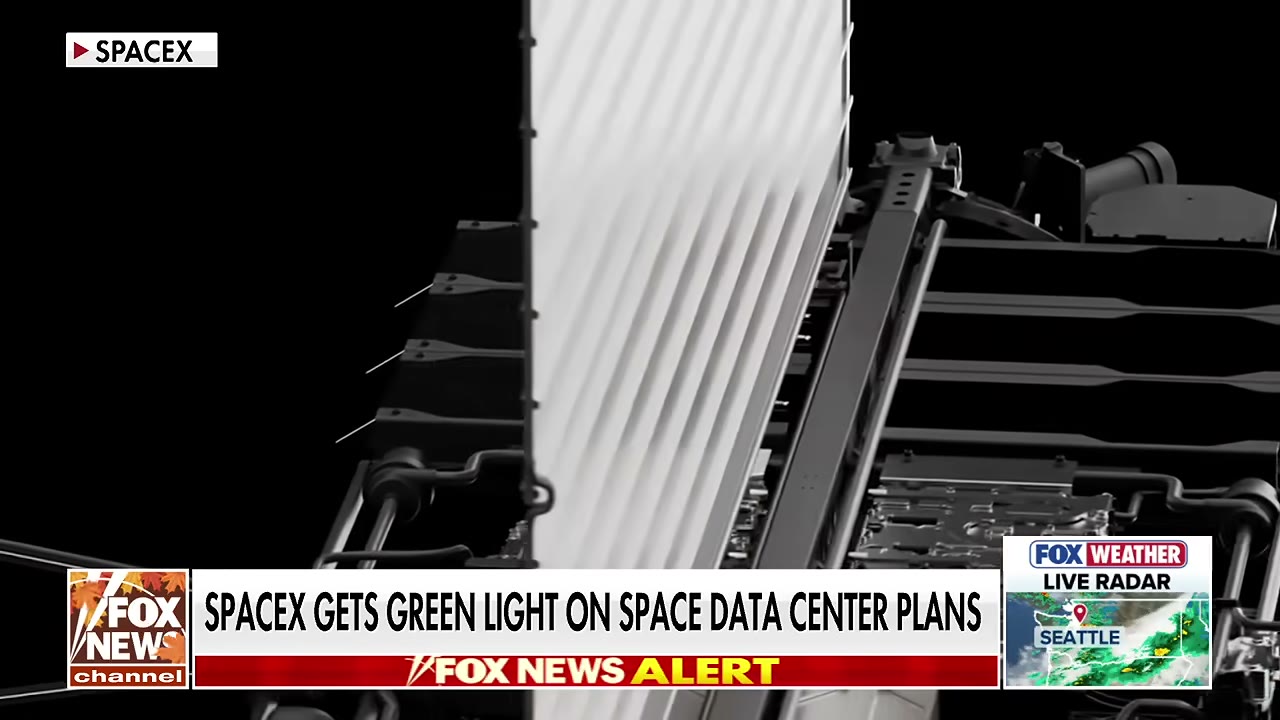
The FCC has approved SpaceX's request to launch up to 1 million satellites for orbital data centers powered by the sun. Amazon, Viasat and the American Astronomical Society warn the plan threatens dark skies and astronomy.
1FCC Approves SpaceX's Starmind Satellite Data Center Constellation
The Federal Communications Commission has approved SpaceX's request to launch up to 1 million satellites into orbit to power data centers in space. The agency's chairman, Brendan Carr, framed the decision as a first step toward moving artificial intelligence off the planet.
In a statement, Carr said the approval "opens a bold new frontier for the computing infrastructure needed to power America's leadership and growth." The network is called the Starmind constellation.
SpaceX's plan calls for the satellites to tap into the sun's power instead of relying on electricity and water on Earth. That could ease concerns about data centers being built across the country.
Elon Musk's company now holds the green light for the orbital data centers. The FCC's approval covers a request for the constellation, which could consist of up to 1 million satellites.
What comes next is the build-out: getting that many satellites into orbit and running data centers in space. For now, the approval is the first regulatory step, not a finished network.
2SpaceX Argues Space Is Too Vast for Satellite Crowding Concerns
SpaceX is pushing back on worries that its satellites could crowd orbit, arguing that space is simply too big to fill. The company's case rests on scale: up close a satellite looks large, but against the Earth it is so tiny you cannot even see it.
"Space is really big," the company's argument goes. "It's not like space is going to get crowded. Space is enormous."
The point is meant to answer concerns about the Starmind constellation, which the FCC has approved for up to 1 million satellites designed to power data centers in orbit. Critics worry about what that many satellites mean for the sky.
SpaceX's response is that the satellites are very tiny compared to Earth. Whether that settles the debate is another matter, with rivals and astronomers already raising objections.
3Amazon, Viasat and Astronomers Push Back Over Night Skies
Amazon, Viasat and the American Astronomical Society are pushing back on SpaceX's plan for space-based data centers, saying the satellites threaten the night sky. The American Astronomical Society warns the threat extends to researchers and the public alike.
The objections target the Starmind constellation, which the FCC has approved for up to 1 million satellites meant to power data centers in orbit. SpaceX counters that the satellites are tiny compared to Earth.
One critic framed the loss of a dark sky as something that cannot be reduced to a dollar figure. "We should be thinking about that as a right for everyone, for every American, for everyone on the planet in general," the critic said.
The pushback puts the value of an unobstructed night sky against the promised computing power in orbit. The FCC has already given its approval; the dispute over what the constellation means for dark skies is now in the open.