Public health experts say problematic internet use affects one in ten people worldwide and could become a global crisis. A Fox News panel discusses the dopamine-driven feedback loop, its costs to health, relationships and productivity, and how people can break the habit.
1Researchers warn doomscrolling could become a global crisis
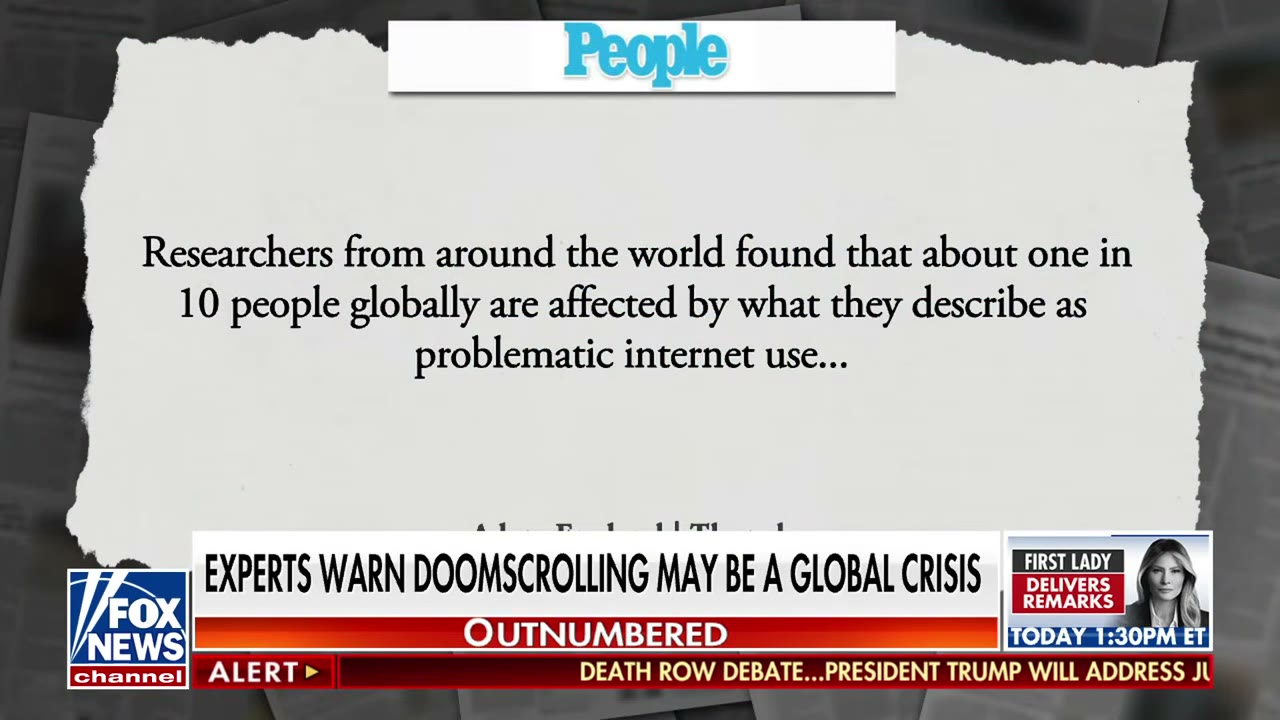
One in ten people worldwide is affected by problematic internet use, researchers from around the world have found. Public health experts say the habit of doomscrolling is taking a serious toll and could be considered a global crisis.
A growing number of people are struggling to manage their online behavior to the point where their health, relationships, work, education and quality of life suffer.
Doomscrolling can show up as excessive gaming, gambling, shopping, social media use, cyberbullying, digital hoarding, or repeatedly searching online for medical information — which researchers say increases anxiety.
They also warn social media can trigger an addictive feedback loop.
2Dopamine feedback loop makes short videos addictive, researchers say
Every time you watch a short video, your brain releases dopamine — a reward chemical that makes you want to chase more short-form entertainment.
That loop is reshaping everyday life, researchers say. Studying and simply having a conversation are becoming boring, and people don't want to do them anymore.
The warning points to how short clips train the brain to expect constant reward, making slower activities feel like a chore.
3Panelists admit their own doomscrolling struggles
The first step to recovery is admitting you have a problem — and the panel did. "I am a doomscroller! I have a problem," one speaker confessed.
Asked whether they were afflicted, Paul said he is aware of it and still loses track of time. He looks up from his phone and an hour and a half has passed, all his plans gone — spent watching hockey fights.
"They can happen to anybody," he said.
4Paul warns doomscrolling isolates people and fuels polarization
Doomscrolling could leave us with 350 million people living in 350 million different countries, Paul warned.
He said a nation needs a common center and borders to hold together. When people lock into their own personalized online worlds, they separate from each other — one reason the country is so polarized.
In the past there was a common core people shared, he said. Now the technology lets people retreat into their own world, and he questioned whether that center can hold.
5Rebeccah says adults must self-regulate their phone habits
Hosts should put a basket by the front door and have every guest drop their phone in it, Rebeccah recommended ahead of the holidays.
She said adults, not just kids, have to take the problem on themselves — to be self-governing citizens with control over their thoughts, time, behavior and relationships.
She pointed to a "serious relational" toll and worried about foreign countries controlling personalized algorithms, which cater to each person's interests and dopamine hits. That, she said, means your reality might differ from mine and further divides the country.
She recommended the book "The Tech Exit" by her friend Claire Morel on helping families become less addicted to technology.
6Doomscrolling costs economy at least $16 billion, panel says
Doomscrolling carries an economic cost of at least $16 billion, potentially tens of billions of dollars, the panel said.
Asked about productivity, a guest said it does take away from work — pointing to the day after the Super Bowl, when people call in sick, and to Black Friday computer shopping. Those losses happen on specific dates and every day, the guest said.
A phone alert told one speaker they averaged six hours a day on screen. "That's a lot of time when you think about 24 hours."
The guest said technology isn't going anywhere and people must set their own parameters, citing a 14-year-old niece whose friend group keeps a phone pile.
7Adolescents spend nearly five hours daily on social media
Adolescents in the U.S. spend nearly five hours on social media per day — and some experts say social media use is as bad as smoking.
Asked how challenging that is, one guest admitted to doomscrolling about once a month. They look down at the phone and it's 1:00 in the morning.
What do they watch? Core exercises and high-protein recipes. They could have just made a high-protein recipe and worked out in that time, they said — but instead stared at everyone else doing it online, trying to get good tips.