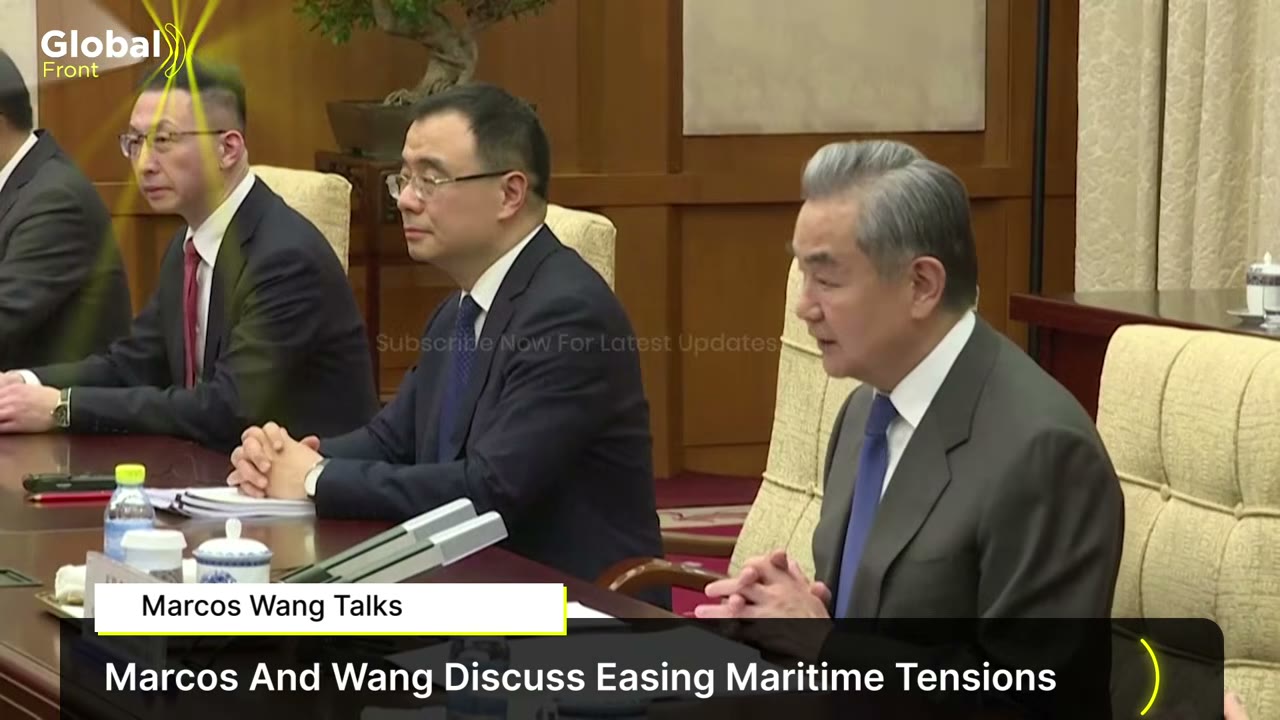
Philippine President Marcos met Chinese Foreign Minister Wang Yi at an APEC dinner in Shenzhen, discussing ways to reduce tensions in the West Philippine Sea. The talks also covered a South China Sea code of conduct and Chinese investment, including a possible SpaceX launch site.
1Marcos Meets Wang Yi at APEC Dinner to Ease West Philippine Sea Tensions
A gala dinner seat put Ferdinand Marcos Jr. beside China's top diplomat — and the Philippine president came away saying talks can still work. Marcos held what he called a surprise but important conversation with Chinese Foreign Minister Wang Yi on the sidelines of the Asia-Pacific Economic Cooperation summit in Shenzhen.
The dinner talk centered on lowering tensions in the West Philippine Sea, improving diplomatic communications, and finding ways for the two neighbors to handle long-standing maritime disputes without letting them poison the wider relationship.
The timing is sensitive. Competing claims in the South China Sea have repeatedly brought coast guard vessels, military personnel and maritime authorities into confrontations.
Marcos said the exchange showed diplomatic engagement remains possible even when the two governments differ sharply on sovereignty and maritime rights.
2Marcos Says Xi Meeting Failed Due to Busy Schedule, Then Sat Next to Wang
Marcos never got his sit-down with Xi Jinping. He got something else: a dinner seat next to Wang Yi.
Speaking to Philippine journalists on November 20, Marcos said China's president was too busy for a meaningful conversation during the summit. Then, at an official dinner, opportunity arrived.
"I had the opportunity during a gala dinner, by chance or perhaps by design," Marcos said. "I, I don't know, sat next to Foreign Minister Wang Yi. And over dinner we had a long conversation on several topics."
What looked like routine diplomatic seating turned into talks on one of the hardest issues between Manila and Beijing. Marcos said the exchange went well beyond diplomatic courtesies.
3Marcos Recalls 1974 Shenzhen Visit and Family's Role in China Ties
Marcos remembers Shenzhen in 1974 — long before it became one of China's leading economic and technological centers.
He raised the memory during his dinner talk with Wang Yi, describing the city's transformation and his family's historic role in building closer Manila-Beijing relations.
The history lesson opened a wider conversation about what comes next. Marcos asked how the two countries carry that relationship forward, move together, reduce tensions in the West Philippine Sea and better interact.
That question, by the account of the meeting, summed up what the talks were about.
4West Philippine Sea Dispute Rooted in Fishing, Energy and 2016 Arbitration
Behind the handshakes sits a dispute over fishing grounds, energy, shipping routes and security — and a 2016 arbitration award China rejects.
For the Philippines, the West Philippine Sea is not just a diplomatic argument. It means access to fisheries, energy resources and maritime transport routes the country considers vital to its economy and national security.
China claims large areas of the South China Sea, including waters overlapping the Philippines' exclusive economic zone. Manila bases its position on the UN Convention on the Law of the Sea and the 2016 international arbitration award that rejected the legal basis for China's sweeping "nine-dash line" claims. Beijing continues to reject that decision.
Those conflicting positions have led to frequent confrontations between Philippine and Chinese vessels, especially around disputed features used by Filipino fishermen.
5Marcos Cautious on Communication Versus Resolving Maritime Dispute
Better communication does not mean either side has moved. Marcos was careful to draw that line.
His comments suggested both countries could look for ways to keep tensions from escalating while each keeps protecting its own interests. The dinner with Wang Yi was a diplomatic opening, not a settlement.
Marcos also praised the welcome his delegation received at the Shenzhen summit. "I must say that the way we have been received here in China is very encouraging and very gratifying," he said. "And despite our differences with China, we still find ways to communicate and make things better."
Manila reads the summit atmosphere as a positive sign after a frosty stretch between officials.
6Earlier Wang Yi and Lazaro Call Set Context for Marcos Talks
Before the dinner in Shenzhen, there was a phone call on November 3.
Chinese Foreign Minister Wang Yi and Philippine Foreign Secretary Maria Teresa Lazaro discussed the deterioration of bilateral relations and the importance of resolving differences responsibly.
The Philippine Department of Foreign Affairs later called the exchange constructive and stressed the need for stable, predictable relations based on mutual respect and peaceful diplomacy. China's Foreign Ministry has been more critical of certain Philippine political statements but has also acknowledged the importance of keeping communication open.
The two governments agreed in principle that dialogue should continue and cooperation should expand — groundwork for the Marcos-Wang conversation.
7South China Sea Code of Conduct Nears 80 Percent Completion
About 80% of the South China Sea code of conduct is negotiated, Philippine officials say — but the finish line is not crossed.
The draft pact is being hammered out between China and the Association of Southeast Asian Nations. It aims to set clearer expectations for behavior in disputed waters, reduce the likelihood of clashes and create ways to manage incidents before they escalate.
Talks dragged for years over the agreement's scope, legal implications and implementation. During the Philippine presidency of ASEAN in 2026, regional governments made significant progress finalizing the framework.
Marcos acknowledged the progress could not have come from the Philippines or ASEAN alone. China, a central negotiator and main claimant, remains essential.
8Marcos Says China Also Wants a Code of Conduct
Marcos is betting Beijing wants the same maritime rulebook Manila does.
"I am very sure that China also wants to have a Code of Conduct," he said, adding that Chinese officials say so themselves.
His assessment suggests he believes Beijing recognizes the value of a regional structure to manage maritime tensions. But backing the code does not settle outstanding differences.
Its real effect will depend on the final provisions, how countries interpret their commitments, and whether those commitments are enforced at sea — above all, whether diplomatic promises change behavior for Filipino fishermen and personnel in disputed waters.
9Marcos Hopes Singapore Completes Code of Conduct in 2027
Manila is pinning its hopes on Singapore. Marcos wants the South China Sea code of conduct finished when Singapore chairs ASEAN in 2027.
"I am very encouraged by the attitude they are showing towards these negotiations," Marcos said. "And let's really hope that Singapore can accept the actual completion of the Code of Conduct."
The remark reflects Manila's push to keep momentum after the Philippine presidency of ASEAN in 2026 and not let negotiations drift.
Singapore's role will matter as the remaining issues likely require careful compromises between ASEAN members and China. For Beijing, the talks are a chance to strengthen ties with Southeast Asian governments while holding its sovereignty positions.
10Marcos Courts Chinese Investment in EVs and Offshore Wind
The sea dispute dominated, but Marcos also went shopping for Chinese investment.
China remains the Philippines' main economic partner, and both countries have strong incentives to keep trade and investment flowing despite political differences.
In Shenzhen, Marcos met representatives of major Chinese companies to explore possible investments, including firms in new energy vehicles and offshore wind power — sectors that can serve the Philippines' long-term development priorities.
Manila wants foreign investment to create jobs, strengthen domestic industries, improve infrastructure and widen access to modern technology. Marcos said international businesses still see the Philippines' potential as an investment destination and a growing participant in Asia-Pacific trade.
11Manila Balances US Security Ties With Chinese Economic Partnership
Manila is deepening defense ties with Washington while keeping its economy wired to Beijing — and both relationships are moving at once. The Philippines and China used recent talks to show that political differences don't have to kill commercial cooperation, with both governments acknowledging the cost when diplomatic tensions hold back investment and trade.
For Manila, the balancing act is the point. Washington remains a long-standing treaty ally, and the two countries have expanded defense coordination in response to regional security challenges. Beijing has often expressed disagreement with developments it believes could undermine its security interests, while Philippine officials have defended the country's right to international partnerships.
Marcos' conversation with Chinese Foreign Minister Wang carried weight beyond the immediate maritime dispute, signaling efforts to keep diplomatic channels open even as the Philippines holds its defense relations and maritime positions.
12Marcos Floats Philippines as Possible SpaceX Launch Site
The Philippines wants Elon Musk's SpaceX to launch rockets from its soil. President Marcos raised the prospect during the visit, pointing to the country's geographical location and proximity to the Pacific Ocean as possible advantages for certain commercial launch operations.
SpaceX, the aerospace company linked to Musk, said the idea remains in the study phase. No timeline, site or commitment was announced.
The pitch came alongside discussions of new economic and technological opportunities during the visit — part of a wider effort to keep diplomatic channels open even as Manila maintains its defense relations and maritime positions.