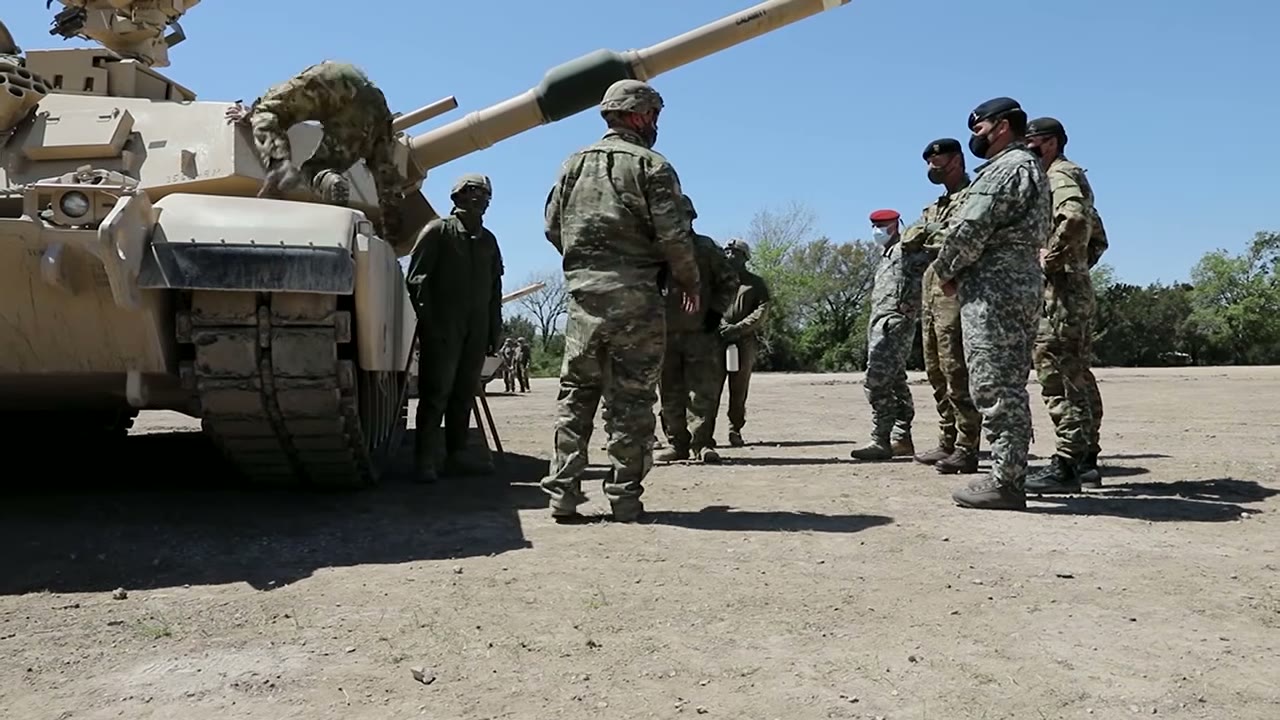
Two Ukrainian tanks survived a Russian drone attack in Vylkhuvatka, thanks to a months-long campaign targeting Russian logistics, Starlink terminals, and drone crews. The video explains how Ukraine's middle-strike drones and Starlink cutoff blinded Russian forces, enabling the armored raid.
1Two Ukrainian Tanks Survive Russian FPV Drone Attack in Vylkhuvatka
Two Ukrainian tanks drove into a village held by Russian troops, took multiple drone hits and light mines, and rolled back out undamaged, the unit that sent them said.
The village is Vylkhuvatka, in the Kupiansk district of the far northeast Kharkiv region, roughly 9 km from the Russian border. In September, Ukraine's General Staff reported Russian forces trying to push toward it and small groups of infiltrators working their way into its buildings.
The unit responsible for that stretch, the 475th Separate Assault Regiment, known by its call name Code 9.2, needed the infiltrators gone and didn't have enough infantry to spare. So it sent two heavily armored tanks in with a small air force of drones flying around them.
According to the regiment, the tanks drove over light mines, fired straight into the buildings where Russian infantry were sheltering, and then turned around. On the way out, Russian FPV drones attacked several times. The tanks made it back.
2The Kill Zone: Why Tanks Became Easy Targets on Ukraine's Front Line
Cheap drones turned a strip of land roughly 20 km deep on each side of the contact line into what soldiers call the kill zone, where nothing valuable dares to park.
The New York Times described a band about 40 km wide along the front as a killing ground. For a drone pilot, a tank is the dream target: big, hot, loud and hard to hide.
In the summer of 2024, Russia added a tool that made tanks even more vulnerable. During Ukraine's surprise push into Russia's Kursk region, Russian units began using FPV drones steered through a thin fiber optic cable instead of a radio signal. With no radio signal, there is nothing to jam, and the electronic warfare bubbles that protected armored vehicles stopped working against these drones.
So tanks were pulled back, firing from a distance like improvised artillery instead of leading assaults. Ukraine didn't solve the problem with a better tank. It went after the supply chain behind every drone: the batteries, warheads, generator fuel, and the crew's food and water.
3Ukraine's Logistics Lockdown: $113 Million to Starve Russia's Kill Zone
Ukraine's defense minister announced a program called Logistics Lockdown and put an extra 5 billion hryvnias, about $113 million, directly into the hands of the front line units best at hitting Russian targets behind the lines.
Mykhailo Fedorov announced the program on May 27th. Its goal was to scale up what Ukrainian planners call middle strike: attacks on Russian targets at operational depth, the zone between the front line trenches and the deep targets hit by long-range missiles. Fedorov also said that in the first four months of 2026, his ministry had contracted 300% more middle strike drones than in the whole of 2025.
One of the stars is a small fixed-wing drone called the Hornet. According to the Kyiv Independent, it costs around $5,000, carries a 5kg warhead, and can fly up to 200 km. The Azov core added Starlink links to it, which, according to analyst Rob Lee, extended its range and made it far harder to jam.
Ukraine also picked up new eyes. The Wall Street Journal reported that small Ukrainian strike teams were receiving commercial satellite images from an American company called Vantor, delivered straight to soldiers' devices in as little as 15 minutes. Those involved said the time to find and hit Russian targets fell by up to 90%.
4Ukraine's Layered Drone Strikes Burn Russian Supply Convoys
The number of Russian trucks hit in the logistics zone more than 10 km behind the front rose from a few dozen a month before May to 770 in September, the highest of the year, according to an analyst who counts only strikes confirmed on video.
Clément Molin's tally: 214 trucks hit in May, 586 in June, 656 in July, 630 in August, 770 in September. By early October, he said more than 3,000 trucks and vehicles had been hit on key roads since May. The real number is almost certainly higher, since only strikes that left a video are counted.
In late May, Ukrainian military intelligence drones briefly blocked the R280 highway in the occupied south, one of the main roads feeding Russian troops toward Crimea, and footage of burning fuel tankers followed. A Russian military blogger summed up the mood on his own side: "They're just burning everything down."
Russia responded in the spring by forcing supply trucks to travel in protected convoys. According to Molin, a typical convoy now groups three to five supply trucks with two or three air defense trucks, and more and more carry radio jammers. Ukrainian operators changed the order of the attack: hit the gun trucks first, then send follow-up drones after the exposed supply trucks.
The Telegraph described the strikes working in layers: around 10 miles behind the front, drones hit supply routes to stop fresh drones and batteries reaching Russian crews; 20 to 25 miles back, supplies feeding Russian artillery; around 60 miles back, the fixed-wing reconnaissance drones that spot targets for Russian rocket launchers. Some convoys were hit more than 100 miles from the front.
Molin expects winter to make it worse for Moscow. Bare tree lines hide nothing, and mud keeps convoys on the paved highways where the drones wait. Supplying Crimea, he said, is turning into a nightmare.
5Starlink Cutoff Blinds Russian Troops at Start of Oleksandrivka Offensive
SpaceX switched off every Starlink terminal in Ukraine not on a whitelist approved by Kyiv's defense ministry, and Russian units that had been using thousands of the terminals went dark.
Ukraine's offensive in the Oleksandrivka direction, where Dnipropetrovsk, Donetsk and Zaporizhzhia regions meet, began quietly on January 29th. Three days later, the ground shifted under Russia's feet. For a long time, Russian units had been using thousands of Starlink terminals they were never supposed to have, bought through third countries and gray markets, to stream drone video, link command posts and coordinate assault groups. Starting February 1st, the cutoff began. Ukrainian terminals were registered and kept running.
Russian commentators were furious. One Russian politician complained that a planned strike had turned into what he called a hellish mess. Ukrainska Pravda, which later interviewed former commander in chief Oleksandr Syrskyi and around a dozen commanders and soldiers, reported that many Russian troops didn't realize a major Ukrainian offensive had started, and some who did were afraid to report it to their superiors. Other accounts described Russian units going days without knowing that Ukrainian soldiers were already on top of their positions.
A Russian volunteer fighting on Ukraine's side, an officer with the call sign Siver, put it simply. "Without Starlink," he said, "those soldiers were isolated. They didn't know what was happening beyond the houses where they were hiding."
Ukraine then turned that blindness into a hunt, targeting the Russian drone crews, radars and electronic warfare equipment that made the kill zone deadly. Every time a Ukrainian drone was shot down or jammed, its location was logged in a central system, and a loss in one spot suggested Russian air defense or electronic warfare nearby. That data shaped the next mission. Over time, Russian drone crews started pulling back to survive, taking their electronic warfare gear with them. The kill zone didn't disappear. It moved.
As Sam Cranny-Evans, a researcher from the British think tank RUSI, explained to the Telegraph, the area that used to be a problem for the Ukrainians became somewhere they could move through a bit more safely.
6Ukraine Reads Russian Soldiers' Panicked Messages to Adjust Artillery Fire
Ukrainian artillery could read Russian soldiers' messages as shells landed near them, and one officer watched a Russian company commander react to a near miss and used that panicked message to keep adjusting fire.
According to the Telegraph, Ukraine gained access to the messaging apps Russian soldiers were using to talk to each other. Normally, correcting artillery fire takes a drone overhead or an observer with eyes on the target. Here, the target itself was reporting how close the last round had landed. The enemy's phone became the spotter.
How Ukraine did it, officially, it hasn't said. Experts quoted in the reporting suspect drones carrying fake mobile phone base stations, devices that trick nearby phones into connecting and handing over their data. Electronic warfare specialist Dr. Thomas Whittington summed up the logic with an old rule of his field: "Find the emitter and you find the target."
Syrskyi said Russian use of FPV drones fell by 18% in February, and he linked it to Ukrainian strikes on Russian drone storage sites, workshops, control points and operator training centers. That's Kyiv's own figure, so treat it with care. But it points in exactly the direction Ukraine wanted: fewer Russian drones in the sky over the front.
At this point, Russia's defenders in this sector were short on supplies, cut off from their satellite links, losing their drone cover, and possibly leaking their own positions. Now, finally, Ukraine moved, but not with tanks, not yet.
7Ukrainian Infantry Infiltrates on Foot Before Tanks Arrive to Hold Ground
Some Ukrainian soldiers walked up to 19 km, about 12 miles, just to reach the fighting, often across open ground where tree lines had been cut down or mined, and some swam rivers after Russian forces kept destroying the temporary crossings.
The first people to go forward were on foot. Small groups of Ukrainian paratroopers and assault troops slipped through gaps in Russian lines. Where Russian positions were well dug in, they often went around them instead of storming them.
Russian forces kept destroying the temporary crossings Ukraine built, including over the Vovcha. So Ukrainian soldiers swam across, and on the far bank, drones dropped them dry clothes.
Infiltration had its own danger. Some Russian troops stayed in their shelters and never noticed the advance passing them by, leaving isolated pockets behind Ukrainian lines that reconnaissance units had to clear one by one.
Only once the ground had been taken did the tanks arrive, and their job surprises most people. They weren't there to charge across open fields. They were there to hold what the infantry had won, pouring direct fire into Russian counterattack groups while their armor let them survive return fire.
As Cranny-Evans put it, tanks are not being used in the broad, sweeping offensives many people expect. According to Euromaidan Press, Ukrainian assault forces in this campaign used M1 Abrams. One up-armored Abrams was lost in early February. By March, others were engaging Russian troops at point-blank range with their 120 mm guns.
8Ukraine's Tank Fleet Relies on Soviet Models, Not Western Armor
Only a little over 200 of Ukraine's roughly 1,100 main battle tanks are Western models, according to one open-source tracker, leaving Soviet-designed armor as the backbone of the fleet.
The Western share is made up of Challengers, Leopards and Abrams. The rest includes around 200 T-64s, a tank originally built in Kharkiv, and many T-72s, more than 200 of them donated by Poland alone.
Some reports have suggested British Challenger IIs may have been involved in this campaign, but that has not been confirmed.
Nobody has said what model the two tanks at Vylkhuvatka were. Euromaidan Press noted it isn't even clear which tank types the 475th regiment operates. Under all that welded steel, it could just as easily be a T-64 as a Leopard.
9Drone Escort: Recon, Vampire Bombers, and FPV Interceptors Protect Tanks
Three kinds of drones flew with the two tanks, each with its own job, and each tank was wrapped in a metal cage bristling with hundreds of welded steel spines.
First, a reconnaissance quadcopter flew ahead, scouting the route and the village, giving the crew a view over the next rise and around the next building. Second, a Vampire bomber drone, a large six-rotor aircraft built by the Ukrainian company Skyfall that Russian soldiers call Baba Yaga after the witch from Slavic folklore. It can carry up to 15 kg of payload, and its maker told Militarnyi its operating range is now 35 to 40 km. Ukraine's own drone points program ranked it the most effective strike system on the front in 2025. Its role was to clear the way, blasting mines and the ambush drones that sit on the ground beside roads. Third, FPV drones, whose role was interception: they dove at Russian FPVs coming in to hit the tanks, acting like a tiny air defense umbrella above the column.
Beneath all of that sat the hedgehog armor, meant to set off incoming explosive drones at a safe distance from the hull, with the cage catching the ones the spines miss. The design came from Russia. Ukrainian troops watched it shrug off dozens of drones at a time, and they copied it.
Was the protection perfect? No. Euromaidan Press reported that the tanks took multiple hits from drones and mines on the way in, but nothing stopped them. They reached an intersection inside the village, fired on nearby infiltrators, and withdrew.
It wasn't a one-off. Two weeks later, the same regiment sent a spiked tank and a Bradley into Russian drone fire under a similar escort, and the hedgehog armor held again. The 475th recently partnered with the 1st Assault Regiment to develop what they call multi-domain tactics, combining ground, air and cyber forces. The 1st Assault Regiment's commander, known as Perun, explained the reasoning in one sentence: "Fighting in only one domain makes no sense."
10Russia Suffers First Monthly Net Territorial Loss Since Kursk Incursion
Russia lost more ground than it gained in April 2026 — its first monthly net territorial loss since Ukraine's Kursk incursion in August 2024. The Institute for the Study of War assessed a net loss of about 116 square kilometers for Russian forces that month.
Russia's average daily advance in the first four months of the year fell to about 2.9 square kilometers, down from nearly 10 a year earlier. ISW credited several causes, not just Ukraine's drone campaign.
On August 12, President Volodymyr Zelenskyy announced Ukrainian forces had retaken 745 square kilometers and 26 villages across three regions since January. ISW's more conservative mapping put the gains at about 627 square kilometers over a slightly wider area. Either way, it was described as Ukraine's largest territorial gain in years.
ISW listed better operational planning, a campaign to suppress and destroy Russian air defenses, deeper strikes on Russian logistics, an edge in tactical drones and the February Starlink cutoff.
Ukraine's third army corps ran its own counteroffensive near Lyman, called Operation Vivaldi, under strict information silence. The corps said its drones first struck Russian logistics up to 50 km behind the front, then pushed out to around 120, and it has since claimed roughly 277 square kilometers and 16 villages back.
11UK Adopts 20-40-40 Mix as Drones Reshape Armored Warfare
Britain is reshaping its army around a 20-40-40 mix — only 20% crewed platforms like tanks, 40% reusable systems such as drones that survive repeated missions, and 40% consumables from shells and rockets to one-way attack drones.
The plan comes from Britain's 2025 strategic defense review, as the country upgrades its Challenger 2 fleet to the Challenger 3. In that mix, the tank becomes the small, precious tip of a much bigger machine.
Whittington's view captures the shift: drones, he argues, haven't killed armor — they've changed the way it gets used.
The picture is not a clean victory story. EuroMaidan Press noted Russia restored much of its command and control over the summer, making Ukraine's gains harder to keep. Ukraine still faces a deep shortage of infantry — exactly why a regiment sent tanks instead of people into Vilkhuvatka.
None of this is a return to the giant tank battles of 2022. The kill zone hasn't vanished; it has been pushed back, and it will creep forward again anywhere Ukraine lets up the pressure.