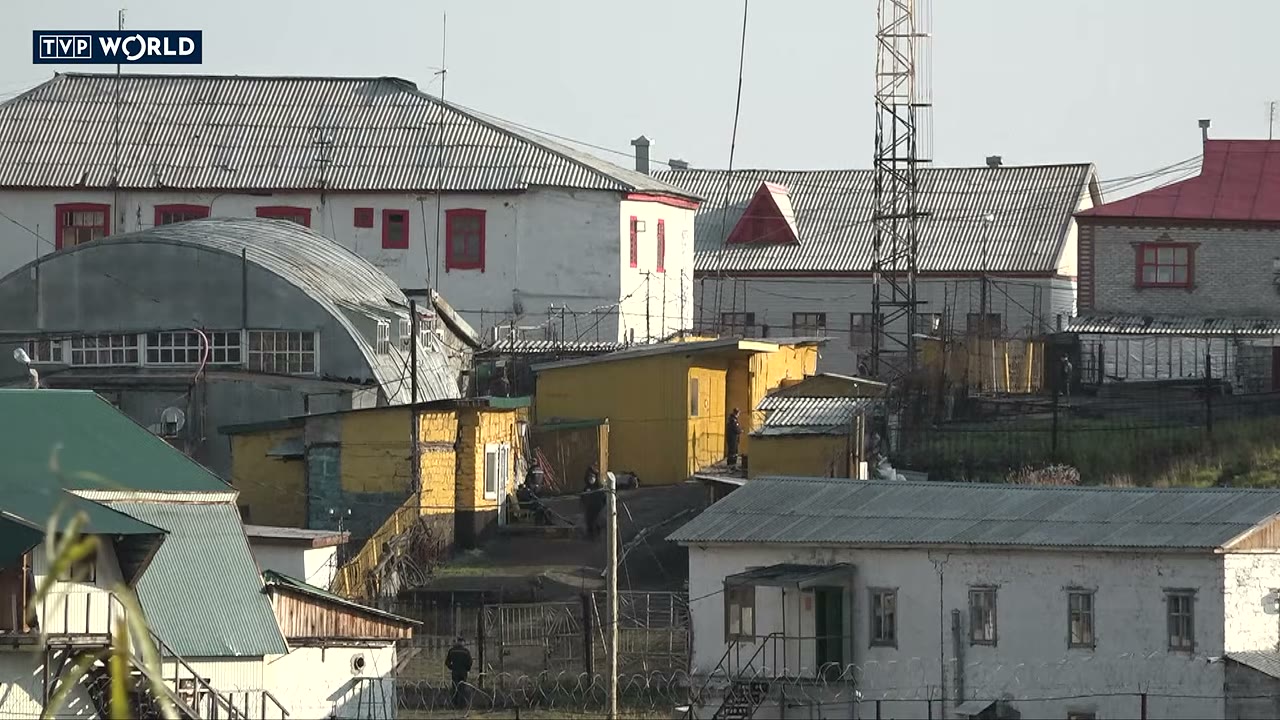
Former prisoners and rights groups say Belarusian penitentiary factories produce goods for the Russian military and once supplied Western firms like IKEA, paying inmates near nothing. The video examines who profits from a system where the state controls sentences, work and complaint.
1Belarusian prisons allegedly forced political prisoners to make military goods for Russia
Political prisoners in Belarus are allegedly being forced to make military equipment for Russian troops fighting in Ukraine, according to an investigation by the human rights group Viasna. Researchers gathered accounts from former prisoners held in eight of Belarus's 15 correctional colonies. All eight reportedly produced military goods, from uniforms and sleeping bags to ammunition components and military transport containers.
Some former prisoners said materials in prison workshops carried Russian military markings, and that prison officials openly admitted significant orders were destined for Russia. Under Belarus's Criminal Code, convicts are generally required to work — which activists argue leaves political prisoners no way to refuse work supporting Russia's war.
Researchers acknowledge that public procurement records do not establish the full extent of Russian orders placed in the colonies. The findings have raised questions over whether the Belarusian Department of Corrections should face European Union sanctions.
2IKEA suppliers allegedly used Belarusian prison labor for a decade
At least 10 Belarusian suppliers to IKEA had commercial relationships with correctional facilities over the past decade, according to a 2022 Disclose investigation. Among them was textile manufacturer Mogotex, which made curtains, towels and table linens for the Swedish furniture giant. Accounting reports showed the company did business with at least four Belarusian correctional colonies.
Other suppliers reportedly bought wood and furniture components from prison-owned enterprises. The relationship existed despite IKEA's standards explicitly prohibiting forced and prison labor. Human rights organizations recorded monthly prisoner pay equivalent to less than two euros in some facilities.
The investigation did not conclusively determine which IKEA products contained materials made by prisoners. IKEA denied having direct partnerships with the companies in question and said it was investigating reports of violations by suppliers. The company suspended imports and exports from Belarus in March 2022.
3Former prisoner says he earned about two rubles a month in prison factory
Former political prisoner Tamaz Pipia said he worked six days a week in a Belarusian prison and received about two Belarusian rubles a month — although the papers indicated 300. Deductions can include taxes, maintenance costs and court debts.
A September investigation by Mediazone Belarus described a workforce whose tasks and schedules are controlled by prison administrations. Production includes furniture, clothing, woodwork and metal goods.
Other former prisoners describe higher pay, so there is no single salary covering every shop — the difference is what exactly goes into the prisoner's account. Goods leave the factory with commercial value, while the person who made them may receive next to nothing. Because the administration controls both production and discipline, an employee who objects also challenges the officials overseeing daily life behind bars.
4Teenagers convicted under Article 328 face years of forced labor and lost schooling
Two teenagers arrested at 17 were initially sentenced to 12 years in Belarus under Article 328, which covers drug-related crimes, after trials they called flawed. Amnesty International documented the cases of Emil Ostrovko and Vasyl Sotchenko in 2019.
The appeal reported grueling compulsory labor, insufficient rest, lack of protective equipment and access to education. A November review by Our Home reported additional concerns about forced confessions and fabricated charges in the cases it studied.
Human rights activists have challenged the evidence and verdicts in individual prosecutions. A drug conviction does not deprive a child of the right to education or protection from violence — and whether a teenager committed a crime and whether the state can exploit that teenager's labor are separate questions.
5UN rapporteur report links prison labor to unsafe conditions and Russian military orders
A 2025 report by the UN Special Rapporteur describes how public and private enterprises profit from prisoner labor in Belarus, including allegations of unsafe working conditions and punishment for refusing tasks. The report also discusses production of goods for the Russian military.
That places responsibility on buyers to establish where goods were made and under what conditions. A supplier's invoice does not explain whether the person working at the machine could have refused the job.
Independent access to prisons, reliable salary information and witness protection could help answer that, the report suggests. Without them, commercial transactions remain far easier to track than employee treatment. The prison produces the product, the buyer receives it, and the prisoner remains behind bars.
6Opposition adviser Franak Vyachorka calls Belarusian prisons a Soviet-era Gulag system
Franak Vyachorka, chief adviser to Belarusian opposition leader Svitlana Tikhanovskaya, was sentenced in absentia in Belarus to 20 years in prison. He describes the system as a Soviet-era Gulag built to break people.
"The main idea is to break a person, to break their personality, to force them to serve the system," he said. He said prisoners are used as unpaid, cheap labor to fulfill orders for military goods and government needs, and are often held in complete isolation, not even allowed to communicate with friends or family.
He also described the so-called "chemistry", where people stay at home but must go to the factory every day under police monitoring. Terms are extreme, he said — five, seven, 10, 15 years, and in recent years some 20-year sentences.
7Vyachorka describes overcrowded cells, solitary confinement and forced factory work
Some cells in Belarus hold 30 to 40 people in rooms designed for five or 10, according to Franak Vyachorka, chief adviser to opposition leader Svitlana Tikhanovskaya. He described maximum security prisons, general regime prisons and solitary confinement facilities such as the KGB prison, where each person sits in a small cell without communication.
He said long-sentence prisoners may be moved from prison to prison so they cannot build social contacts. Women and men are kept separate. After conviction, prisoners are allowed to work — and for many it is a relief.
"When you're in solitary confinement for years, you just go crazy," he said. Work in a factory or military production means doing something else, sometimes seeing the sun and sky. Still, he called it a cruel system where prisoners only suffer.
8Vyachorka says prison labor is both punishment and production for Russia's war
Belarusian prison labor is both punishment and production, Franak Vyachorka said. Prisoners are sent into hard labor and dangerous industries without their consent, very often forced to do it and losing their health, he said, adding that many die in prisons and there is no medical care.
Much of the work is conventional manufacturing. But in the last four years, after the full-scale invasion of Ukraine, prisons began fulfilling military orders and contracts for Russia, according to Vyachorka — producing equipment and sewing clothes for Russian soldiers.
He said the aim is to show that Belarusian political prisoners are forced to work for the Russian military machine. He also claimed that some of Lukashenko's friends in Europe, such as members of Germany's AfD party, place orders carried out by prisoners, including agricultural products.
9Vyachorka says AfD-linked buyers and IKEA used prison-made goods
When asked how much prison-made product reaches Europe, Franak Vyachorka said: "Not so much, not so much." He cited cases in 2021-2022 where factories in the Belarusian prison system manufactured products for IKEA, the international furniture company — which he said stopped after media coverage of the scandal.
He also claimed that members of Germany's AfD party have used forced labor from Belarusian prisoners to produce agricultural products.
Many companies working with Belarus have no idea who their partner really is, Vyachorka said. They sign a contract, and in Belarus the authorities decide who will fulfill it — often passing the order on to prison factories and enterprises.
10European bodies discuss sanctions as Vyachorka urges no trade with Lukashenko regime
The European External Action Service and the European Commission are aware of forced labor in Belarus's prison system, and several European Parliament resolutions mention the problem, according to Franak Vyachorka. A major discussion is underway in the Council of Europe on how to prevent forced labor in economic relations with Belarus.
Vyachorka urged Western companies not to cooperate with Belarusian companies, state-owned enterprises and the Lukashenko regime in general. "The regime will use political prisoners and abuse any cooperation with you," he said.
But he acknowledged there is not much that can be done. The UN High Commissioner for Human Rights, Volker Türk, sometimes raises the issue, he said, but few tools remain because Belarus has withdrawn from international agreements and protocols.
11Prison salaries 20-50 times below average paid as virtual money in prison kiosks
Prison salaries in Belarus run 20 to 50 times below the average wage — sometimes $20-30 a month — and the money is not paid in cash. It arrives as virtual credit in an account, spendable only at a kiosk or shop inside the prison, Franak Vyachorka said.
Sometimes prisoners can buy cigarettes or food. But most have extremist status, marked by a yellow tag on their clothes, and are not allowed to buy anything in the prison shops.
"Essentially, this virtual money only exists in accounts," Vyachorka said. On paper, prisoners are promised a certain payment, but when it reaches their pockets there is almost nothing there.
12Political prisoners face worse conditions than murderers, with longer sentences
Political prisoners in Belarus face the harshest conditions — worse than those of murderers, according to Franak Vyachorka. He described complete isolation, solitary confinement, no contact with the outside world and no ability to buy anything in the prison store.
Murderers very often receive shorter sentences than political prisoners, he said. In recent months, one person was sentenced to 16 years simply for online comments and a donation of 25 or 27 euros to the Ukrainian army, while murder cases over the past six months drew sentences of eight and 12 years.
"Lukashenko is afraid of Belarusians who do not accept his dictatorship," Vyachorka said.
13Vyachorka says Belarus arrests foreigners to blackmail governments over sanctions
Belarus often arrests foreign citizens and uses them to blackmail foreign governments, according to Franak Vyachorka, chief adviser to opposition leader Svitlana Tikhanovskaya. Many Latvians, other Europeans and even Japanese citizens are held in Belarusian prisons, he said.
His account: authorities tell governments that if they impose sanctions, their citizens will receive longer terms. He urged Poles, Latvians, Lithuanians and Europeans not to travel to Belarus — and to visit only after democratic changes.
Asked whether prison labor gives the regime an incentive to jail more people, Vyachorka said it saves costs but does little for the economy. Almost half of the economy is in the hands of the regime, its people and state-owned companies, he said.
14Prison economy run by Lukashenko's vertical, with contracts offered to foreign governments
Prisons in Belarus are run as part of Lukashenko's power vertical, and their output is offered to foreign governments. A researcher said the workforce and economy inside prisons are "completely controlled" by the presidential administration, with no autonomy at all.
State-owned enterprises turn to prison labor because it is cheaper, helping them raise production and cut costs, he said. Contracts are usually with foreign companies, and Lukashenko, his ministers and ambassadors pitch deals abroad, then place the orders in prisons.
He named Russia and Southeast Asia, citing Indonesia's frequent cooperation and the Burmese military junta's many contracts. Cuba still works with Belarus because it is cheap.
15Vyachorka says buyers often do not know goods were made by prisoners
Some buyers of Belarusian goods have no idea prisoners made them. A researcher said prison labor is used across many sectors, and products sometimes reach shoppers without that label.
He said that years ago, international clothing brands sold in stores in European capitals sold jackets and hats made by Belarusian prisoners.
He did not name the brands or say when the cases occurred.
16Trump administration reportedly shelves economic incentives plan for Russia
The Trump administration has reportedly shelved plans to offer Russia economic incentives in exchange for ending the war against Ukraine. The Financial Times reported that US envoys Steve Likaw and Jared Kushner told European officials business deals were no longer central to Washington's negotiating strategy.
Earlier proposals included American investment in Russian oil and titanium production, and a possible purchase by an American investor of the company controlling the Nord Stream gas pipeline.
Moscow initially responded positively, but Russian officials reportedly lost interest and kept insisting on territorial and other concessions Kyiv considers unacceptable. The shift follows an October decision to temporarily ease sanctions on Russian fuel exports. The White House has not commented.
17German survey shows majority now oppose military aid to Ukraine
A majority of Germans now oppose military aid to Ukraine, the latest annual survey by the Kerber Foundation found. Support for arming Ukraine fell from 59% last year to 46%, while opposition rose to 53%.
The survey shows sharp political and regional splits. Most backers of Germany's ruling parties favor continued aid, but 88% of voters for the far-right Alternative for Germany oppose it. Support is also significantly lower in East Germany than in West Germany.
Even so, 82% still see Russia as a military threat, and 64% oppose normalizing relations with Moscow while the war continues. Germany has given Ukraine 11.5 billion euros in aid this year, according to the Ukrainian Ministry of Defense.
18Todd Boely signs deal to buy Lukoil's international assets for $10 billion
American billionaire Todd Boely has signed an agreement with sanctioned Russian oil giant Lukoil to acquire its international energy assets. The deal involves a consortium that includes the American Corporation for International Development Finance, and swaps $10 billion in Lukoil securities for the company's overseas assets.
Lukoil's international portfolio is valued at about $16 billion. It includes operations in 11 countries, with large oil fields in Azerbaijan and Kazakhstan and refineries in the Netherlands, Bulgaria and Romania.
The deal needs approval from the US Treasury Department, which sanctioned Lukoil in October 2025. US authorities will review whether the transaction serves US national security interests.