A countdown of the Republic of Korea Air Force's ten most advanced aircraft, from rescue helicopters and transport planes to the KF-21 Boramae and the F-35 stealth fighter. The video highlights how South Korea combines licensed production, homegrown design and imported stealth to build a modern air force.
1Sikorsky S-70 Helicopter Ranks 10th in South Korea's Air Force
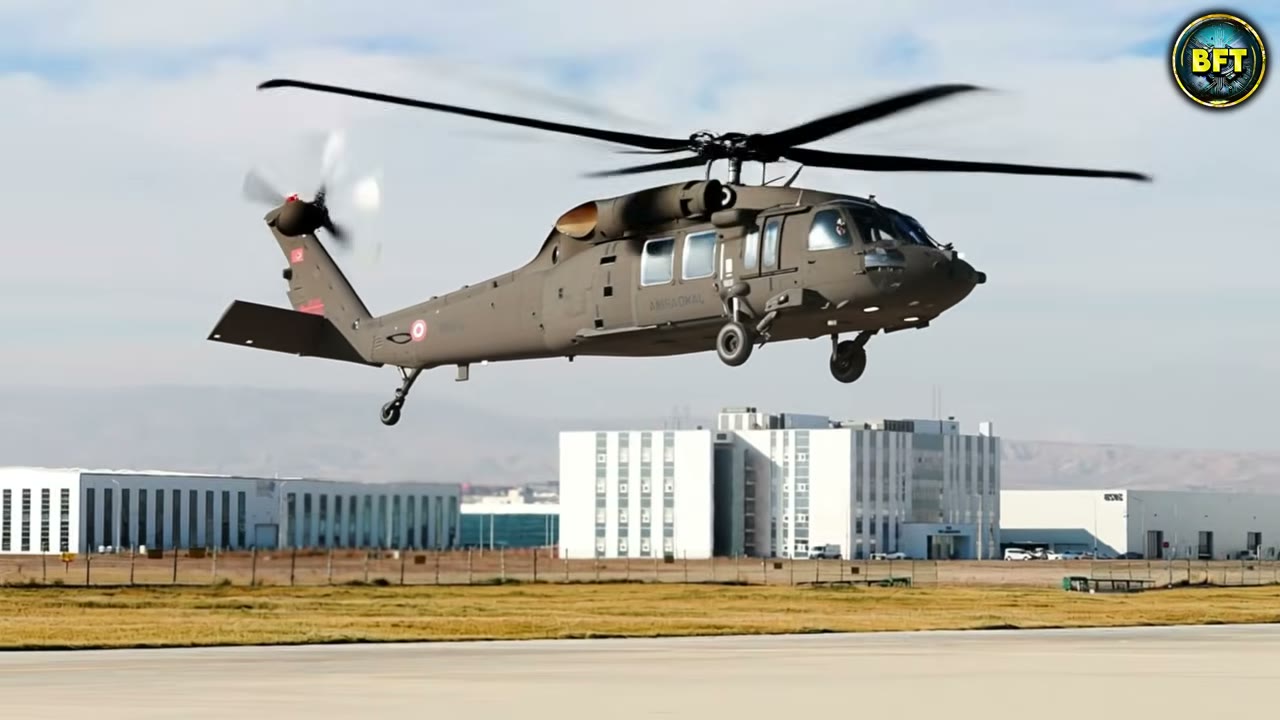
South Korea builds its own version of the Sikorsky S-70 helicopter under a special license, upgrading the cockpit with modern touch displays and secure communications. The aircraft ranks 10th on the air force list, and the military relies on it for high-risk search and rescue, VIP transport and rapid tactical landings.
Equipped with night vision sensors, digital weather radars and automated self-defense systems to evade surface-to-air missiles, it flies at 295 km/h through mountain passes in blinding rain. It carries up to 11 fully equipped soldiers or lifts over 4,000 kg of cargo on an external suspension.
It won't fight supersonic jets, but without it, downed pilots would have almost zero chance of survival.
2AS332 Super Puma Ranks Ninth as South Korea's VIP Command Helicopter
South Korea's top military commanders don't fly commercial in an emergency — they travel in the AS332 Super Puma, a twin-engine helicopter ranked ninth on the air force list. It is built to survive severe turbulence, ice storms and dangerous mountain winds.
Two turbine engines push it to 260 km/h, and it covers over 800 km without refueling. Inside, encrypted satellite channels let officers control ground troops from 6,000 meters up, while electronic warning receivers alert the crew when enemy radar locks on. If a heat-seeking missile approaches, automatic traps fire to distract it.
The Super Puma also flies sea rescue and medical missions and can lift equipment weighing up to 4,500 kg with a rescue winch.
3C-130J Super Hercules Ranks Eighth in Tactical Transport
The C-130J Super Hercules can land on short dirt runways where conventional aircraft would crash — and it ranks eighth on South Korea's list. Four turboprop engines carry over 19,000 kg of cargo or 92 equipped paratroopers at speeds above 670 km/h, covering over 3,300 km non-stop.
What sets it apart from older transports is its digital cockpit: modern screens, advanced windshield indicators and automated navigation let two pilots fly the aircraft where four were previously required.
Defense systems detect and deceive infrared missiles, and night vision devices let it fly low in complete darkness, dropping cargo directly into active combat zones.
4Airbus A330 MRTT KC-330 Cygnus Ranks Seventh as Flying Refueler
The Airbus A330 MRTT, known in South Korea as the KC-330 Cygnus, can carry up to 111,000 kg of fuel in its wings and fuselage — enough to double or triple the combat range of a fighter fleet. It ranks seventh on the air force list.
No extra tanks are needed inside, so the entire main cabin stays free to carry 300 soldiers or 45,000 kg of cargo. An operator using three-dimensional displays runs the refueling system, topping up fighters at 880 km/h.
Without mid-air refueling, a fighter can only stay in the sky a short time before heading home — a problem in a crisis. The Cygnus also serves as an evacuation aircraft to bring citizens home from conflict zones.
5E-7 Wedgetail Peace Eye Ranks Sixth as South Korea's Radar Brain
A 10-meter radar antenna mounted above the fuselage lets South Korea's E-7 Wedgetail scan 360 degrees and track thousands of air and sea targets at once over 400,000 square kilometers — almost four times the country's total area. The aircraft, nicknamed the "Peace Eye," ranks sixth.
Flying at 12,000 meters, it sees past the mountains and the curvature of the Earth that block ground-based radars. It detects low-flying cruise missiles, stealth aircraft and naval vessels at distances over 400 km.
Mission controllers inside direct friendly fighters to their targets without the fighters turning on their own radars, giving South Korean forces an element of surprise. It flies up to 850 km/h with a range of 6,500 km.
6Upgraded KF-16 Fighting Falcon Ranks Fifth in Air Force List
More than 130 upgraded KF-16 fighters form the backbone of South Korea's daily defense, and the fleet ranks fifth on the air force list. The licensed F-16 versions now carry active phased array radars, new on-board computers and helmet-mounted targeting systems.
That last upgrade lets a pilot lock onto an enemy aircraft with a turn of the head and fire without pointing the jet's nose at the target. The aircraft tops 2,100 km/h — more than twice the speed of sound — and handles 9 G turns, with a reclining seat and side control handle to help the pilot cope.
It carries up to 7,700 kg of weapons, including laser-guided bombs, anti-ship missiles and long-range air-to-air missiles, and stays on high alert.
7F-15K Slam Eagle Ranks Fourth as South Korea's Heavy Strike Fighter
South Korea's F-15K Slam Eagle carries 10,400 kg of bombs and missiles on 15 external pylons and reaches Mach 2.5 — over 3,000 km/h. The heavy-strike fighter ranks fourth on the air force list.
Two turbofan engines produce over 26,000 kg of thrust, pushing the jet above 18,000 meters with a combat radius of 1,800 km without refueling. Its weapons include deep-penetrating anti-bunker bombs, long-range cruise missiles for strikes hundreds of kilometers away, and air-to-air missiles for self-defense.
Terrain-following radar lets pilots fly at supersonic speeds just 30 meters above the ground.
8RQ-4 Global Hawk Ranks Third as High-Altitude Spy Drone
South Korea's RQ-4 Global Hawk has no cockpit, no windshield and no pilot — it is flown by operators at ground stations hundreds of kilometers away. The drone ranks third on the air force list.
Its wingspan of almost 40 meters is wider than many commercial airliners. It climbs above 18,000 meters into the stratosphere and stays airborne for over 30 hours, able to monitor an entire country in a single flight. High-resolution synthetic aperture radar, electro-optical sensors and long-range infrared cameras see through clouds, rain and darkness.
It can spot objects the size of a shoe print from 18 km up and sends intelligence to commanders in real time via satellite, giving South Korea early warning of potential threats.
9KF-21 Boramae Ranks Second as South Korea's Homegrown Fighter
South Korea designed and built the KF-21 Boramae almost entirely on its own — a 4.5-generation fighter ranked second on the air force list. The name means "hawk" in Korean, and angular surfaces plus radar-absorbing coating make it hard for enemy systems to detect.
It reaches Mach 1.81, about 2,200 km/h, and carries up to 7,700 kg of weapons on 10 suspension points, including long-range Meteor air-to-air missiles that can hit targets over 200 km away. Its own active phased array radar and an infrared search and track system can locate enemy aircraft without emitting radio signals.
Future versions are planned with internal weapons bays to become a full fifth-generation stealth fighter, and the jet is being developed to control swarms of AI drones as a "mothership" in the sky.
10F-35 Lightning II Tops List as South Korea's Stealth King
South Korea's top stealth fighter shows up on enemy radar as nothing bigger than a small golf ball. The F-35 Lightning II sits at the top of the Republic of Korea Air Force's advanced aircraft list, and its radio-absorbing skin and smooth design keep it nearly invisible to radar.
South Korea operates the F-35A variant, a fifth-generation stealth fighter. It flies at up to Mach 1.6 — roughly 1,960 km/h — and reaches an operating altitude of up to 15,000 meters.
Its edge is sensor data fusion. The jet pulls data from its radar, infrared cameras, electronic warfare system and nearby friendly assets, then combines it into one clear picture on a panoramic cockpit display.
The pilot wears a helmet costing over $400,000 that projects flight data and night vision onto the visor. Six external cameras around the fuselage let the pilot look down through the cockpit floor and see everything around the aircraft.
Weapons ride in internal compartments — precision bombs and air-to-air missiles — so the stealth profile holds. The jet can pass target data to ground troops, ships and other aircraft without revealing its own location.