A federal judge in Tampa dismissed 27 of Donald Trump's claims against the New York Times and Penguin Random House but let seven survive, including tax fraud allegations from the book Lucky Loser. Both sides claim victory as the Times faces a December 17 deadline to respond.
1Judge Dismisses 27 of Trump's Claims Against New York Times
A federal judge in Tampa threw out 27 of the statements Donald Trump sued the New York Times over — but seven survived. Trump says the Times owes him $15 billion for what it wrote about him and his father's money. The judge ruled on the case on Thursday, November 19th. The seven surviving claims stayed alive because of one sentence the judge wrote, which the transcript says will be heard shortly.
2Trump Files $15 Billion Suit Against Times and Penguin Random House
Trump's lawyers filed a $15 billion lawsuit against the New York Times in federal court in Tampa on Monday, September 15th, 2025. The suit names the Times, three of its reporters, a fourth who was later dropped, and Penguin Random House, the world's largest trade book publisher. Trump announced it on Truth Social, writing that he had the great honor of bringing it. The complaint ran 85 pages and landed with Judge Stephen Merryday, a senior federal judge in Tampa first put on the bench by President George H.W. Bush.
3Judge Merryday Rejects Complaint as a Public Relations Megaphone
Four days after Trump's suit landed, Judge Merryday threw it back. He noted the suit had just two counts, and the first didn't show up until page 80. Before that came 79 pages about Trump's election win, The Apprentice, his buildings and his books. The judge quoted one line at the lawyers: "The apprentice represented the cultural magnitude of President Trump's singular brilliance." Then he wrote that a complaint is not a megaphone for public relations or a podium for a passionate oration at a political rally. He struck the whole thing, and Trump could try again in 40 pages or fewer within 28 days. Merryday wrote that his order said nothing about whether Trump's claims were true — he was enforcing the rules, not picking a side.
4Trump Refiles 40-Page Complaint and Judge Keeps Case in Tampa
Trump's lawyers came back in October 2025 with exactly 40 pages. The Times and Penguin then tried to move the whole case to New York, where the book and the articles were written. Merryday said no, writing that Tampa offers neither side a home game. In May, both sides sat down with a mediator to try to settle. They couldn't agree. After a long hearing this summer, the judge let Trump's lawyers rewrite the complaint one more time.
5Three Times Pieces at the Center of the Defamation Case
The suit targets three pieces of writing from the 2024 campaign. The first is a Times article about The Apprentice and how the show sold Trump as a business genius. The second is a book by two Times reporters, Susanne Craig and Russ Buettner, called Lucky Loser. The third is a long article by the paper's chief White House correspondent, Peter Baker, about the scandals in Trump's past. The book came out in September 2024, seven weeks before the election.
6Book Alleges Trump Got $400 Million From Father Through Tax Schemes
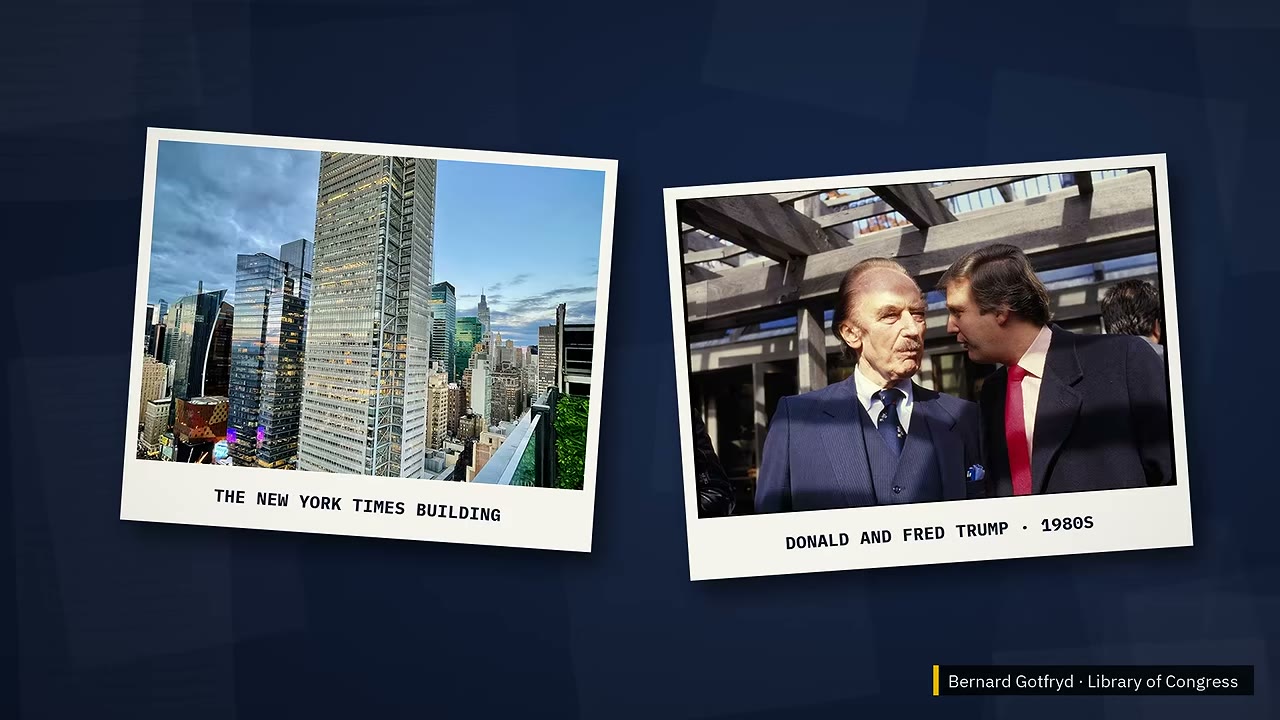
Lucky Loser tells the story of Trump's father, Fred, a Queens builder, and the money that moved from father to son. The book says Trump got the equivalent of more than $400 million from his father, much of it through fraudulent tax evasion schemes. Trump says that's false. His lawyers point out that neither he nor his father was ever charged with tax fraud, and they say the reporters knew it.
7What Defamation Means and Trump's 2018 Loss to These Reporters
This isn't Trump's first fight with these reporters over this story. In 2018, Craig, Buettner and a colleague published a huge investigation into Fred Trump's money. It won a Pulitzer Prize. In 2021, Trump sued them, the Times and his niece Mary in New York State Court, asking for $100 million. That suit didn't claim the story was false — it claimed the reporters had improperly gotten family financial records from his niece. A New York judge threw out the claims against the Times and the reporters in 2023, then sent Trump the bill: $392,638 for the Times' legal fees.
8New York Times v. Sullivan and the Actual Malice Standard
The Times' shield is a 1964 Supreme Court case with a familiar name: New York Times versus Sullivan. It created a rule called actual malice. When a public official sues over a story, it isn't enough to show the story was wrong. He has to show the writer knew it was false or had serious doubts and published anyway. The judge agreed this is a high wall and accepted the defense's own words: the standard is famously daunting.
9Judge Dismisses All Apprentice Article Claims and 27 Statements
For 27 statements, the wall held — including everything Trump challenged in The Apprentice article. The judge's words on those 27 are rough for Trump: "Even if untrue, even if published with ill will or evil intent, none of these statements is actionable." In plain English, even if they were wrong, even if they were mean, the law protects them. That's the part the Times is celebrating. Now the part it isn't.
10Seven Surviving Claims All Allege Complex Crimes
Seven statements survived: six from the book, one from Peter Baker's article. Look at what they have in common — fraudulent tax evasion schemes, a likely tax fraud, a sham layer built to dodge gift and estate taxes, and from Baker's article a line saying authorities looked into his ties with the Mafia and found violations of money laundering rules. What didn't survive: everything about The Apprentice and the image it built, plus most of the book's sharpest lines about Trump as a businessman, including one Trump sued over — "Good things happened to Donald Trump. He did not earn most of those good things."
11Judge Questions Whether Authors Sought Qualified Tax Opinion
The seven that made it all point the same way, toward crimes. The judge described them as statements accusing Trump of planning and perpetrating complex crimes. Back in July, at a hearing that ran more than two hours, he put a pointed question to the lawyer for the book's authors and publisher: if you're about to accuse someone of a tax felony and you know you can't judge that yourself and you know exactly who could, don't you have to ask before you publish? She said they did ask. The authors consulted several tax experts, and the defense says they went through about 100,000 pages of tax returns, bank records and financial statements. The judge wasn't impressed. An expert calling a deal suspicious, he wrote, or saying it smells like a crime is far from a formal legal opinion. Then came the sentence: "They know that they don't know, but they are undeterred."
12Both Sides Claim Victory After Split Ruling
The judge did not rule that the book is false or that anyone lied. He ruled that Trump's side has made a plausible case — enough to keep going, not enough to win. Twenty-seven out, seven alive, and one sentence doing the damage. So who actually won? Trump's legal team called the ruling a victory for honesty in America. The Times said it was encouraged by the dismissal of almost all claims and that what's left has no legal merit. Penguin Random House says the evidence will lead to a full dismissal.
13Trump's Tax Fraud Claims Survive and Discovery Looms
A judge threw out 27 of Trump's claims against the New York Times — but kept the four tax fraud counts, the most serious in the case, alive.
The ruling also killed the entire Apprentice article claim and refused Trump a third chance to rewrite his complaint. The Times and its reporters, along with Penguin, must file a formal answer by Thursday, December 17.
Then comes discovery: emails, notes, drafts and people questioned under oath. The reporters' notes could land on the table, and Trump, as the man suing, could be asked about his father's money under oath.
No date is set for any of that. Four of the six counts remain.
14Trump's Other Media Lawsuits: Wall Street Journal and BBC
Trump's $10 billion suit against the Wall Street Journal was thrown out for good at the end of October, after being dismissed in April and refiled.
The judge said it fell short of showing actual malice. A lawyer for Trump's external legal team said they are "aggressively pursuing litigation against the Wall Street Journal and they will continue."
Nine days before Thursday's ruling, a different federal judge in Florida let his $10 billion BBC case go forward, rejecting the BBC's motion to dismiss. That case concerns how the network edited his January 6 speech; the judge wrote the edit was not trimming around the edges but creating something different.
Trump has been ordered to sit for questioning under oath by December 11.
15Where the $15 Billion Case Stands After Thursday's Ruling
No judge has said a single word about whether Trump is owed any of the $15 billion he is seeking.
After Thursday's ruling, seven of his claims stay alive. The judge who told Trump's lawyers that a complaint is not a megaphone kept them; the judge who agreed the wall is famously daunting found a crack in it.
The ruling was only about which claims get to stay in the fight. The Times hasn't lost anything yet. Trump hasn't won anything yet.
What comes next depends on what Trump can prove.