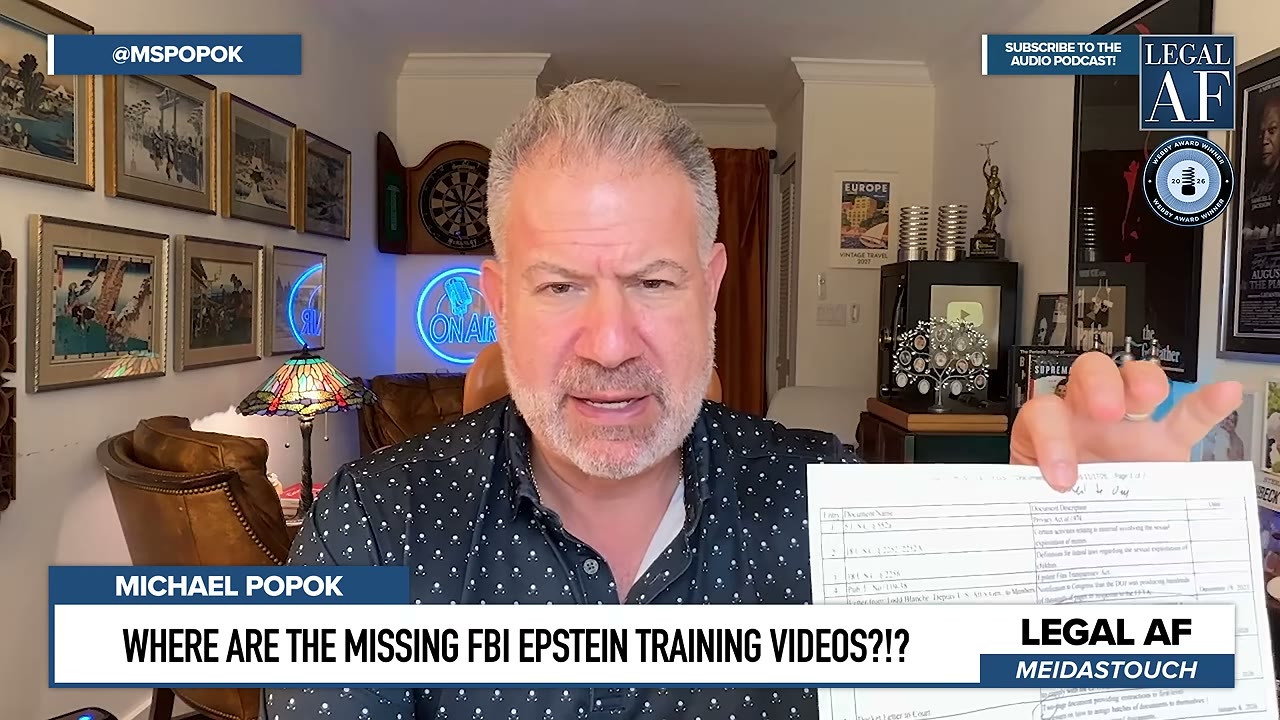
A Justice Department IT director filed a declaration in the Katie Fang Epstein Transparency Act case that lacks a perjury oath and omits key records. The filing reveals DOJ used Everlaw and Amazon Translate while withholding nine FBI training videos.
1DOJ Filing in Katie Fang Case May Trigger Evidentiary Hearing Before Judge Sullivan
A page-and-a-half DOJ filing in the Katie Fang case could put top Justice Department officials under oath in Judge Sullivan's courtroom. The new document, filed under the Epstein Transparency Act, left things out — and that omission will eventually lead to an evidentiary hearing, according to the analysis. Among those who could be forced to testify is Todd Blanche, the top leader of the Department of Justice as attorney general. "Did he just secure himself an interrogation, a sworn statement before Judge Sullivan?" The filing also leaves unanswered where nine FBI training videos went.
2Missing Administrative Record Leaves DOJ's Epstein Release Decision Unexplained
The record that should explain why the Justice Department released only some Epstein documents is still missing. The Katie Fang case turns on the Administrative Procedure Act, and the administrative record is what everyone was waiting for. The DOJ and FBI made a final decision to release only a portion of the documents, not all of them. What drove that decision remains unknown. The administrative record should show what factors and what documents were used in the decision-making process.
3DOJ Withholds Nine FBI Training Videos From Both FOIA and Fang Case
The Justice Department says nine FBI training videos are not relevant to a Freedom of Information Act request — while also keeping them out of the Katie Fang case. Allison Gill, known for "Mueller She Wrote," requested the videos through her lawyer at National Security Counselors, Cal McClenahan. The government admitted it had nine training videos but refused to release them. "You can't sit on two chairs," the analysis says of the contradiction. The DOJ told Gill the videos are not relevant under FOIA, while arguing Fang should file a FOIA lawsuit — and then declining to make the videos part of the administrative record in that case.
4Judge Sullivan Orders FBI to Produce Handwritten Interview Notes by November 24
Handwritten FBI interview notes with a woman who says Donald Trump raped her when she was 13 are set to go public on November 24. Katie Fang has won a continuous series of victories before Judge Sullivan and the federal appeals court in the District of Columbia. As of Saturday morning, the Justice Department had not filed even a motion — let alone obtained a stay — against Sullivan's order compelling the FBI to produce the notes. Unless the DOJ gets a reprieve, the notes will be put in the library for all to see, including the survivors. No suspension is in place yet.
5DOJ IT Director's Declaration Lacks Perjury Oath and Notary
A declaration from the Justice Department's IT director contains no oath under penalty of perjury, no notary and no perjury warning. Shawntrell Nicole Collier, deputy assistant attorney general and IT director, signed the document stating her facts are based on personal knowledge. "Where is the oath under penalty of perjury required in the declaration?" the analysis asks. The declaration closes with a certification that the attached list of administrative documents contains the records relied upon by the DOJ. The analysis says Fang's attorneys — Brandon Blue of the Public Integrity Project and Sam Ward Pacman — should move to have it expunged.
6Collier's Document List Omits Key Records and Trump Redaction Protocol
A 21-item list of records the Justice Department relied on omits correspondence and any record of who decided what to redact. The list includes several two-page memoranda for internal reviewers, a longer memorandum dated January 4, 2026, and one document of 851 pages covering only the investigations into Jeffrey Epstein and Ghislaine Maxwell. The Epstein Transparency Act passed about two months before that January memorandum, according to the analysis, meaning it took two months to record the inspection protocol. Correspondence and communications should be there, assuming they weren't destroyed. Judge Sullivan will have to examine what leadership decided — and possibly whether Donald Trump himself made the redaction calls.
7Allison Gill Details Nine Hidden FBI Training Videos in Interview Clip
Nine FBI training videos instructed agents to tag Donald Trump's name for review by management, according to Allison Gill's sources. Gill, known for "Mueller She Wrote," described the videos in an interview about her case and the Katie Fang case. Her lawyer at National Security Counselors, Cal McClenahan, filed a FOIA request for the training materials, since most agents didn't know how to redact documents for release. About a year later, the government admitted it had nine videos — roughly 75 minutes of training for the "Epstein Transparency Project" — and laid them out in a spreadsheet. The DOJ refuses to release them, citing privileges and calling agents' faces and voices protected personal information.
8Fang's Lawyers Plan to Challenge Deficient Declaration and 21-Item List
Katie Fang's lawyers are preparing to challenge a 21-item record list that they say is mostly already public. Next week, attorney Brendan Bailey and Fang herself will discuss the court documents. The list of 21 items — half of which were already in the public domain — drew ridicule, according to the analysis. So did Shawntrell Collier's declaration, which lacked a perjury warning, an affidavit or any notarized statement. A motion to exclude the evidence is planned.
9DOJ Used Everlaw and Amazon Translate Despite Denying Translation
The Justice Department told Congress and Judge Sullivan it did not translate documents — then its own filing revealed it used Amazon Translate. The declaration signed by Shawntrell Nicole Collier disclosed the electronic database platform used to review the files: Everlaw, which has a built-in translation function. Materials were stored in the cloud through Amazon's service, and Amazon Translate was used if documents needed translation into a foreign language, according to the analysis. The platform name opened the door to figuring out the rest. "All because Shawntrell Collier, by signing it digitally under oath, told the world that they were using Everlaw."