Russia and Ukraine met US mediators in Abu Dhabi and agreed only on a large prisoner exchange, while European powers were kept out of the room and mocked by Moscow. The same week, nearly 2,800 troops from 11 countries rehearsed a future deployment into Ukraine, a force critics say needs Vladimir Putin's permission to move.
1Russia and Ukraine Hold US-Mediated Talks in Abu Dhabi, Europe Kept Outside
Russia and Ukraine sat down face to face for the first time since February — and the only thing they agreed on was a prisoner swap.
Delegations met in the United Arab Emirates on November 10th and 11th for two days of talks mediated by the United States. Jared Kushner and Steve Witkoff led the American side. Vladimir Medinsky represented Russia, Rustem Umerov Ukraine.
The one concrete result: an agreement in principle on a large prisoner exchange, potentially a thousand people or more on each side. Kushner called it the biggest humanitarian release of prisoners.
On a ceasefire, territory and a broader settlement, nothing. Secretary of State Marco Rubio called the first day very productive while saying the war is nowhere near solved in the next 24 hours.
2Lavrov and Medinsky Mock Europeans as Tourists Told to Sit in Hotel Lobby
Germany, France, Britain, Italy, the EU and NATO flew to Abu Dhabi for talks on Ukraine — and were left standing outside the room.
Russia, Ukraine and the United States made up the main format. Russia opposed European participation, and the Kremlin spokesman said no contact with the Europeans was even planned. The Europeans met separately with Ukrainian and American officials.
Foreign Minister Sergey Lavrov said that since the Europeans had flown in, they could sit in the hotel. Russia's negotiator Vladimir Medinsky said Moscow didn't understand in what capacity they had come. If they were tourists, he said, they were welcome in the lobby bar, and they could join the negotiations when their conscience wakes up.
3Kushner Says Europe Cannot Name One Voice to Speak for It
American envoy Jared Kushner said Europe naming one person to speak for it would be a bigger achievement than getting Russia to let it into the talks.
His remark followed Moscow's refusal to seat European governments at the Abu Dhabi negotiations. Kushner's complaint, as described, was not that Russia was wrong to shut Europe out, but that Europe had made itself easy to shut out.
Secretary of State Marco Rubio struck a different note. Speaking at a G7 foreign ministers meeting in Paris, he said the goal is to expand the talks so Europeans are represented directly, and that Europe is part of solving this problem for the long term.
Donald Trump said last week that a big, beautiful agreement is coming on Ukraine, one that might involve all of Europe. He gave no details.
4Russia Wants to Redraw Europe's Security Order Before Ending the War
Moscow wants Europe's security order redrawn before it discusses ending the war — and Europe has been shut out of the room where that would happen.
Lavrov said it is absolutely reasonable to define the parameters of a future security architecture first, and only then move on to resolving the actual war.
According to analysis in the European press, that means limits on NATO's presence in Eastern Europe, permanent neutrality for Ukraine, restrictions on the size and weapons of Ukraine's military, and no lasting Western military infrastructure on Ukrainian soil. Russian sources have linked it to limits on nuclear deployments outside national borders.
Zelenskyy wants the order reversed: stop the war first, then security guarantees for Ukraine, then wider security talks. On territory, Medinsky said every inch of what Moscow considers its land will be returned to Russia one way or another, and demanded Ukraine withdraw from parts of Donbas it still holds.
5Nearly 2,800 Troops From 11 Countries Drill Near Ukrainian Border in Poland
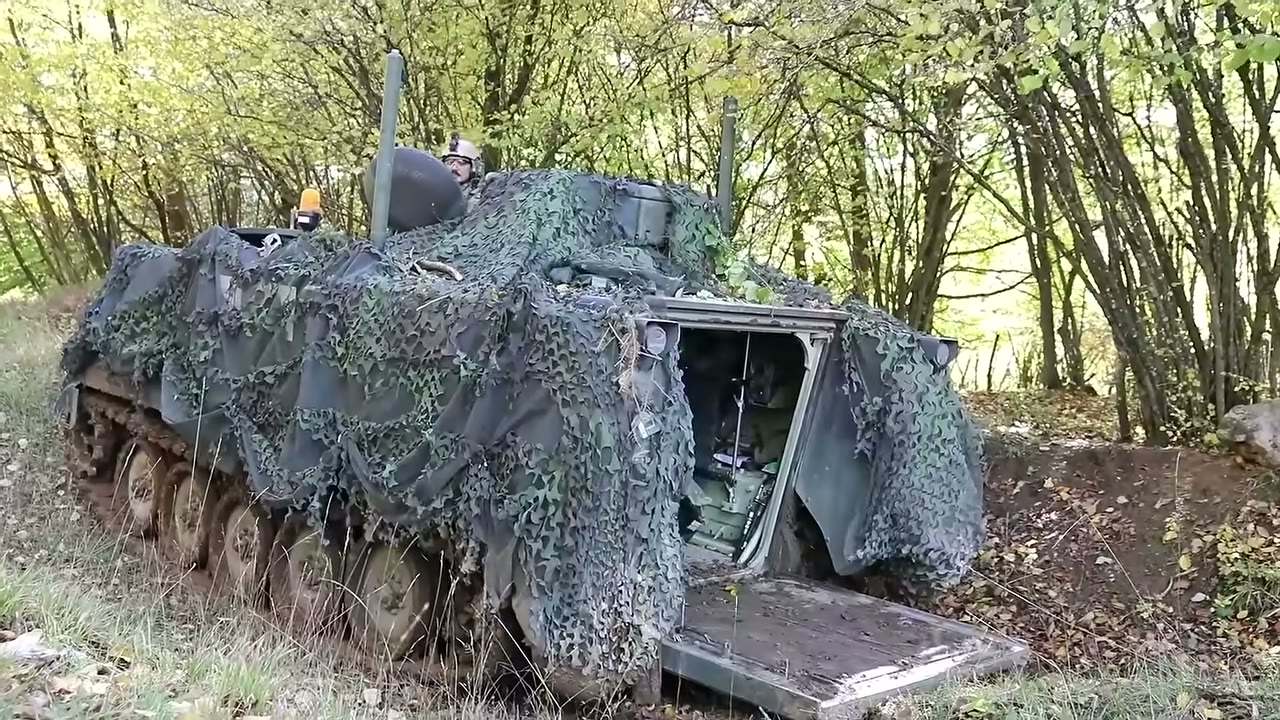
About 2,800 troops from 11 countries are drilling in southeastern Poland, roughly 62 miles from the Ukrainian border.
The exercise, called Coalition, runs from November 9th to the 22nd at a training area near Nowa Dęba. Belgium, Estonia, France, Germany, Lithuania, the Netherlands, Poland, Spain, Sweden, Turkey and Britain are taking part. France sends the biggest contingent, around 1,100. Britain is sending about 300, including soldiers from the 7th Brigade, the Desert Rats, plus Royal Air Force Typhoon fighters and a refueling aircraft.
They are practicing logistics, not battle: how fast units can cross borders and arrive ready under one commander. The Typhoons simulate protecting civilian flights if Ukraine's skies reopen, and Turkish officers are planning how to clear mines from approaches to Ukrainian ports.
6Commanders Say Poland Force Is Defensive and Cannot Monitor a Ceasefire
The force training in Poland is not built to fight, its commander said — and it will not monitor a ceasefire.
British Lieutenant General Tom Bateman, who leads the force, said it isn't designed for offensive operations. Its job is reassurance and helping Ukraine rebuild its own army so it can deter and, if necessary, defend against another attack. A British brigadier on the ground said everything on display is defensive.
A French major general said the hardest challenge is merging all these nations into one framework fast, and that they are ready to go.
Britain's Defense Secretary, Ben Wallace, said this isn't a hypothetical plan. It's a real force ready once the fighting stops.
7Coalition of the Willing Has 24 Nations but Uneven Commitments
Twenty-four nations have made military commitments to the force — but some of Europe's biggest armies won't send troops into Ukraine.
The force is not a NATO operation and would enter Ukraine only after the fighting ends, only at Kyiv's invitation, and only once political and military conditions are met. Its Paris headquarters is due to move to London before the end of the year.
Poland would coordinate the movement of allied troops across its territory, but its own soldiers would stay out of Ukraine, according to Warsaw's defense ministry. Italy has ruled out troops inside Ukraine. Germany says it could contribute forces on neighboring NATO territory. Britain has promised a parliamentary vote.
In January, Britain and France signed a declaration of intent with Ukraine envisioning military hubs on Ukrainian soil after a ceasefire.
8Russia Calls Any Western Troops in Ukraine Legitimate Targets
Russia's Foreign Ministry said any Western troops deployed to Ukraine would be legitimate targets.
On November 7th, as the Poland exercise got going, spokeswoman Maria Zakharova put out a statement. She said it confirms Europeans have no place at the negotiating table. She said deploying foreign armed contingents in Ukraine is categorically unacceptable, whether through the coalition of the willing or under any other banner. She called it military intervention.
She also accused France and Britain of seeking a foothold against Russia.
The warning lands on a force that, by its own description, cannot move until the war is over.
9Russian Missiles and 170 Drones Hit Kyiv Energy Infrastructure
Russia hit Kyiv with multiple waves of ballistic missiles and more than 170 drones overnight, knocking out power, heating and water.
The strikes on November 6th and 7th included Iskander-M and Zircon missiles, according to Ukrainian officials. Substations connecting nuclear plants to the capital and to central Ukraine were damaged.
Zelenskyy said six missiles were fired at the northern bridge over the Dnipro River and four hit, closing it in both directions. A kindergarten and residential buildings were damaged, and at least five people were hurt, including a child.
The barrage came as European governments were being kept out of the Abu Dhabi talks and mocked as tourists.
10Report: Coalition Troops Would Go to Ukraine Only If Putin Agrees
A force built to deter Russia from attacking again would go into Ukraine only if Vladimir Putin agreed, according to reporting from February.
The Telegraph reported on the fourth anniversary of Russia's full-scale invasion that a growing number of coalition members privately admitted the condition. According to the reporting, nobody designed it as a concession. It is structural: security guarantee talks got folded into the US-mediated ceasefire talks, so Russia now has to sign off on the guarantees, including troops on the ground.
One senior diplomatic source put it bluntly: "If Russia says it doesn't agree and considers those troops a target, you need to send a different kind of force." Another source said Europe handed Putin a veto by demanding a seat at the table.
11Europe's Deployment Plan Shrinks From 64,000 Troops to Barely 25,000
Europe's plan for a force in Ukraine has shrunk from a floated 64,000 troops to barely 25,000.
In April of last year, Britain's defense chief reportedly floated the 64,000 figure. European ministers said they could barely scrape together 25,000. That same month, only six of 30 countries had committed to sending troops at all. By February, a European defense source called the whole deployment rather hypothetical.
Emmanuel Macron, who co-chairs the coalition, had ruled out deploying before a ceasefire, calling it escalatory and saying allies had no consensus.
On the same day as that report, Hungary blocked a sanctions package and a €90 billion loan to Kyiv. Viktor Orbán said Hungary would give no money and no soldiers.
12Rasmussen Says Europe Must Force Its Way to the Table
Former NATO chief Anders Fogh Rasmussen said Europe cannot beg its way to the table — and called its own force a coalition of the waiting.
Rasmussen, Secretary General of NATO from 2009 to 2014 and before that Prime Minister of Denmark, did a media run this week with Euro News and the Daily Telegraph. He said Europe has to make itself indispensable by bringing assets and force its way to the negotiating table with action. He accused Donald Trump of siding with Putin in the talks.
He wants British and French troops deployed now, without waiting for a peace deal, stationed in rear areas defending Ukrainian cities and critical infrastructure. He wants a Black Sea maritime mission, possibly led by Turkey, Bulgaria and Romania rather than NATO. He wants European Patriot stocks handed to Ukraine, an end to buying Russian energy, and roughly $200 billion in frozen Russian assets given to Kyiv.
13Rasmussen's Earlier Push for a New European NATO Built on Britain and France
Rasmussen's push for European troops in Ukraine now follows an earlier call for a new European NATO built around Britain and France.
Back in April, he urged the two countries to lead what he called a new European NATO, built around the continent's two nuclear powers. That came after Trump called NATO a paper tiger for not backing the United States in its conflict with Iran.
Even then, Rasmussen said any new structure should complement NATO, not replace it, with the US keeping overall command to preserve its nuclear guarantee. He called the EU's own mutual defense clause weaker than NATO's Article 5.
Critics, including Macron earlier this year, call deploying before a ceasefire escalatory. Britain's defense secretary insists Britain doesn't seek confrontation with Russia.
14European Ministers in Warsaw and Paris Demand a Seat, No Second Yalta
Europe's top diplomats are demanding a seat at any Ukraine talks — and warning Washington against cutting a deal over their heads. On November 6th in Warsaw, Poland's Radoslaw Sikorski, the EU's Josep Borrell and Ukraine's Andrii Sybiha delivered the message "no second Yalta." Sybiha said: "nothing about Ukraine without Ukraine and nothing about Europe's security without Europe." Borrell said the EU is not a mediator and stands firmly on Ukraine's side. At the G7 meeting in Paris on November 9th and 10th, Germany's Johann Wadephul said Europe belongs at this table and warned Moscow to drop its maximalist demands.
15Witkoff and Kushner Meet Putin, Then Zelenskyy Says Europe Will Join Talks
American envoys met Vladimir Putin in the Kremlin for about two hours on Thursday, November 12th, seeking his blessing for Europeans to join the talks. They then flew to Dublin to meet Zelenskyy, who told reporters Europe will be part of the negotiating team at the next meeting, not off to the side. The Kremlin attached a condition: spokesman Dmitry Peskov said Europe must first name a representative. Putin also told the envoys that any European troops in Ukraine after a ceasefire would be "absolutely unacceptable." Another round is agreed, but no date or country list was given.
16Three Possible Endings for Europe's Role in Ending the War
Three endings loom for Europe's role in ending the war. In the first, a deal is struck without Europe, and a force that rehearsed for a year finds the terms rewritten. In the second, Europe gets its seat but accepts Russia's framing — limits on NATO and on Ukraine. In the third, the Rasmussen route: Europe stops waiting and deploys, taking on risks nobody has fully priced in. Lavrov rejects an immediate ceasefire, arguing it would only give Ukraine time to rebuild, and the exercise in Poland runs until the 22nd.