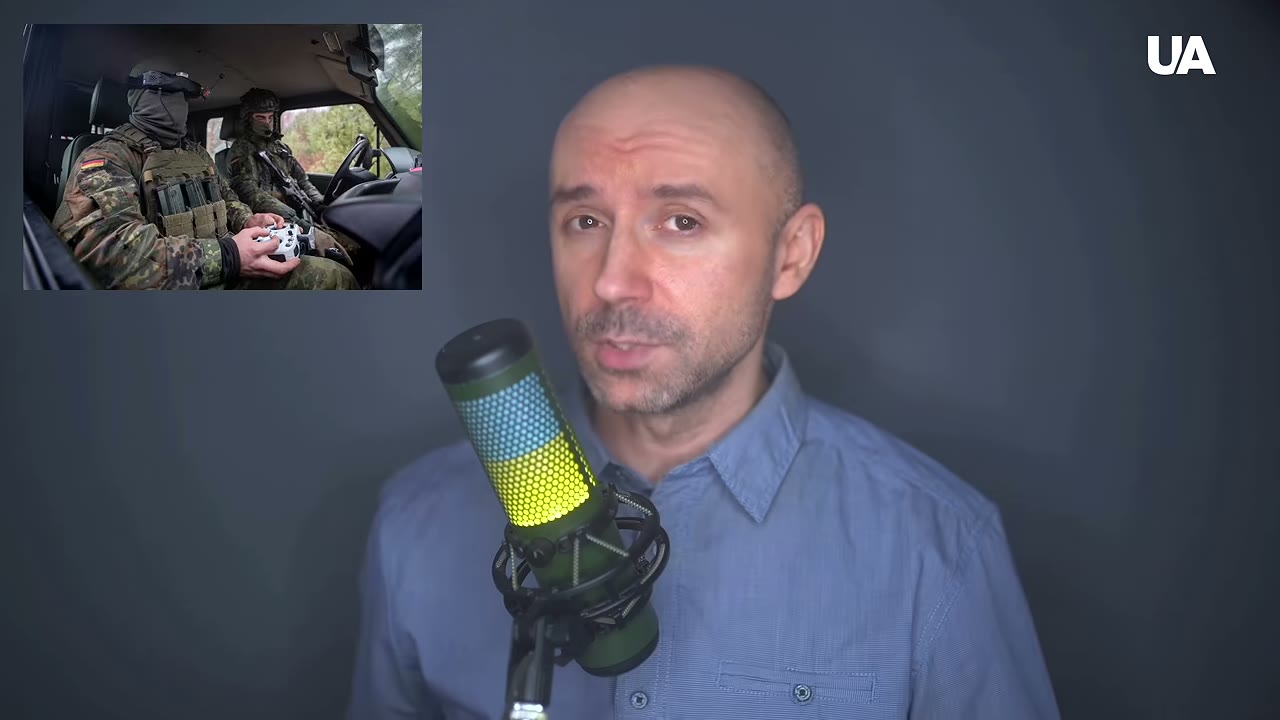
Germany is creating its first specialized unmanned systems regiment, drawing equipment and organization from Ukraine's combat experience. The unit would use Ukrainian drones, ground robots, the Delta control system and possibly Flamingo cruise missiles, marking a reversal in Ukrainian-German military cooperation.
1Germany to create first drone regiment using Ukrainian battlefield concepts
Germany is building its first-ever dedicated drone regiment, and much of its equipment and organizational concept will come straight from the Ukrainian battlefield. Europe's largest military and industrial power is preparing the unit as Berlin reverses the usual flow of know-how.
For years Germany trained Ukrainians on German gear, from artillery to air defense. Now the Bundeswehr has found that Ukrainians have something to teach them in return.
The plan was announced in October. The source describes the move as evidence that the idea Ukraine simply drains Western military aid has been shattered, with cooperation now running in the opposite direction.
2German drone regiment to consist of six specialized companies
Germany's new drone regiment will be split into six specialized companies rather than one giant unit of hundreds of operators. The structure was announced in October.
Some companies will conduct reconnaissance and strike near friendly forces. Others will operate much deeper behind enemy lines. A separate company will defend against enemy drones.
That counter-drone role matters beyond the battlefield, the source says: Russia has launched drones over German territory, German airfields and other European countries, making protection part of countering Russian hybrid warfare.
3Experimental unit to test and upgrade drone technology rapidly
A single experimental unit inside Germany's drone regiment will be tasked with testing new technology and pushing improvements into the field fast. The source calls it the most interesting element of the plan.
Anyone familiar with Ukraine's drone war understands why. Technology that works perfectly in January may become significantly less reliable by March, because Russia constantly develops new electronic warfare methods, changes communications and adapts its tactics.
The unit sits alongside a company called "DeepStrike," which will focus on long-range reconnaissance and strikes on distant targets.
4Germany considers nine unmanned systems, seven already used in Ukraine
Germany is weighing nine different unmanned systems for its new regiment, and seven of them are already effectively used in Ukraine. The lineup spans air and ground.
For front-line reconnaissance, the regiment could get the Vector drone from German manufacturer Quantum Systems, which Ukrainians have used en masse for years. Ukraine's Raybird reconnaissance aircraft, with hundreds of thousands of flight hours, can conduct surveillance for long periods.
For strikes, Berlin may take American Bumblebee and Hornet attack drones — Ukrainian forces deployed over 10,000 Hornets in just three months this summer. The Meerops interceptor is designed to counter aerial threats including the Russian Shahed. On the ground, Ukraine's Termit robot can carry supplies or mount weapons, including a heavy machine gun.
5Germany weighs Ukrainian Flamingo cruise missile for deep strikes
Germany is considering Ukraine's Flamingo cruise missile for its regiment's deep-strike mission — a weapon with a claimed range of over 2,000 km and a warhead weighing 1 ton. It is built by the Ukrainian company Fire Point.
No decision has been made. The idea is in the development stage, and the German military says the final configuration of the regiment is still being developed.
The source notes that considering a Ukrainian long-range missile for the German army would have sounded extraordinary a few years ago. The mention comes as Ukraine and Germany prepare a new production agreement.
6Ukraine and Germany sign joint drone production agreement for 2027
Ukraine and Germany announced a joint production agreement on November 24 to build several thousand Ukrainian tactical reconnaissance drones in Germany in 2027, funded by Berlin.
The deal creates a company on German soil to manufacture the drones. Germany also gains access to Ukraine's Delta combat control system, which Ukrainian defenders use to combine information from satellites and intelligence into a common operational picture.
The agreement lands just days after German troops held their first tactical tests of loitering munitions near the Belarusian border.
7German troops test loitering munitions and AI targeting near Belarus
German troops have conducted their first tactical tests of loitering munitions, during exercises near the Belarusian border. They used equipment made by Helsing and Stark.
The tests also involved AI-based targeting software designed to analyze data from satellites, drones and other sensors.
Germany only approved the purchase of these types of strike drones in 2025. Ukraine, by contrast, has been developing, producing and operating unmanned systems in real combat conditions for years.
8Ukraine's fast wartime innovation outpaces European procurement
Modern warfare is evolving much faster than traditional European procurement and training processes, and the Bundeswehr is now responding to that reality. The source says certain areas of modern warfare move faster than the old system can keep up with.
Creating a regiment on paper looks much easier than making it effective in reality. Germany will need trained operators, reliable supplies of various spare drones, electronic warfare specialists and much more.
The gap matters because Ukraine has spent years developing and operating unmanned systems in real combat, while European procurement cycles have moved at a peacetime pace.
9Ukraine now exports drones and combat experience to Germany
Military cooperation between Ukraine and Germany used to mean German tanks, air defense systems, artillery and ammunition helping Ukraine resist Russia. Now the conversation is increasingly about Ukrainian drones, missiles, software and combat experience helping Germany modernize its own armed forces.
The source describes that as what Ukrainian partners get in return for their support: modern technologies and experience fighting some of the most horrific terrorist regimes on Earth.
The shift runs alongside Berlin's plans for a drone regiment built on Ukrainian battlefield concepts, with the regiment's final configuration still being developed.