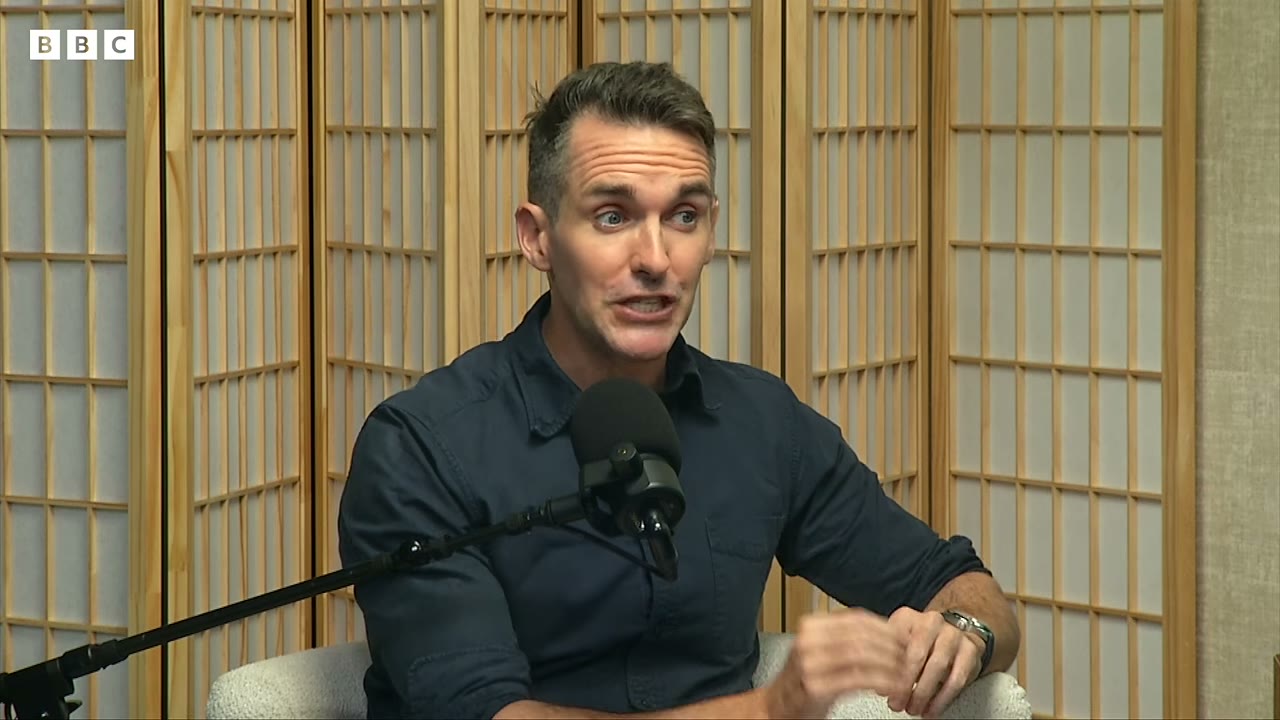
Japan ranks 117th of 145 countries in the World Economic Forum's gender gap index, despite having its first female prime minister. The podcast examines why political representation and economic opportunity lag, and whether Sanae Takaichi's conservative stance helps or hinders women.
1Japan ranks lowest in region for gender equality, WEF index shows
Japan ranks 117th out of 145 countries for gender equality — the lowest in East Asia and Southeast Asia — even though it is currently led by a woman. The World Economic Forum's annual gender gap ranking has placed Japan low consistently since it began, according to the BBC's Asia Specific podcast.
The index weighs female politicians and the gender pay gap. That sits awkwardly with Japan's advanced economy and technology sector, and with the fact that it is the only country in the region with a female executive leader of government, Prime Minister Sanae Takaichi.
Takaichi recently drew raised eyebrows by saying she spends several hours a day on makeup and housework. Critics saw the remark as reinforcing traditional roles for women.
The question now being asked: is Japan's first female prime minister a trailblazer, or is she inadvertently holding women back?
2What the WEF gender gap index measures and why Japan lags
Japan scores high on education for girls and on women's health and life expectancy. It lags badly on two other measures: political empowerment and economic participation and opportunity.
The World Economic Forum's gender gap index tracks four categories. Japan's weak spots are the number of female politicians and cabinet ministers, and the number of female business leaders — plus whether women earn about the same as men for the same work.
The WEF, best known for its Davos gathering of global elites, has published these reports for years and they are generally regarded as reputable.
Other rankings tell a different story. The World Bank and OECD, which look at poverty and access to clean water, rate Japan well.
3Iceland, Finland and Norway top the WEF gender ranking
Iceland, Finland and Norway hold the top three places for the smallest gender gap in the World Economic Forum's ranking. Namibia is fourth, followed by the United Kingdom and New Zealand.
Western countries dominate the top of the list. Japan sits at 117th out of 145.
Its neighbours do better but not by much: South Korea ranks 101st and China 96th.
Across Northeast Asia, Japan takes the lowest position in this survey.
4Women hold 14.6% of Japan's lower house seats
Women hold 14.6% of seats in Japan's lower house of parliament, the chamber that holds the real power. The upper house is at 29.4%.
Both figures have nearly doubled since 2013, when then-prime minister Shinzo Abe introduced his "Womenomics" policy.
Representation has climbed steadily — but it still has not reached the 30% target that was set.
5Councillor Risa Kamio says Japan is not there yet on equality
Risa Kamio, an elected councillor at Setagaya City Council in central Tokyo, says she is not surprised Japan ranked so low.
"Society wants women to be in the leadership positions, but in my daily life, when I talk to women, female friends, and mothers who are raising children, I could feel we're not there yet," she said.
The World Economic Forum index is one of several measures of gender equality in Japan, and the one that places it near the bottom of a list of about 145 countries.
6Kamio entered politics after a thousand-family daycare waitlist
A thousand families were on the waiting list for daycare in Setagaya, Tokyo, when Risa Kamio came back to Japan after about a decade in the US and Europe.
She was raising a three-year-old son. With no daycare place, she couldn't find a job and couldn't work. "This is nonsense," she recalled thinking. That pushed her into politics.
Campaigning brought its own obstacle: candidates are expected to stand outside local stations from 6 a.m. until 10 p.m., bowing and making speeches. With a young son, that was hard — but she was eventually elected.
7Council meetings ran until midnight, sidelining mothers
When Risa Kamio was first elected to her Tokyo council, meetings ran two days in a row and some went on until close to midnight.
How could councillors care for children and do the job at the same time? "It was impossible," she said.
Women raised their voices in the assembly meetings, and the schedule changed. Kamio said Covid helped shift some of the systems too. Conditions are now much better than when she first got elected.
8Sanae Takaichi viewed as conservative despite breaking barrier
Japan has had a female prime minister for about a year, but many feminist groups were not cheering. "Yes, we wanted one, but not her," was a comment heard repeatedly about Sanae Takaichi.
Takaichi is a conservative who embraces traditional values. As prime minister she awards the trophy at sumo tournaments — but sumo tradition bars women from the ring, and she did not go in.
Some feminists had hoped she would break that barrier. On issues affecting women, she is seen as leaning conservative, which is why her appointment did not draw unanimous celebration.
9Takaichi's housework remarks draw criticism in parliament
Sanae Takaichi told parliament she spends three to four hours a day on housework and makeup — and said she is busier than her male predecessors. The remark, made in early October, set off a backlash online and in discussion.
She was answering a question about the gruelling schedule of a prime minister. Critics argue that by saying she does the housework even as prime minister, she reinforces the idea that women must do it regardless of their profession.
After taking office she noted the prime minister's residence has no live-in chef and that she can't simply shop at a local supermarket. One criticism that followed: why not hire help?
10Kyoto mayor Shoko Kawata took maternity leave in office
Kyoto mayor Shoko Kawata became Japan's first mayor to take maternity leave while in office — and the move drew both praise and criticism. The reaction split along experience lines, with one commentator saying the loudest critics were "mostly the ones who don't have experience delivering babies."
Supporters argued the choice should be ordinary. "If you are a woman, you have a choice to have kids," the commentator said, adding that wanting to work too makes maternity leave "very natural to have... despite what job you may have."
Kawata's case sits alongside scrutiny of Prime Minister Takaichi. Those public attacks are painful for the individuals involved, but they are the discussion Japanese society must have to move forward, one speaker said.
11Slow cultural shift as more women enter politics and business
Girls in Japan aren't taught to lead or to be the manager, one commentator said, and that goes a long way to explaining why so few women hold political office. She traced it back to education.
Male managers told her they had offered promotions to female employees who turned them down, not wanting positions where they would be expected to stay late or sacrifice time with children and housework.
Change is happening slowly, helped by Japan's first female prime minister, Takaichi. "You can't be what you can't see," the commentator said. But she added: "We are not there yet. We don't have enough role models."