Federal Judge Anna Reyes issued a temporary restraining order stopping the government from closing East Potomac Park and its golf course, finding the administration's stated reasons pretextual. The case centers on Trump's plan to rebuild the course, a rushed tree-cutting operation and an arbitrary November 15 deadline.
1Trump Calls Golf Course Judge Hostile After She Ordered Tree Cutting Halt
President Trump publicly complained about a judge overseeing his golf course case — nine days after she ordered the government to stop cutting trees. He didn't name her, but the federal judge is Anna Reyes.
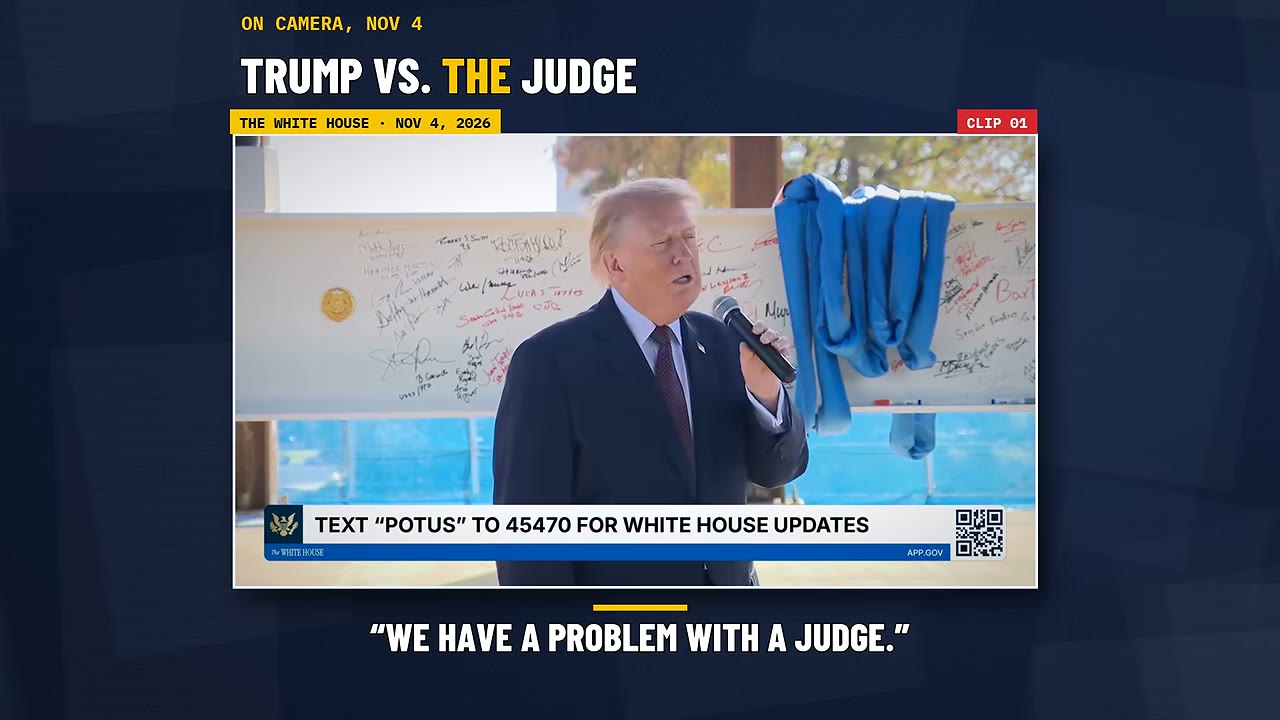
"We have a problem with a judge," Trump said on November 4, referring to a "terrible golf course." He said she wants it to stay terrible, "but I don't think that'll be allowed to happen."
Reyes had already shown her mood in court. A reporter said: "I have never seen a judge so angry." She raised her voice at government attorneys.
2Judge Reyes Issues 30-Page Order Using One Word Repeatedly for Government Reasons
Ten days after Trump's remarks, Judge Anna Reyes issued a 30-page order. On page three, she used one word to describe the government's reasons — and she didn't use it once.
She came back to it again and again. The word is the last one a government lawyer wants to read in a ruling.
The order also quotes an answer a government lawyer gave her in court — an answer that now sits in her ruling in black and white.
3Judge Reyes Issues Temporary Restraining Order Barring Park Closure
On Saturday, November 14, US District Judge Anna Reyes issued a temporary restraining order barring the government from closing East Potomac Park and its golf course during the hours they were open that day. The Park Service had planned to shut most of the park at 9 p.m. the following night.
A temporary restraining order is the fastest tool a federal judge has, built for emergencies. Under federal rules, it can last no more than 14 days unless extended for good cause or by agreement.
To get one, the side asking must show it is likely to win, would suffer serious harm without it, and that stopping the government is fair and in the public interest. The order lasts through November 28 unless the court changes it.
4East Potomac Park's History From Dredged Island to Desegregated Course
East Potomac Park is not natural land. In the late 1800s, the Army Corps of Engineers dredged the Potomac River to open a shipping channel and piled the mud here. Over the years, it became an island.
The park opened to the public in 1912, and people have played golf on it for about 100 years.
In June 1941, three black golfers insisted on playing there. White onlookers jeered and threatened them, and they finished under police protection. Soon after, Interior Secretary Harold Ickes ordered the course open to every player, regardless of race. The National Park Service still marks 1941 as the year the course was desegregated.
5Park Users and Trump's Trash Island Posts Set November 15 Deadline
Trump has his own name for East Potomac Park: "Trash Island." On the day of the ruling, hours before it came down, he posted that Trash Island is currently the worst golf course anywhere in the world.
His plan dates to October 18, when he posted that restoration work on the Fazio design would begin November 15, when the old course would close to play. Eight days later he posted again: the site was closing as scheduled on November 15.
Both posts share a date — November 15. Of everything in this case, that date may matter most.
6Closure Covered Roads, Trails, Picnic Areas and Mini Golf
The closure set to start November 15 went far beyond golf. According to the order, it covered miles of paved road, trails and paths, fishing areas along the river in the Washington Channel, picnic areas and playgrounds at Haines Point, the seawall promenade, a dock and water taxi stop, and every golf course in the park, minigolf included.
Why close all of it? The judge's answer takes one line: the president directed the closure for one reason, so work could begin on the new course.
The Park Service's official closure notice never mentions the president's directive.
7Park Service Cut Over 400 Healthy Trees in About 10 Days
In about 10 days, Park Service crews planned the job, lined up people and equipment, and cut down more than 400 healthy trees on the golf course.
Judge Reyes was not amused. "I am thoroughly unamused right now," she said at a hearing. She added that what happened had caused the government to lose all credibility in the case.
On October 26, she issued a preliminary injunction blocking tree removal on the course and requiring notice before certain other work. The government asked her to pause it while it appealed. On November 9, she said no.
8Trump Says Judge Hates Him and Calls Two Judges Like Twins
Asked how he planned to go around the judge, Trump said: "She's very hostile to me." He added: "She hates Trump, obviously. I have two of them. I have two of those judges. They're like twins. They hate Trump."
The next date in the fight is November 28. That is when the temporary restraining order runs out unless the court changes it.
9Park Service Listed Three Reasons for Closure in Its Notice
In its closure notice, the Park Service listed three reasons: the golf course was about to lose its operator; the course's buildings and grounds showed what it called an escalating trend of unsafe conditions; and the seawall around the park is deteriorating.
At a November 13 hearing, the government's lawyers named one more reason — the one the notice left out: the president's directive.
The judge went through the written reasons one at a time.
10Judge Finds Operator Lease Ended by Design to Justify Closure
The course is run by a nonprofit called National Links Trust. Its job there ends at close of business on November 15. Why that day? Because on October 28, the Park Service signed a new lease with the group that ends its work on this course on that exact date, while it keeps running two other city courses.
The agency then pointed to the missing operator as a reason the park had to close. The judge said that reverses cause and effect and added: "by design."
At the November 13 hearing, she asked the government lawyer whether ending the operator's work on November 15 was part of carrying out the president's wish to close the course that day. The answer, as quoted in her order: "They did it consistent with the president's direction that the park closed on November 15th, but they did it for the purposes outlined in the closure order itself." The judge was not persuaded.
11Judge Rejects Safety Claims Citing 30,000 Rounds Played Since May
The closure notice cited a May 2026 assessment that recorded 110 deficiencies at the golf course, 69 rated critical or urgent. That sounds alarming. But Kevin Grece, superintendent of National Mall and Memorial Parks, testified in October that the agency had not addressed any of them.
Since May, according to the record, it had removed trees and vegetation, fixed a fence, and thrown out some trash. The course stayed open. By the judge's conservative count, more than 30,000 rounds of golf have been played there since May.
An agency that could organize the felling of more than 400 healthy trees in 10 days, the judge wrote, was not without ability or resources.
12Judge Questions Seawall Danger After Marine Corps Marathon Allowed
No one disputes the seawall is in bad shape. The judge says so herself: it is deteriorating and needs repair. But from 2011 until this October, the agency never suggested the repairs would require closing this part of the park.
The acting director of the Park Service, Jessica Bahrin, filed four sworn declarations. The seawall doesn't come up in the first three. It appears in the fourth, filed October 28 — three days after the Marine Corps Marathon went around the park with the Park Service's permission, more than 30,000 runners.
In court, a government lawyer described the danger near the seawall as a risk to life and limb. The judge wrote it cannot be that the Park Service let 30,000 runners risk life and limb on a road near that wall.
13Judge Calls Government Explanations Pretextual and Cites NEPA Violation
On page three, the judge used the word: pretextual. The court, based on the current record, readily found the government's explanations were pretextual — meaning the reasons on paper were not the real reason.
She noted the finding is based on the current record and can still change. She also wrote that pretext alone does not require granting the order. What does, she wrote, is that in its haste to meet an arbitrary deadline, the government has likely violated at least two federal laws.
One is the National Environmental Policy Act, known as NEPA, which requires environmental review before major federal actions. She had already found that review missing in October. The arbitrary deadline was November 15 — the president's date.
14Judge Proposes Special Master to Probe Government Lawyers' Ethics
A federal judge has proposed appointing a special master to examine whether government lawyers broke ethics rules in the fight over a park. Judge Reyes named former U.S. Attorney Jesse Liu for the role.
The Justice Department pushed back. In a November 13th filing, it argued there was no reasonable basis for an investigation and that a special master would delay the review, according to WJLA. The filing noted the judge had said she was prepared to conduct the inquiry herself.
No one has been found to have broken any rule. This is a proposal, the government opposes it, and it hasn't been decided.
15What the Order Does and Does Not Require for the Park
The park will not close on Sunday. Judge Reyes' order blocks the government from shutting East Potomac Park and the golf course during the hours they were open on November 14th.
But the order does not force the government to run the golf course. Nothing in it requires anyone to operate the course for play or to sign a contract with a company to do it.
The government can still make repairs with the notice the October injunction already requires. A Justice Department spokesperson said nothing in the order precludes planning for a world-class golf course from continuing. Closing the park to start building is what can't happen for now.
16November 28 Deadline Could Bring Appeal to Federal Appeals Court
November 28th may be the day this fight moves up a level. The restraining order runs through that date unless the court acts sooner.
Judge Reyes can extend the order another two weeks if she finds good cause, or replace it with a preliminary injunction — the longer-lasting kind she already used to stop the tree cutting in October. That would keep the park open while the case goes on, possibly for months.
The difference matters: a temporary restraining order usually can't be appealed, but a preliminary injunction can. If she issues one, expect the government to take it to the federal appeals court in Washington, as it did after the tree injunction.
17East Potomac Park Was Created by Congress to Be Forever a Park
East Potomac Park was created by an act of Congress in the late 1800s and later codified into DC law, "to be forever held and used as a park for the recreation and play."
The case isn't happening in a vacuum. At the Supreme Court, the administration lost two of its three decisions this November, counting one petition the justices turned down.
On November 4th, the president said he didn't think the judge would be allowed to keep that golf course the way it is. Ten days later, she ruled that the park stays open.
18Takeaway: Contradictory Paperwork Led Judge to Rule Against Government
When a government's own paperwork contradicts the reasons it gives a judge, the judge notices. This one wrote it all down page by page.
The government called it "a great project" that "suffers from one thing" — the judge has struck arrangements.
On November 28th, we'll find out if the government has better answers.