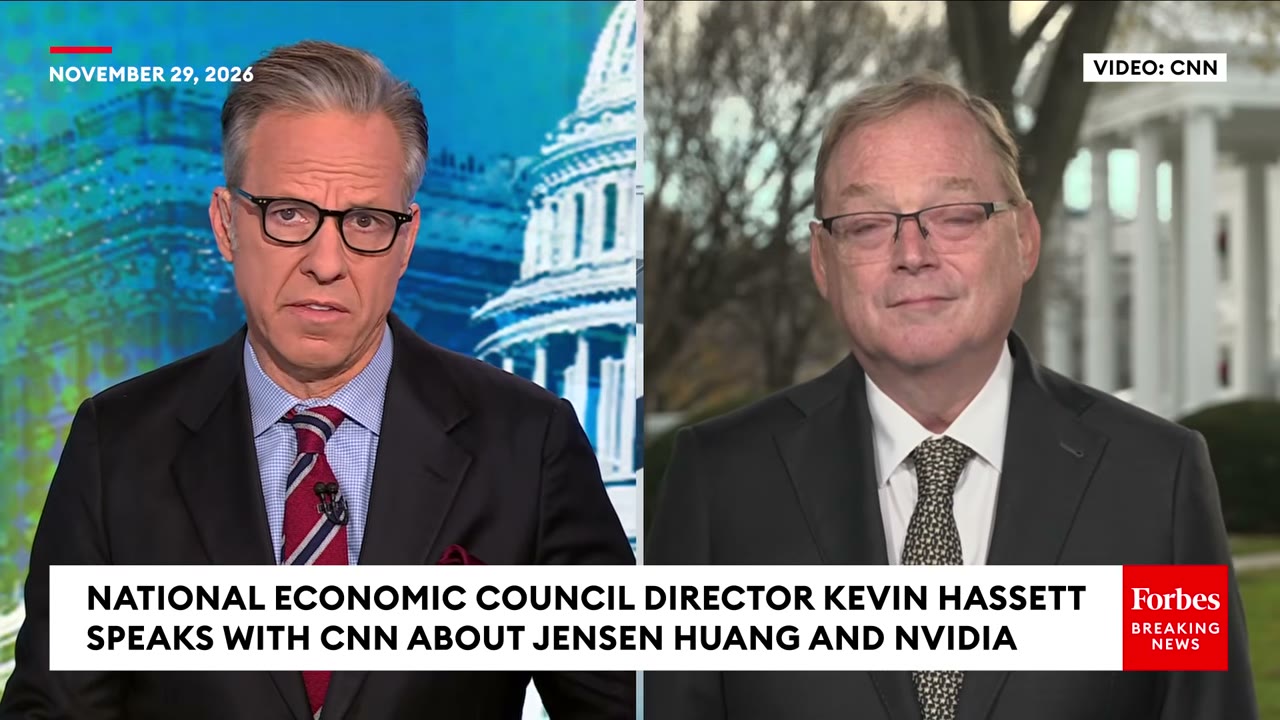
CNN's Jake Tapper asked White House economic adviser Kevin Hassett whether the administration is in a bubble after Democrats won the House and Senate. Hassett defended his pre-election skepticism of polls and argued consumer confidence reflects political sentiment, not economics.
1Hassett Rejects White House 'Bubble' Claim After Democratic Midterm Wins
Kevin Hassett rejected the idea that the White House is in a "bubble," after Democrats took back the House and Senate in midterm wins few expected. The top economic adviser was pressed on whether he and other officials were out of touch with Americans' concerns.
The question came with a reminder of what he said in October, before the midterms. Hassett had questioned polls showing Democrats were likely to regain control of Congress. "Before an election cycle, the fact that there are, you know, maybe biased pollsters who are telling us that people are very, very depressed—that's a classic Democratic move, and I just don't believe it," he said at the time.
Then the Democrats crushed the Republicans and took both chambers with majorities few expected, and he was asked directly whether he had any concerns that he and others in the White House were in a kind of "bubble" and not hearing the concerns of many Americans.
His answer was a flat no. He pushed back on the framing, pointing to the context of the earlier conversation and to his role as an economic adviser rather than a political one.
That answer opens a second front: whether the sour public mood is really about the economy at all. Hassett has argued that consumer confidence readings are tracking politics, not economic data — a claim he ties to what happened after the Democrats won.
2Hassett Says Consumer Confidence Reflects Politics, Not Economy
Consumer confidence is really a measure of politics, not the economy, Kevin Hassett argued after Democrats won the midterms. His evidence: confidence soared after the election even though no new economic data had come out.
The economic adviser drew a line between his job and politics. "I'm an economic advisor, not a political one," he said.
He described the puzzle he had been asked about before the vote: economic data looked really good, yet consumer confidence data showed people very depressed about the economy. The latest GDP report showed growth in the mid-four percent — one of the best numbers in a long time. Yet those surveyed said they thought the economy was the worst since the Great Depression.
What he meant, he said, is that when people answer those questions they are no longer thinking about what an economist would think about the state of the economy. They think about everything else going on in the world.
His proof, as he put it: after the election, when the Democrats won, consumer confidence soared despite the lack of new economic data. In his view, those indicators are really just indicators of political sentiment.