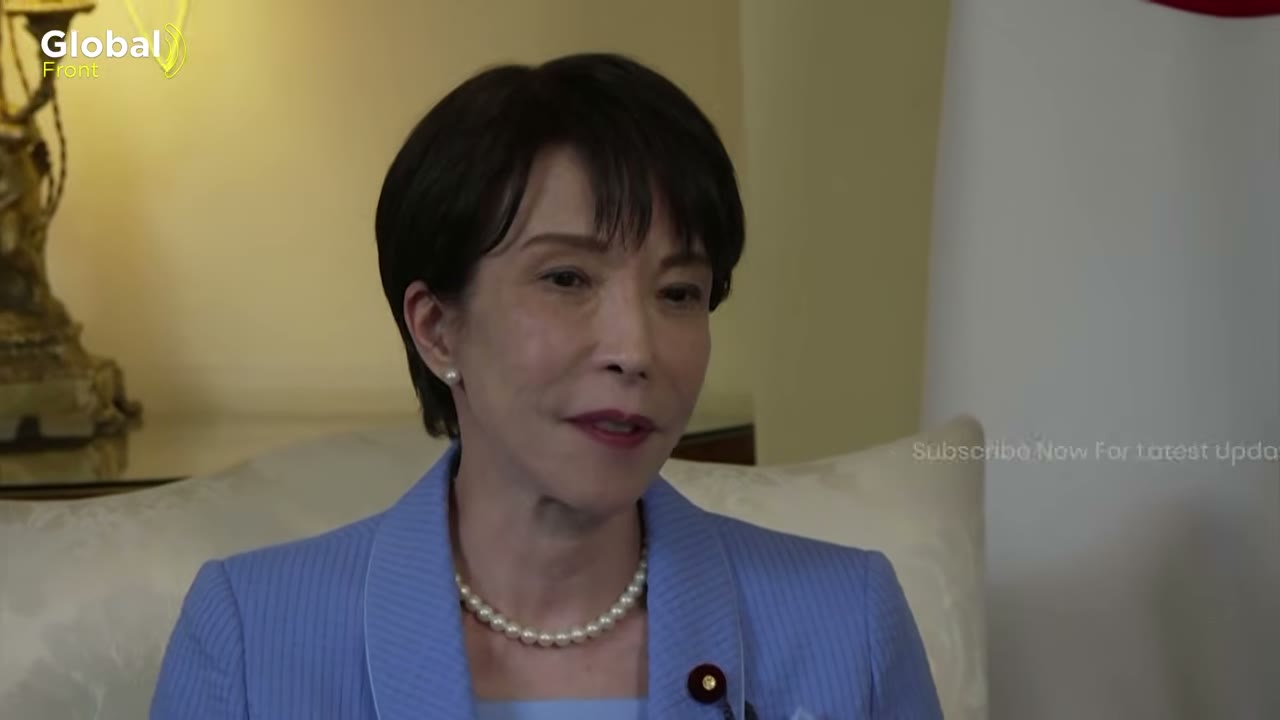
Japanese Prime Minister Sanae Takaichi attended the APEC summit in Shenzhen but held only brief exchanges with Xi Jinping, not a formal bilateral meeting. The snub comes amid disputes over Taiwan, military activity, trade restrictions and rare earth minerals, and contrasts with Xi's talks with Trump and Putin.
1Takaichi Returns from APEC Without Formal Xi Meeting
Japan's prime minister came home from China with handshakes, not a meeting. Sanae Takaichi traveled to Shenzhen for the Asia-Pacific Economic Cooperation summit on November 18-19 hoping to keep contact with Chinese President Xi Jinping. The two leaders exchanged brief greetings and handshakes but held no formal bilateral meeting.
Beijing hosted US President Donald Trump and Russian President Vladimir Putin for diplomatic talks during the same period. Japan, one of China's most important economic partners, could not secure the direct negotiations its government wanted.
The result drew attention across the region and underscored how complicated Tokyo's relations with Beijing have become.
2Shenzhen APEC Summit Brings Together 21 Economies
Twenty-one economies sent leaders and representatives to Shenzhen for an APEC summit that became as much about politics as trade. The organization, established in 1989, promotes economic cooperation, trade, investment and technological development across the Asia-Pacific.
The meeting came amid growing disagreements over Taiwan, military activity, economic restrictions and regional security. For Takaichi, the visit was a test of whether Japan and China can begin repairing relations that deteriorated sharply over the past year.
Xi chaired the meeting, delivered speeches on regional cooperation and held separate diplomatic meetings with other participants.
3Takaichi's Ambitious Diplomatic Agenda Before Shenzhen
Before leaving Japan on November 16, Takaichi laid out a sweeping diplomatic agenda: economic development, trade, energy security, digital technology and regional stability. She was scheduled to attend ASEAN-related meetings in Manila before flying on to Shenzhen.
The question hanging over the trip was whether she would get meaningful talks with Xi. Takaichi signaled Tokyo would not soften its stance just because relations with Beijing had become difficult.
"I also intend to firmly convey Japan's position on these issues," she said before departing.
4Takaichi and Xi Exchange Only Brief Greetings at Summit
Two brief encounters were all Takaichi and Xi got. They shook hands at a welcoming reception on November 18, then met again on November 19 for another short exchange during the summit proceedings.
Takaichi used the moment to thank China for its hospitality and its role in organizing the summit. The interactions showed basic diplomatic communication remains possible.
But none grew into a formal meeting with delegations, interpreters and an agreed agenda — the format that allows leaders to work through complex differences.
5Takaichi Stresses Communication Despite Unresolved Issues
No formal talks was a disappointment for Japan's diplomatic push, though the summit did not end all contact. Takaichi and Xi still greeted each other; what was missing was the deeper political engagement that could reduce uncertainty between the two governments.
After the summit, Takaichi said Japan remains committed to constructive relations with China — while making clear significant differences require ongoing communication.
"Communication is important precisely because there are unresolved issues and challenges between us," she said.
6Beijing Gives Cautious Response on Meeting Japan
Beijing gave no signal that a formal meeting with Japan's prime minister was coming. Asked on November 19 whether China would meet Takaichi, Foreign Ministry spokesman Guo Jiakun offered only a brief line.
"Our position on China-Japan relations is clear," he said.
The response reflected Beijing's reluctance to signal a diplomatic breakthrough while its disagreement with Tokyo remained unresolved. Chinese officials have repeatedly objected to Takaichi's previous comments on Taiwan and urged Japan to exercise greater caution on the issue.
7October Gyeongju Meeting Showed Dialogue Was Possible
Nine days before the Shenzhen chill, dialogue had looked possible. On October 31, 2025, Xi Jinping and Sanae Takaichi met during the APEC summit in Gyeongju, South Korea, for a formal discussion lasting about 30 minutes.
The talks focused on maintaining a constructive and stable relationship. Both governments recognized the importance of open diplomatic channels, and the leaders covered economic cooperation, security, regional stability and their differences.
Despite significant disagreements, the meeting showed dialogue was possible — a contrast that made Shenzhen's handshakes-only outcome stand out.
8Takaichi's Taiwan Remarks Spark Beijing's Objection
Takaichi's November 2025 parliamentary speeches changed the atmosphere. She discussed circumstances in which a serious confrontation over Taiwan could threaten Japan's survival under its security legislation.
Beijing strongly objected, calling the comments an unacceptable suggestion that Japan could be drawn into a military confrontation over Taiwan. China considers Taiwan part of its territory and opposes foreign interference.
Japan sees the issue through a security lens: Taiwan lies near its southwestern islands, and surrounding waterways are critical for shipping, energy imports and regional stability. Beijing says Japan's statements risk crossing political lines.
9Takaichi Reaffirms 1972 Joint Communiqué Position on Taiwan
At her November 19 press conference in Shenzhen, Takaichi tried to reassure Beijing that Japan's Taiwan stance had not shifted. She pointed to the 1972 joint communiqué that laid the foundation for modern Japan-China diplomatic relations.
"There was no change in the position set out in the joint communiqué between Japan and China," she said.
Tokyo still treats that document, along with other bilateral agreements, as central to the relationship. But reaffirming an existing position does not resolve security differences — China continues to object to the implications of her earlier remarks.
10Diplomatic Spat Creates Economic Uncertainty for Japan
The diplomatic dispute is spilling into boardrooms. China remains one of Japan's largest trading partners, with deep ties in autos, machinery, electronics, consumer goods and advanced technology.
Restrictions on rare earth minerals have become a particular problem. The materials are essential for magnets, electric vehicles, electronics and industrial equipment. Japan is working to diversify its sources, but building alternative supply chains takes significant investment, industrial collaboration and time.
Companies in both countries depend on predictable trade and reliable supply chains — and deteriorating relations complicate investment, production and long-term planning.
11Trump, Xi and Putin Hold Unprecedented Trilateral Meeting
While Japan and China stayed divided, three major powers met directly. On November 19, President Donald Trump, Chairman Xi Jinping and President Vladimir Putin held an unprecedented trilateral meeting on the sidelines of the APEC summit.
Discussions focused on key security issues, including nuclear arms control and broader geopolitical stability.
The meeting drew international attention because of the influence all three leaders hold over global security and economic relations — and it put them at the center of the diplomatic stage while Tokyo remained on the sidelines.
12Japan's Isolation Stands Out Against US-China-Russia Talks
Japan's closest ally was talking to Beijing while Tokyo could not arrange its own meeting. The United States has been engaging in direct dialogue with China and Russia at the highest level, while Takaichi and Xi held only brief exchanges.
Washington's outreach did not mean it ignored Japan's concerns. The two countries maintain a long-standing security alliance and continue coordinating policy in the Indo-Pacific region.
But Washington is also developing its own relations and holding talks with Beijing — a contrast Tokyo could not ignore.
13Takaichi Strengthens Quad and Regional Partnerships in Manila
Japan is courting Quad allies and the Philippines as ties with China fray. Sanae Takaichi used meetings in Manila to deepen cooperation with regional partners, with talks involving Japan, the US, Australia and India underlining the Quad's role in regional stability.
The four countries discussed maritime security, supply chain resilience, emerging technologies, cybersecurity and support for stability in the Indo-Pacific.
For Tokyo, these partnerships are part of its response to growing uncertainty, expanding ties with countries that share concerns about economic vulnerability and regional security.
The Philippines is increasingly important to Japan's strategy. President Ferdinand Marcos Jr.'s government is seeking closer security cooperation with Tokyo as it faces its own maritime disputes with Beijing in the South China Sea.
In Manila, Japan stressed cooperation on energy security, emergency oil supplies and economic resilience.
14Energy Security Tops Japan's Regional Agenda
Energy security has climbed to the top of Japan's regional agenda as Asian economies stay exposed to disruptions in oil transport and supply chains.
Sanae Takaichi's diplomacy went beyond any meeting with Xi Jinping. Even without a formal China-Japan summit, Tokyo kept building relations with Southeast Asian governments and other strategic partners.
Japan is pushing closer regional coordination to help governments prepare for sudden shortages and economic emergencies.
Asian economies remain vulnerable to interruptions in oil transportation and international supply chains, making the issue particularly urgent for the region.
15APEC Leaders Adopt Declaration on Trade and Innovation
APEC leaders adopted a declaration pledging to strengthen regional trade, connectivity, innovation and development, even as diplomatic tensions simmered.
The meeting produced agreements on broader economic cooperation. Discussions focused on digital technologies, artificial intelligence, sustainable growth and the need to boost economic resilience.
Those issues matter especially for Shenzhen, a major center of Chinese technology and manufacturing.
For Japan, participation stayed valuable despite the difficulties in the relationship between Sanae Takaichi and Xi Jinping. APEC lets Tokyo help shape economic priorities that affect businesses and communities across the region.
16Taiwan Sends Acer Founder Stan Shih to APEC Summit
Taiwan President Lai Qingde has picked Acer founder and chairman emeritus Stan Shih as his representative at the November APEC summit.
Shih brings deep technology industry experience and previously represented Taiwan at the 2007 APEC meeting in Australia. His appointment reflects Taiwan's determination to stay engaged in regional economic discussions, especially on artificial intelligence and technology supply chains.
Taiwan's participation remains politically sensitive. Beijing insists these arrangements comply with its "one China" principle, while the Taiwanese government insists it must take part with dignity and proper treatment within the organization's established structure.
After a briefing in Shenzhen, Shih said Taiwan participated on an equal footing and maintained contact with representatives of other participating economies.
17Japan to Revise Three Key Defense Documents by 2026
Japan plans to revise three key security documents by the end of 2026: the national security strategy, the national defense strategy and the defense capability building program.
The review reflects concerns about China's expanding military capabilities, North Korea's nuclear and ballistic missile programs, Russia's military activities and the broader regional security environment.
Japan is strengthening its defense capabilities and coordination with international partners, saying its security policy must respond to changing threats.
These changes are likely to remain a source of disagreement with Beijing, especially on Taiwan, maritime security and closer Japan-US cooperation.